Oman's FM: Threats to Gulf security come from outside, especially Tel Aviv
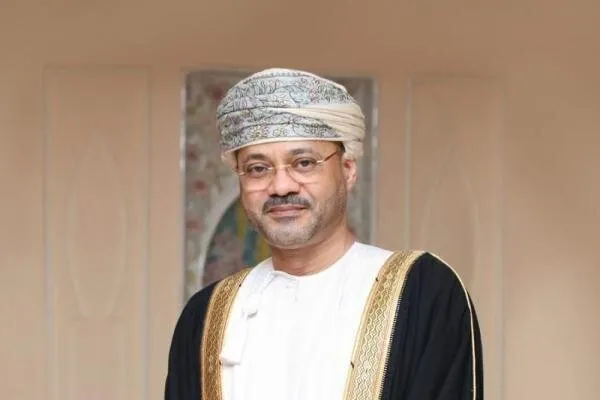
Tehran - BORNA - Badr al-Busaidi, Oman's Foreign Minister, said that complex discussions are underway to draft a long-term agreement guaranteeing freedom of navigation in the Strait of Hormuz. He added that Oman bears the responsibility of cooperating with Iran and the international community to achieve an agreement that ensures freedom of navigation.
He emphasized that the largest threats to Gulf security are not internal but stem from decisions and actions taken outside the region, especially in Tel Aviv.
The relationship with the US must be rebuilt
Al-Busaidi said the relationship with the United States must be rebuilt to align with the strategic reality revealed by the war. He described the current war as a "disaster" that lacked UN authorization and failed to achieve any of its objectives.
He noted that the war related to Iran has highlighted the need for a comprehensive review of the Gulf region's security infrastructure. He added that the people of Oman and the Gulf countries have borne the greatest damage from a war that should never have happened.
Al-Busaidi expressed hope that current developments would lead to a real end to the conflict rather than a temporary halt in military operations.
A permanent framework for freedom of navigation
He said one of the current priorities is establishing a permanent framework to guarantee freedom of navigation in the Strait of Hormuz. Oman has a special responsibility in this regard as one of the littoral states alongside Iran. He emphasized the need for realistic and sustainable measures by Oman and Iran, in cooperation with the international community and in compliance with international law, to guarantee freedom of passage and protect shipping in this waterway.
Al-Busaidi also appreciated France's constructive role in negotiations regarding the future of shipping in the Strait, stressing that addressing the strait's situation must be part of a broader strategic vision encompassing the Persian Gulf and its connected maritime corridors.
Security infrastructure built on flawed assumptions
Al-Busaidi stated that the security infrastructure established in the Persian Gulf since 1979 was based on the assumption that Iran poses an existential threat to the region and Western interests — an assumption he described as fundamentally flawed.
He noted that decades of massive military spending, expansion of US bases in the region, and a security system relying on external protection have failed to achieve lasting security or prevent wars and crises. He said the recent war exposed containment policy as an illusion.
No framework can exclude any Gulf state
Al-Busaidi questioned how the Gulf's security infrastructure should be rebuilt given these changes, emphasizing that no future framework can exclude any of the eight Gulf states — the six GCC members plus Iran and Iraq. Each of these countries has vital interests and responsibilities proportionate to their capabilities, and all must participate in designing and implementing the new regional order.
He called for a balanced review of relations with international partners, primarily the United States, noting that the goal is not to abandon historical ties but to rebuild relations based on strategic realities revealed by the war.
Al-Busaidi also stressed that Gulf security cannot be separated from the northwest Indian Ocean, Bab al-Mandeb Strait, the Red Sea, and the ports and maritime corridors linked to the region's economic and logistics infrastructure. The nations of this vast region would benefit from establishing a legal and practical framework capable of protecting trade and shipping while strengthening stability and sustainable prosperity.
End Article