Why did Trump back down from attacking Iran?
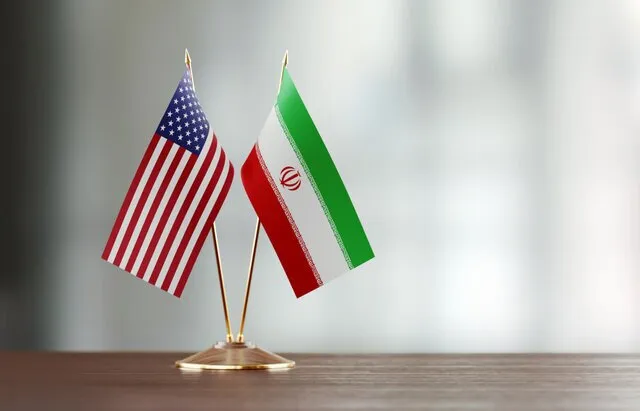
Tehran - BORNA - Trump's sudden announcement that he had agreed to call off a planned strike against Iran came after days of warnings from Iranian officials that any US military action would be met with an immediate, decisive, and proportionate response. The development suggests that rising costs of military confrontation and concerns over Iran's response have pushed the White House back toward the option of negotiation.
The recent events in Iran-US relations show that the military option, despite repeated US threats, continues to face serious limitations. Trump said early Sunday that he had agreed to cancel a strike planned against Iran, adding that the continuation of this decision depends on the possibility of quickly reaching an agreement. The remarks attempt to keep diplomacy alive while maintaining political pressure.
This shift comes as senior Iranian officials had repeatedly emphasized over recent days that any US military action would be met with an immediate, decisive, and proportionate response. These warnings were not limited to political statements but were framed within Iran's defense and deterrence doctrine, which has altered US calculations of the costs and benefits of any military action.
The pillars of Iran's deterrence
Iran's deterrence, particularly after the two wars in June 2025 and March 2026, is not the product of one or two factors. It can be defined by four complementary components: military capability and the development of missiles and drones; strategic geopolitical position; national cohesion and resilience; and political and popular will to defend the country's interests and security. Each of these pillars is important individually, but the real effect of deterrence emerges when these elements work synergistically to raise the costs of any military or security action in the calculations of the adversary.
The first component is Iran's military capability, particularly in ballistic and cruise missiles and drones, developed through domestic production and capable of targeting military centers and sensitive infrastructure at various ranges. The second component is Iran's geopolitical position, situated at the crossroads of West Asia, Central Asia, and the Persian Gulf, giving it strategic leverage over one of the world's most important energy chokepoints.
Alongside these two factors, national cohesion and political will serve as complementary pillars of Iran's deterrence. Past experience has shown that internal solidarity in the face of external threats increases the country's resistance capacity and influences the calculations of the adversary. Political will to use available capacities is perhaps the most important pillar, as military capability without the will to employ it is not fully effective.
In recent months, the experience of Iran-US confrontations has shown that any limited conflict can quickly escalate into a broader regional crisis. US decision-makers must therefore consider not only Iran's military capability but also the political, economic, and security consequences of any military action — consequences that could affect the security of US bases in the region, energy flows, maritime transport, and even the global economy.
Pressure and diplomacy
Trump's recent remarks can be analyzed within this framework. While he spoke of cancelling the strike, he simultaneously linked the decision to rapid progress in negotiations with Iran. This approach shows that Washington continues trying to balance "pressure" and "diplomacy" — maintaining the military threat as a bargaining chip while avoiding a war with unpredictable consequences.
Another factor influencing this decision is concern over the expansion of any conflict. In the event of a direct strike, the crisis could spread beyond Iran, threatening US interests and bases in West Asia. From this perspective, Iran's deterrence is not limited to its defensive capability but extends to its ability to impose broad costs on the adversary.
Trump's renewed emphasis on reaching an agreement with Iran suggests that the White House, after successive failures in the military option, still sees diplomacy as the least costly path to managing internal differences in Washington. While the White House tries to project this approach from a position of strength, backing down from a strike previously warned about indicates that the military option has encountered serious obstacles and that US decision-makers have preferred to avoid escalation.
This development can be assessed within the broader US strategy. Washington has recently tried to combine economic pressure, sanctions, military threats, and political negotiations to extract concessions from Iran. However, whenever the prospect of increased military and security costs has risen, the diplomatic path has been revisited. The cancellation of the strike, therefore, is not merely a temporary decision but a reflection of the fact that the regional deterrence balance — in which Iran has demonstrated its capacity — plays a decisive role in White House decisions.
In sum, Trump's retreat from military action against Iran is the result of Washington's growing concerns over the consequences of any direct confrontation. Although the US administration still emphasizes the need to reach an agreement and seeks to maintain pressure, recent developments show that Iran's deterrence — characterized by the political will to confront the US at all levels — remains one of the most important factors shaping US strategic calculations, leading the White House, at least for now, to prefer diplomacy over military strikes.
End Article