Shared beliefs and culture underpin Tehran-Baghdad ties, Iraqi envoy says
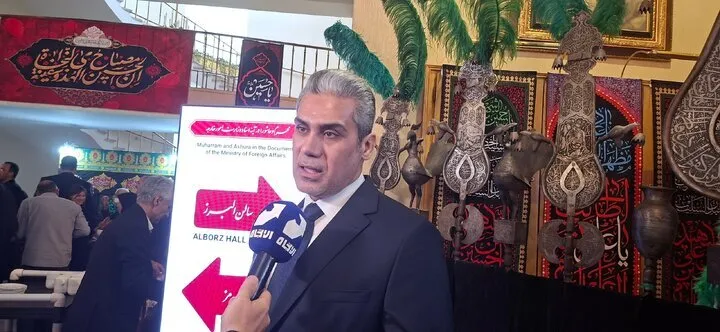
Tehran - BORNA - Speaking to reporters on the sidelines of the exhibition "Muharram and Ashura in the Mirror of Iranian Foreign Ministry Documents," Yasser Abdul Zahra al-Hajjaj pointed to historical documents and photographs compiled by Iran's Ministry of Foreign Affairs and recorded by historians over centuries, noting that these records reflect deep-rooted historical bonds between the two nations.
Strategic convergence rooted in shared heritage
Al-Hajjaj emphasized that diplomatic and societal relationships built upon common religious, spiritual, and value-oriented foundations are among the most profound and enduring ties between nations.
"While history shows instances where religious and civilizational factors became sources of conflict, what we witness today between Iran and Iraq is a movement toward convergence and the strengthening of shared ties," al-Hajjaj said.
He added that Tehran and Baghdad are advancing toward a form of strategic alignment and synergy by relying on deep-seated historical, cultural, and spiritual commonalities, which continue to lay the groundwork for deepening bilateral cooperation.
Ashura as a symbol of unity
The Iraqi ambassador highlighted the central role of Imam Hussein in bridging the peoples of Iran and Iraq, stating that the commemoration of Muharram and Ashura serves as a primary manifestation of this connection.
Al-Hajjaj noted that these religious commemorations transcend bilateral borders, drawing millions of participants from various countries around the world each year.
He concluded that the observance of Muharram and Ashura has evolved into a enduring symbol of solidarity between the Iranian and Iraqi nations and a clear expression of their shared religious and cultural heritage.
End Article