Iran merges Khatam Headquarters and Armed Forces General Staff in major military command overhaul
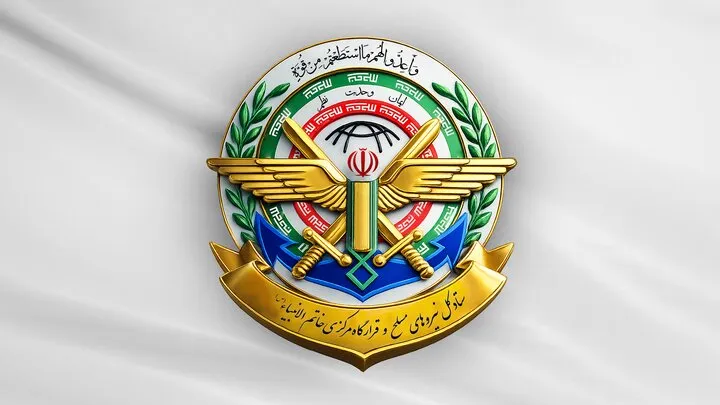
Tehran - BORNA - The Khatam al-Anbiya Central Headquarters and the Armed Forces General Staff are two of the most important pillars of Iran's defense command structure. Each was established at different historical moments in response to specific needs. The Khatam al-Anbiya Central Headquarters was formed during the Iran-Iraq war to create unified operational command and coordination between the Army and the IRGC. The General Staff, originally established as the "Supreme Commander's Staff," was created to provide overall coordination and coherence across all armed forces.
For more than four decades, these two institutions operated as distinct structures with different missions, though closely linked. Recent security and military developments, including the experience of new wars waged against Iran, have led to their merger into a single entity now headed by Major General Ali Abdollahi, with Brigadier General Kioumars Heydari as his deputy.
How the Khatam Headquarters was born
According to published documents and memoirs of Ayatollah Hashemi Rafsanjani, the Khatam al-Anbiya Central Headquarters was formed on February 19, 1984, on the eve of the Khyber Operation. Its creation stemmed from the experience of the first three years of the Iran-Iraq war, which revealed the need for a joint command center between the Army and the IRGC. In the early years of the war, each force had its own structure, command, and operational methods. Coordinating their capacities in large operations was a persistent challenge.
In response, Imam Khomeini entrusted the war command to Ayatollah Hashemi Rafsanjani, who at the time was speaker of parliament and the Imam's representative on the Supreme Defense Council. The Khatam Headquarters was established as the supreme command center for joint operations.
With its formation, Army and IRGC commanders were required to coordinate their plans and actions within a unified command framework. The Khatam Headquarters gradually became the main center for commanding and coordinating joint operations during the eight-year war.
From the 'Supreme Commander's Staff' to the 'General Staff'
The war experience demonstrated that coordination of the armed forces extended beyond the battlefield. Managing a large-scale war required coordination in organization, personnel, training, equipment, logistics, and defense industries. In the final years of the war, the need for a comprehensive structure to manage and coordinate all armed forces became increasingly apparent.
Ayatollah Seyed Ali Khamenei, then president, proposed to Imam Khomeini that the affairs of the Army, IRGC, gendarmerie, and other forces be entrusted to a single individual. This process entered a new phase on June 2, 1988, when Imam Khomeini appointed Hashemi Rafsanjani as deputy commander-in-chief.
After the war, the command structure entered a new phase. On January 15, 1992, the "Supreme Commander's Staff" was renamed the "Armed Forces General Staff" by order of the Supreme Leader, becoming the most important strategic and coordinating body of the armed forces.
Commanders of the Khatam Headquarters after the war
The Khatam Headquarters was not dissolved after the war and retained its role as the center for commanding joint operations. Following Hashemi Rafsanjani's resignation in September 1989, the Supreme Leader assumed direct command of the headquarters. In 2016, Major General Gholamali Rashid was appointed as its commander. Rashid was martyred on the first day of the 12-day war in June 2025.
Major General Ali Shadmani was appointed as his successor on June 13, 2025, but was martyred on June 18, 2025, after being wounded in an Israeli attack. Major General Ali Abdollahi was then appointed as commander of the Khatam Headquarters, a move that carried special significance given his long experience at the General Staff.
Who led the Armed Forces General Staff?
With the formation of the Supreme Commander's Staff in 1988, Ayatollah Hashemi Rafsanjani initially served as its head. After his resignation, Major General Seyed Hassan Firouzabadi was appointed as chief of staff on September 26, 1989, serving for nearly three decades until July 2016, when Major General Mohammad Hossein Bagheri was appointed as chief of the General Staff.
Bagheri served until June 2025, when he was martyred in the early days of the 12-day war. He was succeeded by Major General Seyed Abdolrahim Mousavi, with Brigadier General Ahmad Vahidi as his deputy. Following Vahidi's appointment as deputy commander of the IRGC in January 2026, Abdollahi concurrently held the positions of Khatam Headquarters commander and deputy chief of the General Staff.
Integration of the General Staff and Khatam Headquarters
Following the military and security developments of 2025 and 2026, including the 12-day and Ramadan wars and the martyrdom of several senior commanders, the need to restructure the command system and accelerate decision-making became urgent. The merger of the two supreme military bodies had already been initiated under the martyred Supreme Leader's directives before the Ramadan War and was being pursued by General Staff Chief Mousavi.
On August 11, 2026, the Supreme Leader issued a decree appointing Major General Abdollahi as chief of the Armed Forces General Staff, emphasizing the completion of the merger process. Abdollahi brings both long experience in the General Staff and command of the Khatam Headquarters since the 12-day war.
From separation of 'staff' and 'field' to unified command
The significance of this merger becomes clearer when considering the historical missions of the two institutions. The Khatam Headquarters was created in 1984 to solve the problem of joint operational command, while the General Staff was established in 1988 to address broader coordination and management of the armed forces. The two structures were designed for different but complementary purposes: operational command and strategic coordination.
With their integration, both functions are now combined in a single entity, possessing both the strategic planning capacity of the General Staff and the operational capability of the Khatam Headquarters. This change can be seen as an effort to shorten the chain of command and reduce the distance between strategic decisions and battlefield execution.
In modern warfare, which simultaneously involves air, missile, drone, cyber, intelligence, and other domains, the speed of decision-making and coordination has become increasingly critical. The integration of staff and operational structures aims to reduce redundancy, enhance coordination, and shorten the command chain.
From this perspective, the completion of the merger represents one of the most significant transformations in the armed forces' command structure since the end of the Iran-Iraq war — a change rooted in wartime experience but shaped in response to the different conditions of the 2020s.
End Article