Lebanese daily: Collapse of anti-Iran consensus — Shanghai's firm message to Washington
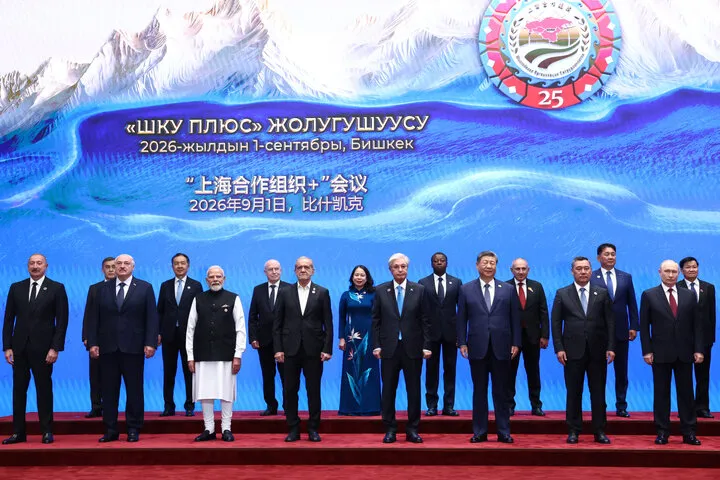
Tehran - BORNA - Leaders of member states condemned US and Israeli attacks on Iran and stressed Iran's sovereignty and territorial integrity, the resolution of disputes through political and diplomatic means, and the development of financial and trade mechanisms independent of US-dominated systems, the paper wrote.
According to Al-Binaa, Washington's bet on new sanctions against Iran was not based on the belief that the US alone could bring Iran's economy to its knees, but rather on hopes of driving a wedge between Iran and Russia and China, or convincing them that Tehran was a burden to be contained rather than a partner whose right to resist war and blockade should be defended.
The paper argued that President Donald Trump had counted on Moscow's need for a deal with Washington over Ukraine, as well as Beijing's desire to avoid a new economic confrontation ahead of the Chinese president's planned visit to Washington, believing the path was clear to turn US sanctions into an international blockade. But the SCO summit in Bishkek, the analysis said, dealt a clear political blow to that calculation.
The summit did not merely welcome Iranian President Masoud Pezeshkian and offer him a political platform, Al-Binaa noted — leaders of 10 countries, including Chinese President Xi Jinping, Russian President Vladimir Putin, Indian Prime Minister Narendra Modi and Pakistani Prime Minister Shehbaz Sharif, signed the "Bishkek Declaration."
That declaration condemned the US and Israeli attacks on Iran, describing them as violations of international law and the UN Charter and a threat to global security and stability. Member-state leaders also affirmed support for Iran's sovereignty and territorial integrity and declared that resolving disputes must occur solely through political and diplomatic channels.
The most significant part of the declaration, according to the analysis, was its opposition to "unilateral sanctions measures" inconsistent with UN and World Trade Organization rules, along with a warning about the negative consequences of such measures for the global economy. While the declaration did not name specific US sanctions packages, the paper said it rejected their international legitimacy and framed sanctions on Iran as part of a unilateral economic-pressure policy the SCO does not accept.
As a result, Al-Binaa argued, Trump failed to build an international front against Iran, instead facing a bloc representing roughly 43% of the world's population and described as the world's largest economic power.
Support for Iran's nuclear rights
A second blow to US policy, according to the analysis, came on the nuclear file. SCO leaders affirmed the right of Nuclear Non-Proliferation Treaty member states, including Iran, to research, produce and use nuclear energy for peaceful purposes, describing any effort to restrict that right as inconsistent with international law.
This, the paper said, challenged Washington's attempt to present sanctions and war as a defense of the non-proliferation regime — with the SCO effectively declaring that the issue was not Iran's exercise of its legal rights, but rather the US attempt to strip those rights away through force.
Toward independent economic mechanisms
A third development, according to Al-Binaa, was the shift among member states from political condemnation toward consideration of economic tools. The summit stressed continuing to establish the SCO's development bank, strengthening financial cooperation, developing independent settlement and payment mechanisms, and implementing an energy and economic development strategy through 2030.
Putin said the new bank should have maximum independence from financial systems tied to countries that use economic tools to pursue unilateral political goals.
This trend shows, the paper argued, that US sanctions have not distanced SCO member states from Iran — instead, they have helped build institutions that reduce Washington's ability to punish countries that cooperate with Tehran.
China and Russia
In a separate bilateral meeting between Pezeshkian and Putin, Iran's president thanked Moscow for its position during the war and sanctions, saying strategic cooperation between the two countries enables them to counter US unilateralism. Putin, for his part, expressed solidarity with the Iranian people in defending their interests and stressed the continuation of trade and economic relations between the two countries despite the war.
China's position needed no fanfare, the analysis said — Xi's signature on the Bishkek Declaration, along with Beijing's insistence on its right to protect its trade relations and continue purchasing the bulk of Iran's oil, served as a practical response to Trump's threats.
Washington knows that sanctions on Iran lose much of their effectiveness without China's participation, the paper said. China does not rely solely on US financial channels in its trade with Iran, instead using the yuan, barter arrangements, and a network of companies, tankers and small refineries that are difficult to fully sanction.
Sanctioning major Chinese banks and companies, the analysis added, would effectively mean launching an economic war with China at a time when the US is already contending with rising oil prices, climbing Treasury yields, falling stock values and approaching midterm elections — meaning the threat of sweeping secondary sanctions runs up against limits on how much Chinese retaliation Washington can absorb.
Trump's setback at the G20, Pezeshkian's win in Shanghai
Russia, the paper argued, is in no position to be asked by Trump to sacrifice Iran in exchange for vague promises on Ukraine. Moscow remains under pressure from US sanctions, while believing that Iran's collapse or surrender would mean reasserting US dominance over the Persian Gulf and Central Asia and undermining the broader multipolar-world project.
As a result, according to the analysis, US pressure has not driven a wedge between Russia and Iran — it has instead deepened cooperation between the two countries.
The SCO did not become, and did not claim to become, a military pact for entering Iran's war, the paper noted. Still, its importance in preventing the war and US sanctions from becoming an international consensus against Iran became clear. Trump left G20 meetings with disagreements that complicate implementing a blockade strategy, while Pezeshkian left the Shanghai summit with a joint declaration condemning the war, rejecting sanctions, affirming Iran's nuclear rights and paving the way for alternative financial and trade mechanisms.
In this way, the analysis concluded, the plan to isolate Iran instead exposed the isolation of US policy itself. The bet on separating Russia and China from cooperation with Iran failed, since both countries understand that this confrontation targets not only Tehran but the broader multipolar world order.
Bishkek's message to Trump, the paper said, was clear: the US can impose its own sanctions, but it can no longer call them "international sanctions" or compel the rest of the world to join them.
One notable point, according to Al-Binaa, was the absence of any reference in the declaration to the Strait of Hormuz or international shipping — issues Trump had previously described as central to any understanding with China.
End Article