Baghaei: US visa ban on Iranian president’s media team is bid to hide the truth
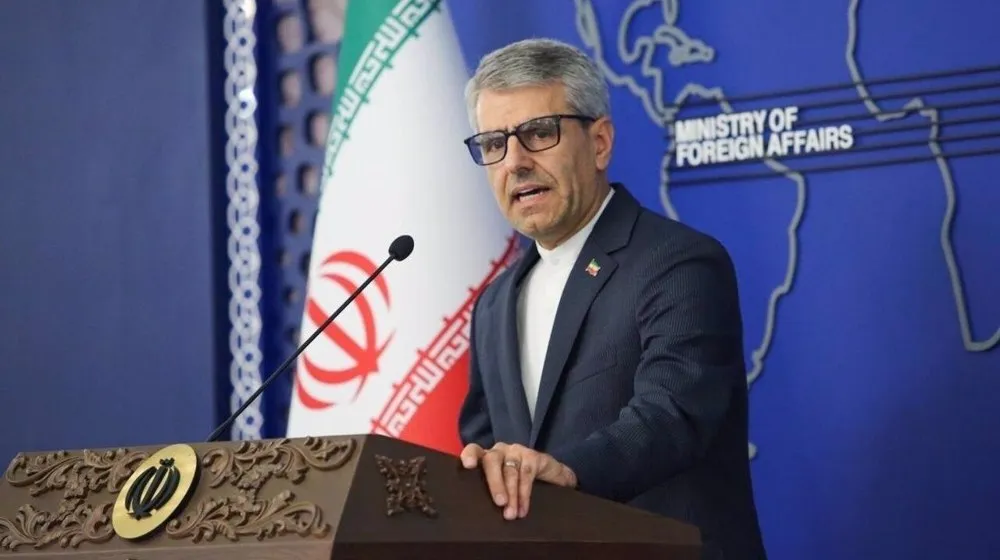
Tehran - BORNA - In a statement posted on X on Monday, Baghaei said Washington slammed its doors shut on journalists it dislikes at home and on foreign reporters whose voices it would rather silence, including the Iranian president’s communications team.
“When an administration slams its doors shut — even on American journalists it happens to dislike — and bars foreign reporters, including the Iranian president’s media team, whose voices it would rather silence, it is not managing access; it is trying to hide the truth and further its misinformation campaign by trampling on the right of access to information,” he wrote.
“A nation that once took pride in tearing down the Iron Curtain now finds itself standing behind one of its own,” he added.
The Foreign Ministry spokesman attached a historic photograph of barbed wire and guards at the Brandenburg Gate, underscoring what Tehran describes as Washington’s own wall of censorship.
The United States had refused visas to parts of Pezeshkian’s high-level delegation, including his communications team, in an unprecedented hostile move by the Trump administration.
The Iranian president is due to address the General Assembly on Wednesday and will be the highest-ranking Iranian official to enter the United States since the US-Israeli war of aggression against Iran began in February.
The visa blockade comes days after the White House barred reporters from CNN, Politico and MS NOW from its grounds and confiscated credentials over coverage the administration rejected. Baghaei tied the two decisions together, arguing that an administration unwilling to tolerate scrutiny from American journalists is even less willing to allow Iranian media to report unfiltered from New York.
The pattern is familiar. Last year, the same administration restricted Iranian diplomats’ movement in New York to a narrow perimeter around UN Headquarters, limited even routine activity, and denied visas to members of the president’s media team.
Baghaei then described the measures as “cheap” restrictions and systematic harassment designed to disrupt Iran’s diplomatic work. Iran’s UN ambassador later urged Secretary-General Antonio Guterres to act, calling the curbs a violation of US obligations under the 1947 UN Headquarters Agreement.
Tehran’s position is that the host country of the United Nations is legally bound to facilitate the presence of member-state delegations, including the media personnel required for a head of state to communicate with his public and with the world.
By locking out Pezeshkian’s press team, Washington is seeking to control the information environment around his speech and sideline meetings rather than allow independent coverage of Iran’s account of the war, sanctions, and the wider international order.
Habibollah Abbasi, director-general of public relations at the Iranian presidency, called the latest visa refusals a hostile act. Officials in Tehran have said the president will still travel and that developments from the visit will be shared with the public despite the absence of the full media contingent.
Pezeshkian is expected to leave for New York on Tuesday. His address to the General Assembly will go ahead. What Washington has tried to prevent is an Iranian media team standing in the same room to record it.
End Article