Eslami: Iran Will Not Yield to Pressure; Silence in the Face of Aggression Is a Stain on the IAEA’s History
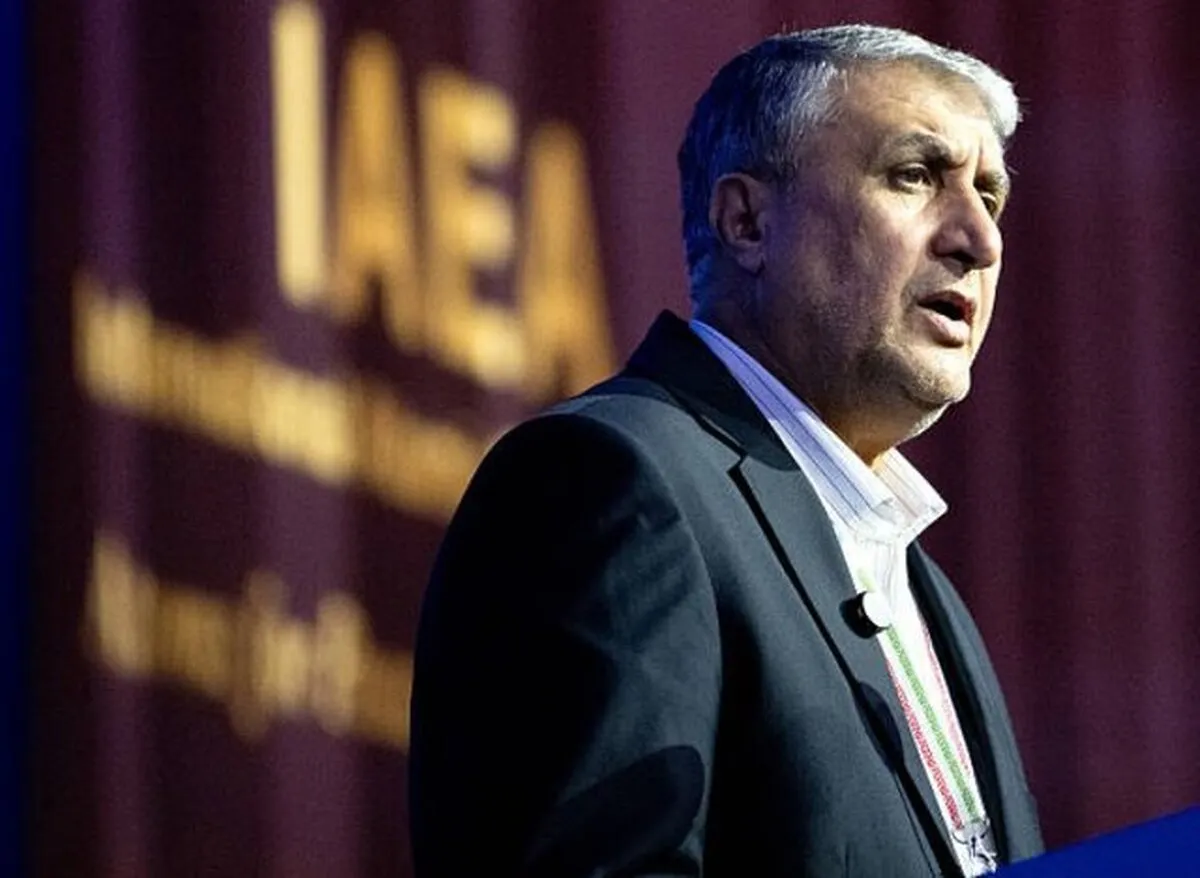
Tehran - BORNA - Speaking on Monday at the IAEA General Conference, Eslami described the recent Israeli and U.S. strikes against Iran’s nuclear facilities as a blatant violation of international law, the UN Charter, and the IAEA Statute—an unprecedented move that harms both Iran and the credibility of the Agency and the safeguards regime.
Eslami said the IAEA and the UN Security Council, under U.S. pressure, failed to react decisively, raising serious questions about the value of the safeguards system. He stressed that Iran has cooperated extensively with the IAEA and that there is no evidence of nuclear diversion, criticizing the Agency’s silence on condemning the attacks and noting that the suspension of inspections resulted directly from those military aggressions.
He reiterated that Iran remains a party to the NPT and will continue engagement with the IAEA under new arrangements that first address security concerns. Eslami also recalled Western non-compliance with the JCPOA, firmly opposed any “snapback” attempt by the E3, and called for UNSCR 2231 to terminate on schedule on 18 October 2025.
Thanking countries that stood by the UN Charter and international principles, Eslami said Iran has submitted a draft resolution condemning attacks on safeguarded facilities, fully aligned with the IAEA’s mandate, Statute and international law, and expects the General Conference to act accordingly and resist any attempt to normalize or legitimize such unlawful attacks.
Full text of Eslami’s address is as follows:
Mr. President, distinguished delegates,
The International Atomic Energy Agency stands at a very sensitive moment in history. The Nuclear Non-Proliferation Treaty (NPT) and the integrity of international law face a serious threat as a result of the aggressive actions of the Israeli regime and the United States of America.
At dawn on Friday, 13 June 2025, the Israeli regime committed a grave crime and launched a military attack against my country. This attack—carried out only hours after the Board of Governors adopted a resolution—targeted Iran’s IAEA-safeguarded nuclear facilities, and, alongside the assassination of nuclear scientists and senior military commanders with their families, resulted in the martyrdom and injury of thousands of innocent Iranian citizens and inflicted heavy material damage on the noble Iranian nation. On 22 June 2025, the United States—permanent member of the Security Council and the depository of the NPT—unlawfully joined this aggression and, in flagrant contradiction with international law, the UN Charter and the IAEA Statute, struck Iran’s safeguarded nuclear facilities, dealing severe damage to our nuclear industry.
All the world witnessed how the valiant Armed Forces of the Islamic Republic of Iran shattered the prestige of these criminals and delivered resolute, unforgettable responses to Israel and the United States—and it is abundantly clear that should they repeat such an error, they will receive even harsher responses.
Nuclear knowledge and industry in Iran will not be destroyed by military operations and terror
Iran’s enemies must know that science and technology—our nuclear knowledge and industry—are deeply rooted and cannot be erased through military operations, terror or aggression. The genocidal, child-killing Zionist regime’s criminal actions do not merely seek to destroy Iran’s nuclear facilities; they have always aimed to sabotage the path of diplomacy and peace. This regime has not joined the NPT, has obstructed the realization of a Middle East free of nuclear weapons, and continues expanding its nuclear arsenal. Regrettably, these actions—contrary to international law—take place with the support or at least the silence of some Western countries.
This unprecedented act in the history of the IAEA runs counter to Article 2(4) of the UN Charter, the prohibition of aggression under UNGA Resolution 3314 (1974), and the principles of non-intervention and respect for state sovereignty—the very foundations of the post-1945 international order. The aggressive actions of the U.S. and Israel also violated numerous resolutions of this General Conference, including GC Resolutions 443, 444, 533, Decision 13 (2009), and paragraphs 1, 3, 4 and 10 of GC Resolution 381 (1981) as well as IAEA Resolution 409. The UN Security Council Resolution 487 (1981) recognized the illegality of attacks against safeguarded nuclear facilities.
What is the value of safeguards?
What we witnessed was not only a criminal and cowardly act against Iran; it was a direct assault on the IAEA’s credibility and the integrity of its safeguards regime. Nevertheless, the Board of Governors and the UN Security Council each held two emergency meetings but—due to U.S. political pressure—failed to take a decisive stance against the perpetrators. A legitimate question therefore arises: what is the value of safeguards if facilities under safeguards can be attacked with impunity? If sincere cooperation and good-faith transparency are answered with the assassination of scientists and their innocent families, blind military strikes on residential areas and safeguarded facilities, what then is the value of transparency?
The Agency did not condemn unlawful actions against Iran
Iran’s cooperation with the IAEA has been extensive and structured. The last Director General’s report issued before the aggression (GOV/2025/25)—despite our serious reservations about its content—did not establish any violation of Iran’s safeguards obligations nor any diversion of nuclear material. The Agency explicitly confirmed there is no evidence of a nuclear weapons program in Iran. Regretfully, the Director General’s so-called comprehensive report did not even mention the 2015 “Final Assessment” and BoG Resolution GOV/2015/72, in which the Board legally and explicitly closed all past issues. It is as if the Agency ignored that resolution entirely—even though, paradoxically, the Agency cited it in a letter to Iran regarding verification activities. If this is not unprofessional and biased, then what is it?
Despite our formal correspondence and recorded request—submitted as INFCIRC/1301—for an unequivocal condemnation of attacks against Iran’s safeguarded facilities, the Agency failed to condemn these unlawful acts and failed to protect the integrity of its safeguards system or uphold its statutory mission. This silence and inaction will remain a stain on the IAEA’s history.
Iran remains an NPT party
The Director General’s recent report confirms that, as a direct consequence of the aggressive actions by the United States and the Israeli regime against Iran’s safeguarded nuclear facilities, inspections and verification activities were suspended. It must therefore be emphasized that the root cause of this suspension is the unlawful use of force by the U.S. and Israel against Iran’s nuclear facilities. In view of national security considerations and in response to the dramatically altered security environment created by these military aggressions, our Parliament approved the suspension of activities related to IAEA safeguards. This does not mean withdrawal from the NPT. Iran remains a State Party, and continued cooperation with the Agency will proceed—after Iran’s public and facility security concerns are addressed—through new arrangements.
One must acknowledge that what happened to my country is unprecedented in safeguards history. The Comprehensive Safeguards Agreement contains no provisions on how to proceed under acute crisis conditions arising from aggression and ongoing threats to nuclear sites and facilities. A new definition of safeguards implementation under such conditions must be agreed—especially to ensure the safety and security of nuclear facilities and personnel. The recent understanding reached between the Agency and Iran is designed specifically to address the exceptional and unprecedented conditions created by these aggressions.
Snapback is null and without legal effect
The JCPOA could have been a hallmark of diplomatic success for the international community. Iran fully implemented the agreement for a year—and even after the U.S. unilateral withdrawal and unlawful re-imposition of sanctions—as confirmed by 15 consecutive DG reports. The Western parties never fulfilled their obligations. Under international law, a party in material non-performance cannot demand performance from the other side of the same agreement. Today, as we approach JCPOA “Termination Day” on 18 October 2025, we again witness attempts—including the unlawful and baseless activation of the so-called snapback mechanism by the three European countries. This substantive and procedural abuse of multilateral mechanisms is not only illegal; it mocks the rule of law and the text of UNSCR 2231 and the JCPOA. The E3—who failed to meet their commitments and remain indebted to the Iranian nation—cannot escape their culpability and then present demands of Iran. They are notorious for non-compliance and malfeasance. Any attempt by the E3 to restore Security Council resolutions that 2231 had terminated is null and without legal effect. UNSCR 2231 must expire exactly on schedule on 18 October 2025.
Iran will not yield to pressure and will not abandon its inalienable, lawful rights under the NPT and international law. We call on the international community to oppose these glaring contradictions and to uphold the principles of sovereignty, non-use of force, and peaceful settlement of disputes. We ask the international community to demonstrate that no one is above the law. While Iran believes in diplomatic and political solutions, it will not submit to political, psychological, or military pressure. The noble Iranian nation is determined and united in securing its rights.
Iran is a wronged claimant, not a culpable debtor
We extend our sincere appreciation to those members who, defending the principles of the UN Charter, stood up to this unprecedented challenge and placed themselves on the right side of history. We cannot overlook the aggressive actions of certain Security Council members that have dealt a severe blow to the non-proliferation regime’s credibility and cast a dark shadow over the Agency’s future.
In this crisis, Iran is a wronged claimant—not a culpable debtor. The path forward is clear: condemn the attacks on Iran’s safeguarded nuclear facilities and restore respect for international law. Address Iran’s legitimate security concerns and restore the IAEA’s integrity and impartiality. Anything less would be a betrayal of the UN Charter and the IAEA Statute and would create a dangerous precedent—normalizing lawlessness and eroding the very foundations upon which the international order rests.
Iran’s draft resolution is grounded in protecting the Agency’s mission
In this context, Iran has submitted a draft resolution intended to serve the international community. It is fully grounded in protecting the IAEA’s mission, in full conformity with the Statute, and in adherence to the basic principles of international law and the UN Charter. In light of the professional and principled positions taken by many independent member states, we expect the IAEA General Conference—representing the collective will of all member states—to take appropriate action in response to these unlawful attacks on safeguarded nuclear facilities. It is the Conference’s responsibility to resist any attempt to normalize or even legitimize such illegal attacks and to firmly uphold the shared, foundational principles of the international community as well as the Agency’s statutory mission. The recent threats by the United States, political pressure on countries, and the instrumentalization of the IAEA—including through pressure on the Agency’s budget—must be opposed and condemned by member states.
End Article