Shahriar: Iran’s Cultural Icon Who Spoke to Every Heart
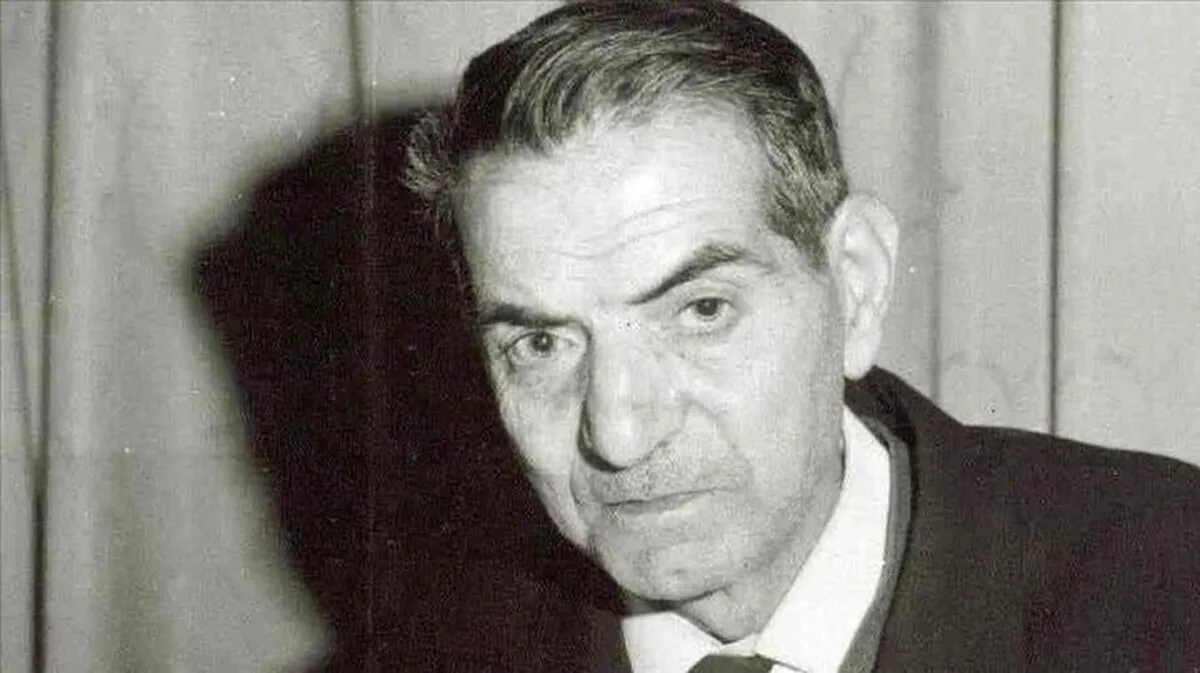
Tehran - BORNA - On September 18, Iranians commemorate the life and legacy of Seyyed Mohammad-Hossein Behjat Tabrizi, better known by his pen name Shahriar (1906–1988), one of the brightest stars of modern Persian and Azerbaijani literature. The day is officially recognized as the National Day of Persian Poetry and Literature, underscoring the poet’s unique role in shaping Iran’s literary and cultural identity.
A Life Rooted in Poetry
Born on January 2, 1906, near Tabriz in East Azarbaijan Province, Shahriar revealed his poetic gift at a young age. By his teenage years, he was already publishing verses in Tabriz newspapers. Initially writing under his birth name, Behjat, he later adopted the pen name Shahriar, symbolizing both grandeur and nobility.
His early talent quickly attracted attention. In 1931, he published his first collection, Divan-e Shahriar, in Tehran. The work drew acclaim from some of Iran’s most respected literary minds, including Mohammad Taqi Bahar, Saeed Nafisi, and Pejman Bakhtiari. With their endorsements, Shahriar was ushered into Iran’s literary elite at an early stage.
Master of the Ghazal
Although Shahriar wrote in a wide variety of poetic forms—odes, elegies, quatrains, and couplets—his reputation rests most firmly on his mastery of the ghazal. Deeply influenced by Hafez, he revitalized this classical form for the modern era. His ghazals combined lyrical beauty with accessible language, allowing them to resonate not only with scholars and intellectuals but also with the general public.
One reason for Shahriar’s enduring appeal was his use of colloquial, everyday expressions. By blending the rhythm of classical poetry with the language of ordinary life, he bridged the gap between high culture and popular sentiment. His verses reached bazaars, schools, universities, and homes alike.
Heydar Babaya Salam: A Landmark in Azerbaijani Literature
Shahriar’s most famous work, Heydar Babaya Salam, written in Azerbaijani Turkish, stands as a cultural landmark. The poem is a nostalgic tribute to Mount Heydar Baba near his childhood village, reflecting memories of rural life, family, and the innocence of youth.
Translated into more than thirty languages and adapted for theatrical performance, Heydar Babaya Salam is widely considered one of the greatest works in Azerbaijani literature. Its popularity in Iran, Azerbaijan, Turkey, and beyond reflects Shahriar’s role as both a Persian national poet and a regional cultural icon.
Romantic and Mystical Voices
Shahriar’s poetry cannot be confined to a single theme. Alongside mystical and spiritual works, he produced some of the most romantic verses in modern Persian poetry. His celebrated ghazal beginning with “Amadi janam be ghorbanat, vali hala chera” (You came, my life for you—but why now, when it is too late?) remains a staple of Persian literature, blending passion with lament, devotion with regret.
In these love poems, Shahriar spoke with emotional clarity, often adopting a conversational tone. Unlike many of his predecessors, his romantic voice was not veiled in allegory but direct, heartfelt, and universally relatable.
Shahriar in the National Imagination
Shahriar’s place in Iranian culture goes beyond literature. His passing on September 18, 1988, marked not just the death of a poet but the departure of a cultural figure who had become part of the national consciousness. His burial in Tabriz’s Maqbaratoshoara (Mausoleum of Poets)—the final resting place of nearly 400 poets, mystics, and scholars—cemented his place among the immortals of Persian cultural history.
The Iranian parliament later designated the anniversary of his death as the National Day of Persian Poetry and Literature, ensuring that his name would forever be tied to the country’s literary heritage.
Voices of Recognition
In 2006, on the centenary of his birth, Iran’s Supreme Leader Ayatollah Seyyed Ali Khamenei described Shahriar as a poet whose works embodied both wisdom and national pride. He stressed that honoring Shahriar was “in fact honoring Persian poetry itself,” highlighting the poet’s dual role as both a cultural figure and a symbol of national identity.
Literary critics often note that Shahriar’s poetry captured the contradictions of 20th-century Iran: the longing for tradition amid rapid modernization, the tension between Persian and Azerbaijani identities, and the struggle between spirituality and worldly love.
International Reach
Shahriar’s influence transcends Iran’s borders. His works have been translated into dozens of languages, from English and Russian to Arabic, Turkish, and Chinese. In Azerbaijan and Turkey, Heydar Babaya Salam remains a cultural touchstone, studied in schools and recited at cultural events.
In academic circles across Europe and Asia, Shahriar’s poetry is analyzed as a bridge between classical Persian verse and the demands of modern literature. His ability to combine tradition with innovation has made him a case study in comparative literature courses worldwide.
A Symbol of Unity
For many Iranians, Shahriar symbolizes unity across linguistic and cultural lines. Writing in both Persian and Azerbaijani, he showed how literature can transcend ethnic and linguistic boundaries. His poetry created a shared cultural space in which Iranians of diverse backgrounds could find common ground.
This dual identity—Persian and Azerbaijani—has given Shahriar a special place in Iran’s multicultural narrative, making him a figure who speaks not only to Persians but also to Azerbaijani Turks and other communities.
Shahriar’s Legacy Today
Decades after his death, Shahriar’s works continue to inspire musicians, filmmakers, and visual artists. His poems have been set to music, recited in films, and celebrated in exhibitions. Modern Iranian singers frequently adapt his ghazals into contemporary ballads, keeping his voice alive for younger generations.
At universities, his poetry is still taught as a gateway to modern Persian literature, while cultural festivals across Iran and the region honor his contributions annually. The enduring popularity of Heydar Babaya Salam shows how poetry can outlive politics, connecting generations through shared memory and sentiment.
Shahriar’s Eternal Message
Whether speaking of lost love, spiritual longing, or the innocence of childhood, Shahriar’s poetry continues to carry a message of human universality. His works remind readers that poetry, at its best, is not just literature—it is memory, identity, and soul.
For Iranians, Shahriar is more than a poet. He is a cultural icon who spoke to every heart, whose legacy endures in classrooms, libraries, and households across the country. And for the wider world, he remains one of the voices that testify to the richness and depth of Iran’s literary tradition.
End Article