Iran Becomes the Third Global Power in Gas Turbine Refractory Brick Production
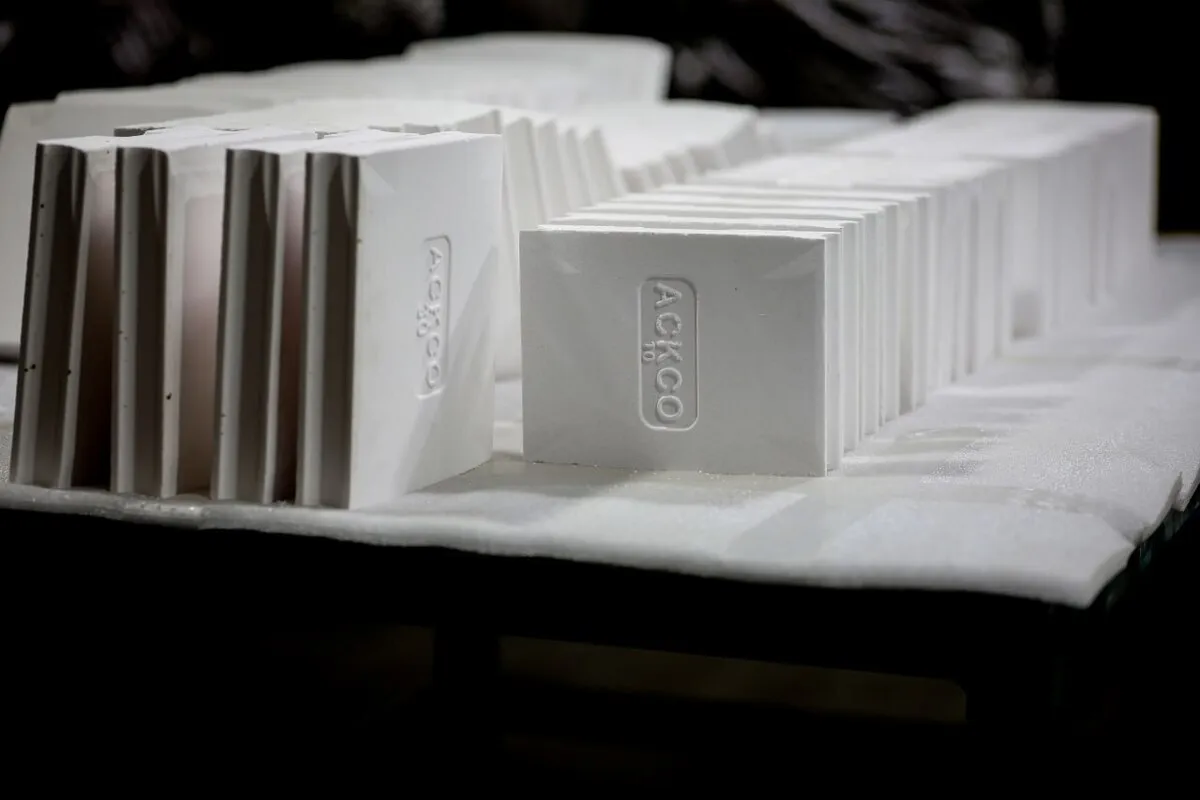
Tehran – BORNA – In recent years, Iran’s power plant industry has reached a critical juncture in its history a point where, alongside rising electricity demand and increasing pressures from international sanctions, the need for technological self-sufficiency is felt more than ever. Amid these challenges, one serious issue is the failure and erosion of the refractory bricks in the combustion chambers of gas turbines small yet vital components that play a decisive role in the safety and stability of the country’s power grid. The failure of a single brick can result in contact with turbine blades, a complete shutdown of the unit, and damages of up to 900 billion, an amount equivalent to the construction cost of a medium-sized power plant.
In this context, an Iranian knowledge-based company, relying on domestic expertise, reverse engineering, and nanoceramic technology, has successfully developed the production process of specialized refractory bricks for gas turbines entirely within the country. These bricks are manufactured using an innovative supercooling method and liquid nitrogen at minus 196 degrees Celsius a process that imparts a sacrificial property, enabling the bricks to crumble into powder instead of breaking and flying off upon impact, thereby preventing damage to turbine blades worth hundreds of billions.
This achievement has placed Iran alongside Germany and the United States as the third country possessing the technical knowledge to produce sacrificial refractory bricks for gas turbines a success that not only prevents the annual outflow of millions of dollars but also paves the way for exporting knowledge-based power industry products.
This article is based on a technological tour organized by the Special Headquarters for the Development of Nanotechnology to Qom Province on 5 October 2025, during which a group of technology reporters closely observed the design, production, and characteristics of this product. The following sections examine the technical details of this technology, its development path, the engineering features of the sacrificial nanobricks, challenges in the power industry, and the export outlook of this national achievement.
Localization of Power Plant Refractory Bricks From Concept to Commercialization
Mohammad Hosseinzadeh, CEO of the knowledge-based company producing these bricks, highlighted during a visit by reporters to the production lines in Qom Province that he has 27 years of experience in the ceramics and refractory industry. He said: My main expertise lies in refractories and ceramics. I have published more than 25 articles in domestic and international journals, participated in peer review of articles and patents, and am a member of about ten international professional associations.
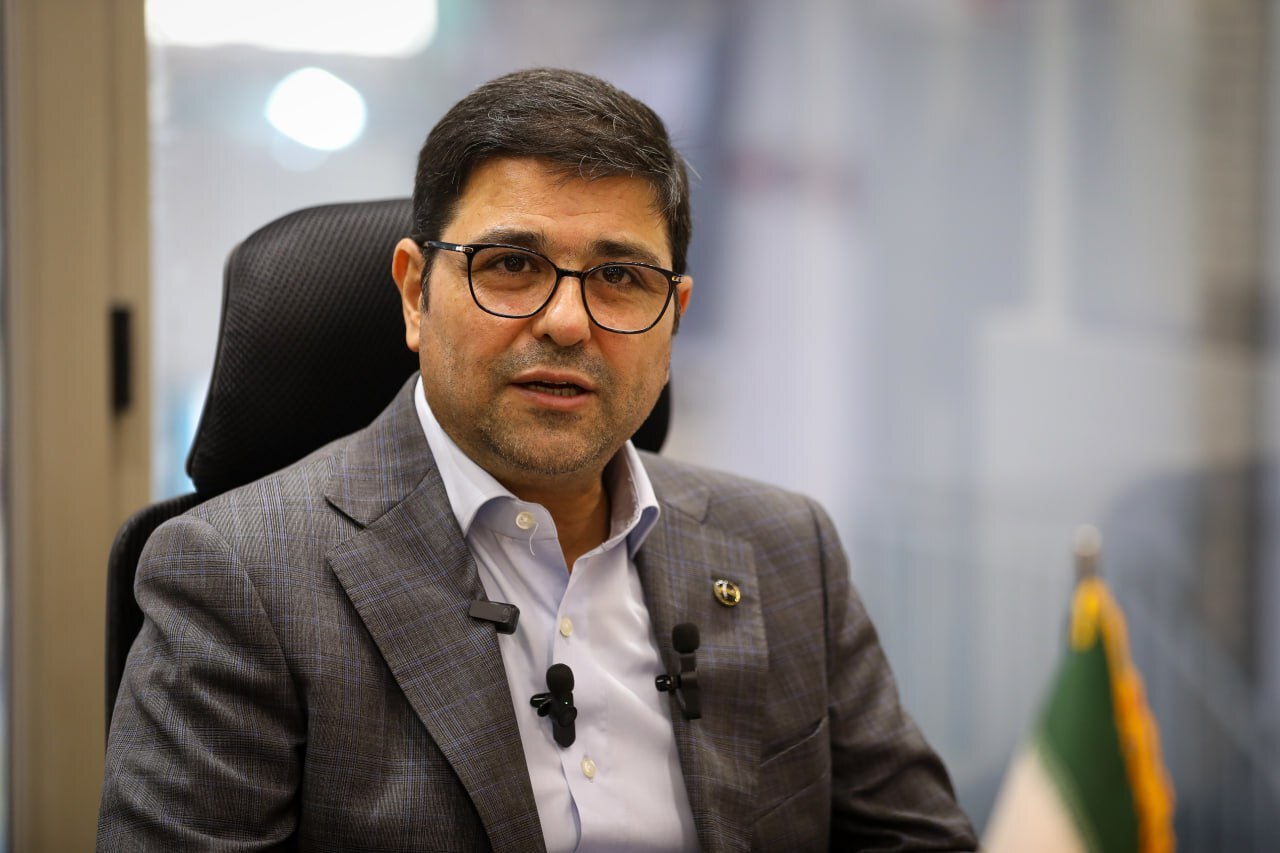
Referring to his managerial experience, he added: Before establishing this company, I worked in a facility in Yazd, which in 1997 was recognized as a national exemplary research center in the non-metallic minerals industry. Subsequently, we took over a facility in Borujen that was about to be sold, and over eight years, increased the company’s net profit from 7 billion tomans in 2004 to approximately 60 billion tomans in 2013. Development projects aiming to expand production capacity up to 1,500 billion tomans were then initiated.
Launch of the National Localization Project in Collaboration with the Power Development Organization
According to Hosseinzadeh in 2009, the Iran Power Development Organization defined a national project to localize one of the key and consumable components of gas turbines, which had become unavailable due to sanctions.
He said: At that time, refractory bricks for turbines were supplied through intermediaries at very high prices, creating serious dependency on foreign companies. That is why we entered this field, and based on our technical experience and research results, we won the national localization project.
Unique Production Technology From Furnace to Freezer
Hosseinzadeh explained the technical innovation behind the product: We acquired the technical knowledge for producing these bricks through reverse engineering of foreign samples. While conventional bricks are produced in high-temperature kilns, our process is based on extreme cooling. In fact, the bricks are manufactured in freezers at around minus 70 degrees Celsius, and at one stage, we use liquid nitrogen at minus 196 degrees.
He noted that this method creates a unique structure in the brick. During freezing, the raw materials undergo a phenomenon called gelation, which bonds the particles in a network, producing a final product with a very dense, strong, and sacrificial structure.
Sacrificial Property: Protecting Billion Blades
The technologist explained the bricks’ performance: Upon impact, the produced bricks turn into powder instead of breaking into large pieces. This property, which we call sacrificial, is similar to tempered glass, which shatters into small particles to prevent cuts. In turbines, if a brick dislodges and hits the blades, the blades could be taken out of service. But with the sacrificial property, the brick powders before causing damage, keeping the blades intact.
He emphasized: There are over 240 active gas turbines in the country, generating a total of more than 35,000 megawatts. Any damage to turbine blades can result in unit shutdowns and losses of up to 900 billion Tomans yearly (more than 10 million USD). Therefore, the sacrificial property of these bricks is vital for grid safety.
Technical Specifications and Engineering Features
The CEO noted that the bricks have extraordinary technical properties:
• Heat tolerance up to 1,800°C
• 16% porosity
• Density of 2.9–3 g/cm³
• Mechanical strength of 12 MPa
• High corrosion resistance in acidic and alkaline environments
• Thermal shock tolerance over 40 cycles (standard test from 1,000°C to cold water)
• Service life exceeding 33,000 operating hours (approximately five years)
The bricks maintain highly precise dimensional tolerances, with a maximum error of 0.2 mm. All angles, grooves, and curves are measured using precise CMM tools.
Nanoceramic Structure and Role of Nanoparticles
The bricks incorporate alumina and silica nanoparticles, enhancing cohesion, uniformity, and thermal shock resistance. Precise particle sizing and controlled homogenization on a vibrating table are critical process steps. After casting the material into molds and securing them, the molds are transferred to a freezing tunnel for the gelation process. Hosseinzadeh stated that this step is the most important in ensuring the final brick quality.
Billion Losses from a Single Component Failure
Gas turbine blades are among the most sensitive and expensive power plant components. Hosseinzadeh explained: Each row of turbine blades is worth around 300 billion tomans. If refractory bricks fail and hit the blades, several rows can be destroyed sequentially, causing total damages of up to 900 billion tomans. Beyond financial losses, turbine downtime for months and safety hazards are additional consequences.
He added: Currently, over 70 refractory brick manufacturers operate in the country, but almost none produce turbine bricks due to the high technical sensitivity and responsibility. A single mistake can cause turbine explosion or shutdown.
Importance of Refractories in the Power Industry
Power plant or refractory bricks are vital in steel, petrochemical, refinery, and especially thermal power plants. Unlike ordinary construction bricks, they are designed to withstand high temperatures, thermal shocks, and corrosion. Proper performance directly affects plant efficiency, fuel consumption, and emergency shutdown prevention.
Each large power plant requires thousands of refractory bricks annually, with a lifespan of two to five years depending on the composition. Domestic capability in production and repair significantly reduces dependency and prevents currency outflow.
Fuel Challenges and Refractory Wear
One primary factor in brick erosion is fuel type. Ash and sulfur compounds from fossil fuel combustion can form low-melting-point materials that damage brick surfaces. Compounds like vanadium oxide, iron oxide, and potassium oxide in diesel cause undesirable chemical reactions and reduce refractory lifespan. Therefore, precise fuel quality control and use of resistant materials are essential in brick design.
Expanding Iranian Technology to Global Markets
Regarding exports, Hosseinzadeh said: Some of these bricks have been installed in domestic power plants with successful testing. Samples have also been sent to Russia. After the Russia-Ukraine war, demand for these bricks in Russian power plants increased. Although sanctions and ownership of most Russian plants by Jewish companies complicated direct contact, negotiations were carried out through European intermediaries.
He added: Currently, no official exports have occurred, but test samples have been sent free of charge. Formal contracts could generate significant foreign revenue. Negotiations are also underway with South Africa, Iraq, Oman, and other Gulf countries.
Iran The Third Country Possessing Production Knowledge
Hosseinzadeh stated that currently only three companies worldwide have this technical knowledge: Siemens (Germany), General Electric (USA), and the Iranian knowledge based company. Previously fully controlled by Western companies, Iran has now joined this list relying on domestic knowledge and research.
Improving Turbine Efficiency and Environmental Challenges
He explained: There are approximately 240 Class E turbines and some Class F turbines in the country. Electricity production efficiency in Class E turbines is around 33%, and in Class F up to 39%. Combined cycle adds about 10% efficiency. Even Siemens turbines do not exceed 35% efficiency, with the remainder lost as heat, contributing significantly to greenhouse gas emissions and air pollution.
Step-by-Step Process to Final Technology
The turbine refractory brick production process involves multiple precise steps:
• Preparing raw materials with different particle sizes and adding alumina and silica nanoparticles.
• Casting materials into molds with complex geometries.
• Homogenization on a vibrating table for uniform particle distribution.
• Transferring molds to a freezing tunnel containing liquid nitrogen.
• Gelation to create a cohesive chain-like structure.
• Thermal shock, corrosion, and dimensional testing in international labs.
• Approval from Niroo Research Institute and Tavanir, and registration in Tavanir’s vendor list for official power plant use.
These bricks are now installed in several plants, including Damavand, Yazd, and Isin, with positive technical and operational feedback.
A Milestone in Iran’s Power Industry
The production of nanostructured refractory bricks using supercooling technology marks a turning point in Iran’s power plant industry. This achievement eliminates decades-long dependency on strategic imports and demonstrates that domestic technical knowledge, with targeted support, can replace proprietary Western technologies.
By preventing hundreds of billions damage to turbines and enhancing grid reliability, this technology exemplifies the realization of a knowledge-based, resilient industry.
End Article