Iran to Build Its First Fully Electric Crew Boat / Construction of Small and Medium Vessels Becomes the New Maritime Priority
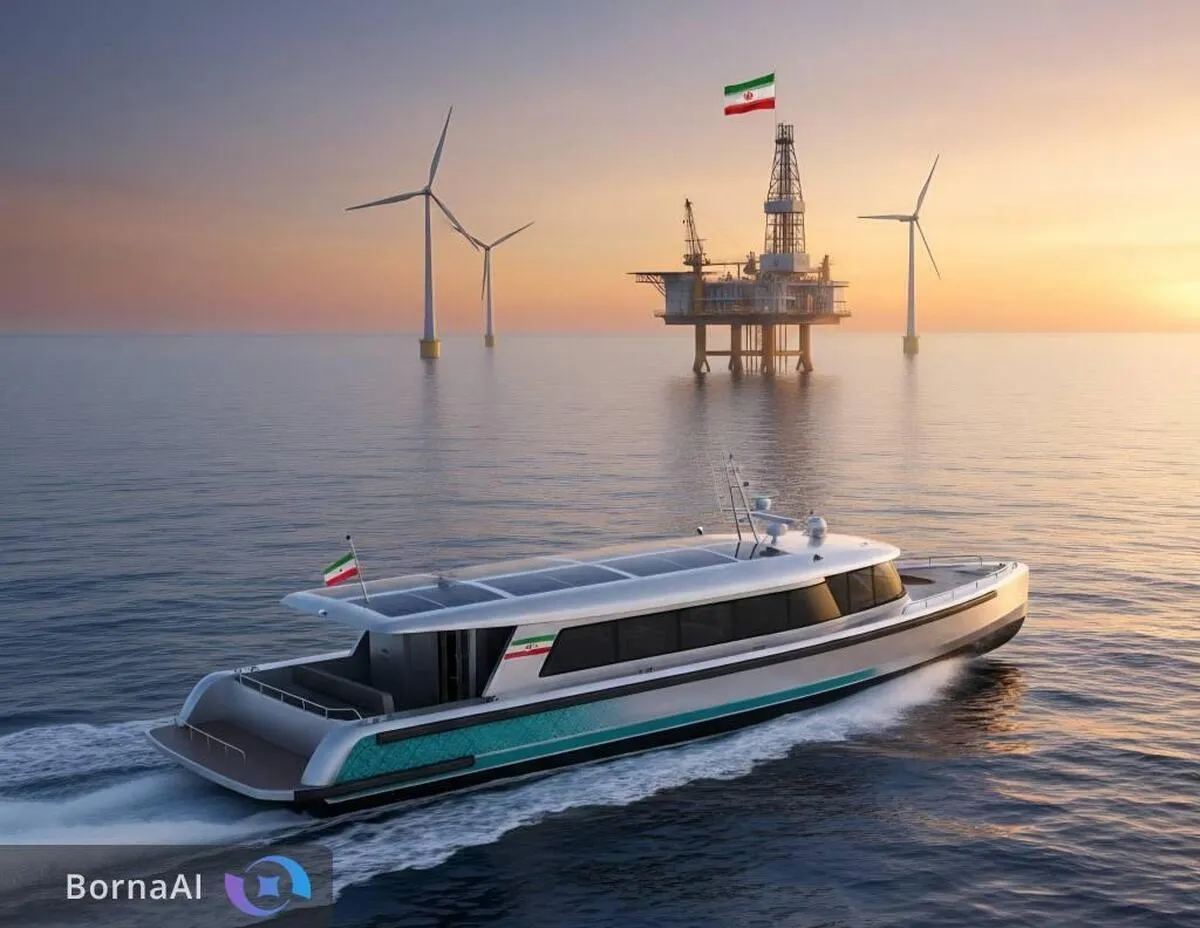
Tehran – BORNA – In recent decades, the global marine industry has entered an unprecedented era of technological innovation, in which clean fuels, electric propulsion systems, smart vessels, and lightweight, energy efficient designs are recognized as the main drivers of transformation. Among these a group of vessels known as Crew Boats play a key role in operational support for marine industries. With the expansion of offshore activities, increased demand for fast and safe transportation of personnel and the growth of the oil, gas, and renewable energy sectors, these vessels have gained strategic importance.
Given the vast waters of Iran's southern and northern regions, the needs of its offshore oil and gas industry, the development of ports, and the growth of knowledge based companies, Iran has also entered a stage where the production of such vessels especially electric and energy efficient versions is considered a strategic necessity.
In this article, with drawing on the explanations of Mehdi Khorasanchi, Secretary of the National Program for the Development of a Maritime Economy at the Vice Presidency for Science and Technology and by expanding the technical, economic, and global dimensions of the topic, we examine the importance of producing electric Crew Boats and the international landscape of this industry.
Iran’s Shipbuilding Industry and the Priority of Building Small and Medium-Sized Vessels
In an interview with Borna’s tech reporter, Mehdi Khorasanchi explains that the main focus of the National Program for the Development of a Maritime Economy is directing the country’s shipbuilding industry toward the construction of small and medium sized vessels. This is not only an operational decision but also an economic and industrial strategy.
He added that building ocean going ships is not a suitable path for Iran because this field requires an extensive chain of manufacturers, complex technologies and stable markets. Issues such as the need for massive engines with 18,000 horsepower of which only two to three companies in the world can produce show that entering this arena is not only difficult for Iran but also economically unjustifiable.
In contrast, Iran has a large market for small vessels. According to official statistics in the past decade alone around 10,000 engines in the range of 600 to 1,400 horsepower have been imported into the country indicating the real volume of domestic demand. These numbers prove that focusing on small and medium sized vessels is not only necessary but also economically logical.
Global Trends in Clean Fuels and the Development of Electric Vessels
Global developments show that the next generation of vessels is moving toward clean fuels, electric propulsion systems, and low carbon technologies.
While referring to this shift Khorasanchi states that in 2023 the share of LNG powered vessels in the world fleet was only five percent but their share in the global orderbook has reached 35 percent. These rapid changes demonstrate that the global marine industry is moving decisively toward alternative fuels.
He adds that during the same period discussions and planning for electric vessels have intensified globally, and several countries including the United States have launched serious projects for the construction of large tonnage electric vessels (including an 1,800-ton example).
This global trend shows that electric vessels are not only a future oriented technology but also an environmental and economic necessity. Reduced emissions, lower maintenance costs, compliance with strict international regulations and suitability for offshore operations are among the reasons the global market is heading in this direction.
What Is a Crew Boat and What Role Does It Play in the Marine Industry?
A Crew Boat is designed for transporting staff, engineers, technicians and operational personnel to oil platforms, offshore bases, operational ships and work sites at sea. These vessels are among the most vital support tools in the marine industry and typically feature high speed, agility, advanced safety systems, suitable capacity and optimized fuel consumption.
The main functions of Crew Boats include:
- Rapid transfer of personnel
- Time is crucial in offshore operations. Crew Boats enable fast and safe transfer of personnel.
- Light logistical support
- Besides personnel, these vessels carry a portion of light equipment, spare parts and essential tools.
- Emergency operations
- Some Crew Boats are equipped with rescue, assistance and relief systems.
- Transfer between ships and platforms
- For short to medium distance operations, Crew Boats are the most practical option.
Countries Producing Crew Boats Worldwide
Crew Boats are manufactured in many countries but several nations dominate this industry and are recognized as global leaders:
• United States: One of the largest producers of Crew Boats, especially for the oil and gas industry in the Gulf of Mexico. American companies have also become active in electric and hybrid designs.
• Norway: A pioneer in clean, hybrid, and electric vessels, particularly for the offshore renewable energy sector and wind farms.
• Singapore: A global hub for shipyards specializing in small and medium sized vessels. Many Crew Boats operating in the Middle East are made in Singapore.
• China: The largest producer of small and medium sized vessels in the world, known for large scale production and competitive costs.
• Netherlands and Turkey: Home to private companies actively building light, fast, and operational vessels.
• UAE and Qatar: Both producers and buyers of Crew Boats with large offshore projects.
This global map shows that Crew Boat manufacturing is a broad, dynamic and competitive industry; however electric versions are still in the development and commercialization phase and only a limited number of manufacturers have entered this field.
Why Does Iran Need Electric Crew Boats?
With access to the Caspian Sea, the Persian Gulf, the Sea of Oman and with numerous oil platforms and marine industries Iran has a significant need for crew transfer vessels.
But why electric?
• Lower maintenance and repair costs: Electric motors require less maintenance than diesel engines.
• Compliance with international environmental regulations: Meeting emission standards is essential for operating in international waters.
• Technological independence: Iran lacks the capacity to manufacture very large diesel engines but it is highly capable in electric motor technologies.
• Faster market entry: Electric Crew Boats can reach commercialization within a few years by relying on domestic knowledge based companies.
• Competitive advantage: The first Iranian electric Crew Boat could become a strategic and competitive product for regional markets.
Iran’s Capabilities in Producing Electric Propulsion Systems
Khorasanchi emphasizes that Iran has notable capabilities in producing industrial electric motors, especially for the oil and gas sector. Although these motors are not marine grade, knowledge based companies can standardize electric propulsion systems for marine conditions by applying specialized modifications. He gives an example: one of Company in Iran marine-adapted a diesel bus engine; therefore, the same process can be done for electric motors. Environmental engineering considering high humidity, salinity, impact, vibration, marine standards, and electrical protection is essential in this adaptation.
The First Iranian Electric Crew Boat Project
According to Khorasanchi, the design and construction program for the first Iranian electric Crew Boat has begun and this vessel is intended to be the first product designed and built specifically for marine use. The project is advancing in close cooperation with domestic knowledge based companies and under the umbrella of the National Program for the Development of a Maritime Economy.
Its features include:
• Full use of electric propulsion
• Full localization of the mechanism
• Application in marine and offshore industries
• Potential for commercialization and mass production
• Use of domestic companies’ experience in manufacturing industrial motors
He states that the project was launched a few months ago in 2025 (1404 in the Iranian calendar) and has now completed the process of receiving tax credit approval. This approval was issued through the tanker tax credit mechanism, which facilitates product development. It is hoped that the project will soon enter the construction phase and later commercialization.
Structural Transformations in the Global Marine Industry
Global structural changes in the marine industry particularly in the three areas of energy transition, emissions reduction and operational efficiency have reached a stage where participation without modern technology is practically impossible. In this landscape leading countries have distanced themselves from heavy diesel propulsion systems and moved toward electric, hybrid, and LNG powered systems to prepare for new global market requirements. The sudden rise in the share of clean vessels in the global orderbook indicates a paradigm shift that Iran’s marine industry must inevitably align with.
The focus of the National Program for the Development of a Maritime Economy on small and medium sized vessels is an accurate response, grounded in the industrial realities of the country. Building ocean-going ships requires a complex chain of high level technologies, stable markets and the capacity to produce ultra heavy engines a domain where none of the necessary components currently make practical or economic sense for Iran. By contrast, the large domestic market for vessels with 600 to 1,400 horsepower, the ability to produce electric motors for the oil and gas industry, and the active presence of knowledge based companies constitute a genuine competitive advantage.
The electric Crew Boat project marks the first official effort to enter the field of fully electric, domestically developed vessels. The significance of this project goes beyond building a new vessel; it signifies the beginning of an industrial empowerment phase that could shape the future pattern of clean vessel design and construction in Iran. This product which employs fully marine standardized electric propulsion for the first time can reduce the technological gap between Iran and the global market and integrate the country into the chain of international innovation.
At the macro level, this project represents a strategic step toward realizing a maritime based economy an economy that cannot compete in regional and international markets without agile, efficient, standardized, and technologically advanced vessels. By developing such vessels, Iran can not only reduce its dependence on imported diesel engines but also introduce a marine high tech product to the regional market for the first time. If properly supported, this path can lay the foundation for a new generation of clean, smart and competitive vessels in Iran and enhance the country’s position in the regional marine ecosystem.
End Article