Hegseth Under Fire After AP Reports Pentagon Knew of Survivors in Deadly Caribbean Attack
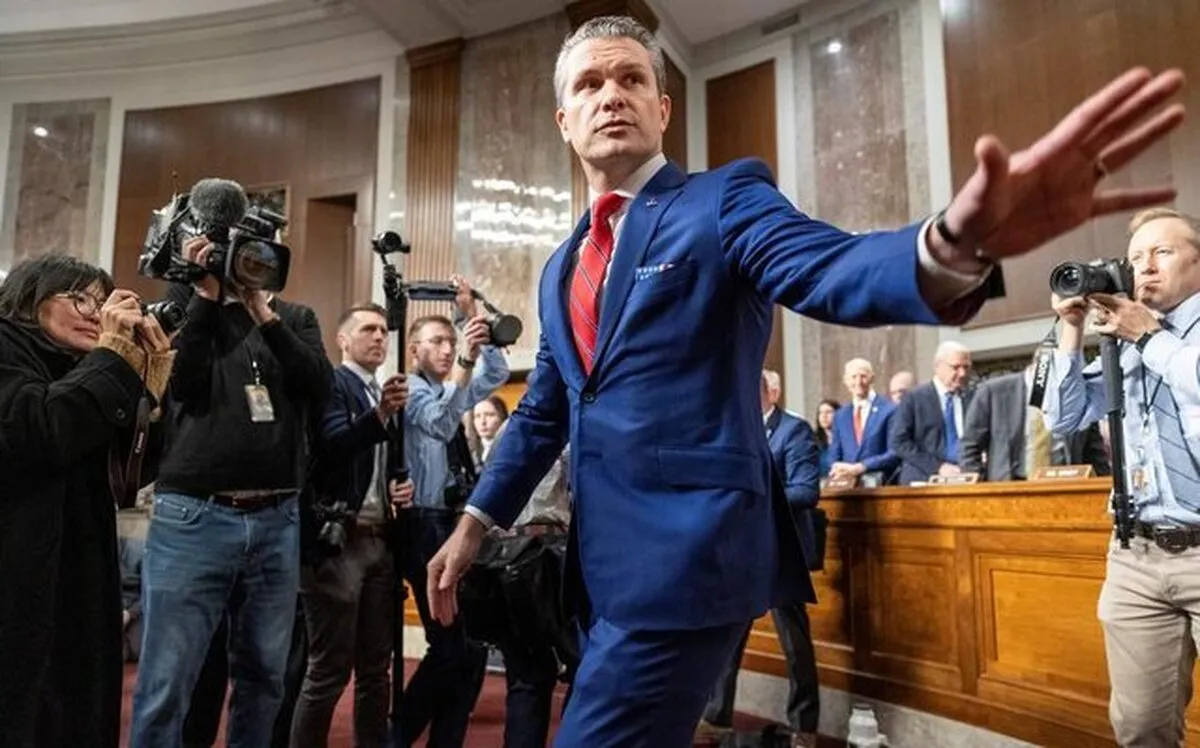
Tehran - BORNA - Two individuals familiar with the matter stated that the Pentagon knew survivors remained after a September attack on a suspected drug smuggling boat in the Caribbean Sea, yet the U.S. military still proceeded with a secondary attack.
The sources, who spoke to the Associated Press (AP) on Wednesday on condition of anonymity, indicated that the reason for the secondary strike was that it was deemed "necessary" to sink the boat. The Trump administration maintains that all 11 people aboard the vessel were killed.
One of the sources noted that what remains unclear is who ordered the strikes and whether U.S. Secretary of War Pete Hegseth was involved. These details are gaining urgency as lawmakers initiate an investigation to determine if the U.S. acted lawfully during its military operation.
These questions are expected to be raised on Thursday during a classified Congressional briefing with Admiral Frank Mitch Bradley, the commander the Trump administration says ordered the secondary strike.
The Pentagon did not respond to a request for comment on Wednesday regarding the newly reported details about the secondary September attack.
Legal Scrutiny and Justification
Hegseth is under increased scrutiny for the Defense Department's strikes against drug traffickers in the Caribbean and Eastern Pacific, particularly the secondary attack that allegedly killed survivors. Some legal experts and lawmakers argue that the strike violated both peacetime laws and the laws governing armed conflict.
Pete Hegseth has defended the deadly secondary attack as having occurred in the "fog of war," and claimed at a White House Cabinet meeting this week that he did not see any survivors but also "was not present for the rest of the mission."
The U.S. Secretary of War has also maintained that Admiral Bradley, as the admiral in charge, "made the right decision" in ordering the second attack and "had full authority to do it."
On Wednesday, U.S. President Donald Trump was asked whether he would release the video of the secondary strike, as requested by prominent Democratic lawmakers. He told reporters: "I don't know what they have, but whatever they have, we'll certainly release it. No problem."
The Trump administration claims the U.S. is in "armed conflict" with drug cartels, even though Congress has not passed any authorization for the use of military force in the region.
Human Rights Complaint and Congressional Inquiry
The late September attack has already resulted in a formal complaint filed with the Inter-American Human Rights Commission by the family of a Colombian man, arguing that his death constituted an extrajudicial killing. The lawsuit filed by the family of Alejandro Carranza claims the U.S. military bombed his fishing boat on September 15, violating human rights conventions.
The subsequent attack on September 2 was the first vessel struck in what the Trump administration calls a counter-narcotics campaign that has since grown to more than 20 declared attacks with over 80 deaths.
Information regarding the secondary attack was not provided to lawmakers during a classified briefing held in the days following the incident in September. One source indicated that the information was later disclosed, and the explanation provided by the department has generally not satisfied various members of the National Security Committees in the U.S. Congress.
According to the AP report, in a rare display of bipartisan oversight, the Armed Services Committees in both the House and the Senate quickly announced investigations into the attacks, with lawmakers from both parties raising questions.
Admiral Bradley is scheduled to appear in a closed-door briefing today (Thursday) alongside the two Republican Chairmen and two senior Democratic members of these committees.
End Article