Israeli airstrikes disrupt fragile ceasefire in southern Lebanon
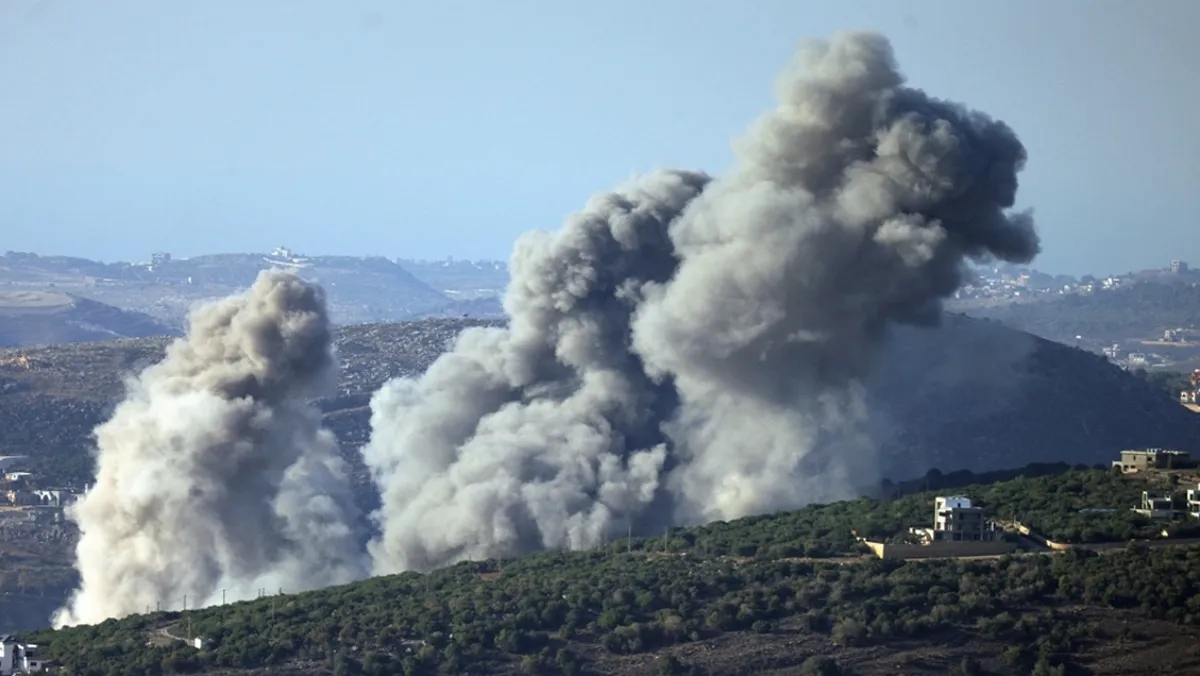
Tehran - BORNA - On Monday night, Israeli warplanes launched a series of airstrikes, prompting sharp international condemnation and marking a significant setback for the US-brokered ceasefire, which is now on the verge of collapse just over a year after its establishment.
An Israeli military spokesperson claimed the strikes were necessary to counter Hezbollah's alleged efforts to rebuild its capabilities in civilian areas.
While no immediate casualties were reported, the attacks produced plumes of smoke over towns like Mahrouna, Jbaa, and al-Majadel, where residents described the situation as "terrifyingly routine."
Lebanon's National News Agency (NNA) confirmed the "intense aerial bombardment," labeling it a clear breach of international law and Security Council Resolution 1701, the UN framework aimed at maintaining peace along the volatile border.
In response, Hezbollah reiterated its commitment to the ceasefire while asserting a "legitimate right to self-defense" against Israel's "aggression under the guise of negotiation."
The airstrikes came just two days after Israel and Lebanon sent civilian envoys to a US-monitored committee in Beirut, a significant step towards expanding indirect talks as encouraged by the Trump administration's so-called Middle East peace plan.
The session, hailed by Washington as "historic progress," focused on border demarcation and Hezbollah's disarmament south of the Litani River. Lebanese officials insisted that any broader dialogue must be contingent on an immediate cessation of hostilities. As one Lebanese diplomat remarked, "They bomb by day and bargain by night – this is not peace; it's paralysis."
This incident underscores a broader trend in a ceasefire that has proven to be more fiction than reality. Since the November 27, 2024, agreement ended 14 months of cross-border warfare that claimed over 4,000 lives, the UN Interim Force in Lebanon (UNIFIL) has documented more than 10,000 Israeli violations, including nearly 7,500 airspace incursions and 2,500 ground breaches—averaging 27 violations per day. By late November, the Lebanese Armed Forces recorded 5,198 infractions, including 657 airstrikes.
UN human rights experts, in a November report, highlighted a "disturbing pattern" of unlawful killings, with 127 Lebanese civilians killed and hundreds injured due to strikes on homes and public infrastructure.
A particularly deadly drone attack on the Ein el-Hilweh refugee camp last month claimed 14 lives, including 12 children, raising concerns of potential war crimes.
Israel maintains five "strategic" hilltop outposts in southern Lebanon. Over the past year, the Israeli military has conducted 669 airstrikes nationwide, resulting in the deaths of at least 218 Hezbollah operatives, according to the Alma Research and Education Center.
UN Special Rapporteur Morris Tidball-Binz argued that these operations undermine Lebanese sovereignty and hinder disarmament efforts.
Amid a growing humanitarian crisis, over 80,000 Lebanese remain displaced, unable to return to border villages devastated by conflict.
Social media erupted with outrage following the latest airstrikes, with users sharing footage of explosions and condemning "genocide disguised as precision strikes."
Activists in Beirut questioned, "Israel violates SCR 1701 with impunity – where is the ICC?" This sentiment was echoed by UN experts calling for independent investigations.
As a UN Security Council delegation concluded its visit to Beirut, reaffirming support for Resolution 1701, the threat of renewed all-out war looms. Lebanese Prime Minister Najib Mikati called for "immediate international action" to enforce the truce, while US envoy Tom Barrack warned of "serious consequences" for any escalation, implicitly directing the message towards Israel.
End Article