US-led meeting discusses implementation of ‘phase two’ of Gaza ceasefire, ignoring Israeli violations
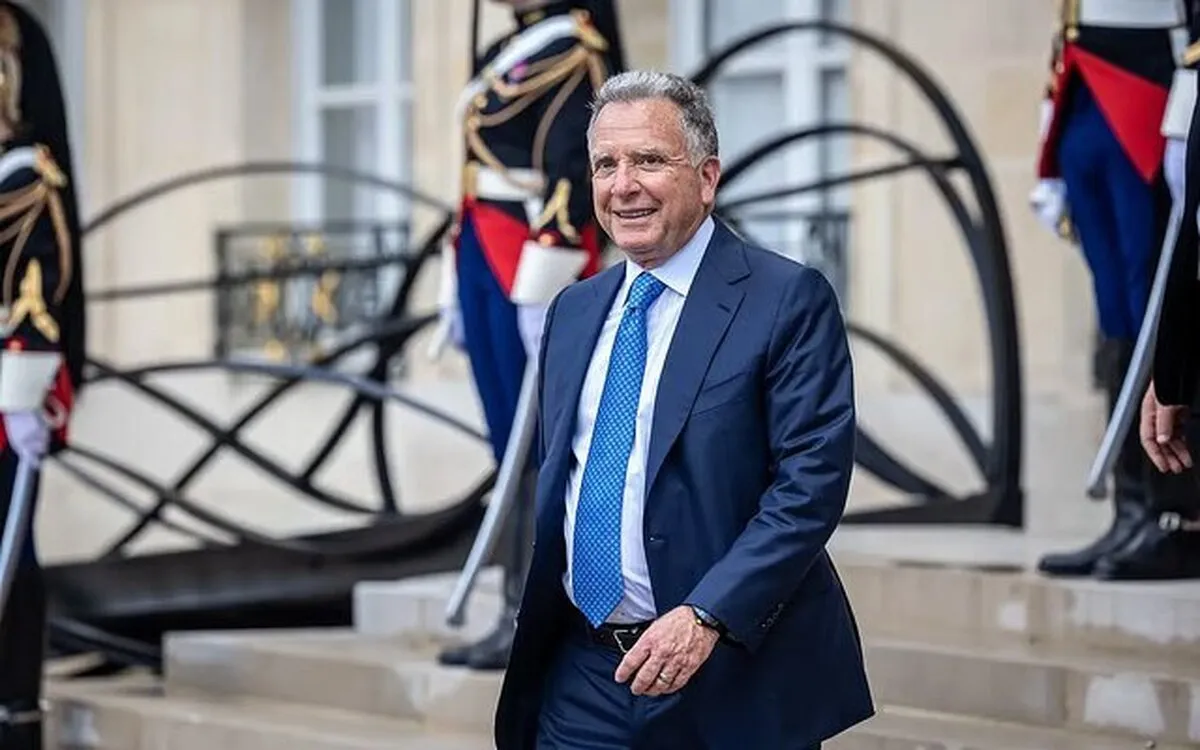
Tehran - BORNA - On Saturday, the United States regional envoy Steve Witkoff announced in a post on X, formerly Twitter, that representatives of the country, Egypt, Qatar and Turkey had met in Miami to review implementation of the first phase of a ceasefire deal clinched between the Israeli regime and Gaza’s Hamas resistance movement in early October.
Witkoff said the meeting had focused on preparations for implementation of “the second phase,” adding that the first phase had included, what he called, expanded humanitarian assistance, return of the remaining Israeli captives in the coastal sliver, partial force withdrawals, and a reduction in hostilities.
“The first phase has yielded progress,” he noted, sidestepping the regime’s ongoing daily violations of the deal.
Hundreds of Palestinians have been killed during the violations of the agreement signed as part of a 20-point proposal forwarded by Donald Trump that the US president says is aimed at ending the Israeli regime’s war of genocide on the territory.
Critics have repeatedly warned that the aggression has repeated the genocidal pattern of the war that has claimed the lives of nearly 70,700 people, mostly women and children, since its onset in October 2023.
Earlier this month, Hamas condemned the regime's restrictions on the entry of humanitarian aid into Gaza, particularly concerning tents and prefabricated homes, despite the deal. It said Tel Aviv continued to permit only limited quantities of aid trucks into the territory, which “do not meet even the minimum basic needs” of its population amid the worsening humanitarian crisis.
Witkoff went on to say discussions on “phase two” had seen the participants emphasize creation of a “governing body in Gaza under a unified Gazan authority to protect civilians and maintain public order.”
He said the meeting had also addressed “regional integration measures such as trade facilitation, infrastructure development, and cooperation on energy and water.”
Within this framework, the parties expressed support for near-term establishment of the so-called “Board of Peace” as a transitional administration overseeing civilian, security, and reconstruction tracks, the envoy said.
He said the meeting had reviewed next steps in implementing the “Comprehensive Peace Plan for Gaza,” Trump’s term for his proposal, and reaffirmed commitment to the entirety of the 20-point plan, with further consultations planned in the coming weeks.
The remarks came after the United Nations Security Council adopted Resolution 2803, which endorsed the plan. The resolution passed with 13 votes in favor, while Russia and China abstained.
The move has been widely criticized by Palestinians and rights advocates, who view it as biased in Tel Aviv’s favor and as rewarding it despite its atrocities in Gaza.
Since the launch of the war, the United States has vetoed six Security Council resolutions calling for an end to the atrocities, continuing a long-standing pattern of blocking measures critical of the regime.
Although Washington abstained once, allowing a resolution to pass in March 2024, it later declared that measure non-binding, a position that observers said enabled the regime to ignore the council without consequences.
By contrast, the Trump administration has treated Resolution 2803 as binding, deflecting criticism from Palestinians and their supporters, who have especially faulted the proposed “Board of Peace” and a so-called International Stabilization Force.
Under the resolution, the board would be chaired by Trump himself and would function as an administrative authority governing Gaza, with sweeping control over reconstruction, aid distribution, and ceasefire enforcement.
While described as temporary, its mandate would require renewal by the end of 2027, raising concerns about prolonged foreign administration.
The ISF would also be led by the United States and operating in coordination with the Israeli regime and Egypt. Unlike any UN peacekeeping missions, the force would be tasked with demilitarizing Gaza and confronting Palestinian resistance groups, a role critics say amounts to UN-mandated enforcement of Washington and Tel Aviv’s preferences.
The vote also came amid mounting UN findings on Gaza, including a commission of inquiry’s conclusion in September that the regime was committing genocide, and repeated rulings by the International Court of Justice that Tel Aviv has ignored.
Experts have, meanwhile, raised alarms over the Trump plan’s refusing to demand accountability on the part of the regime over its atrocities as well as Washington’s failure to press Tel Aviv for guarantees concerning implementation of ceasefire.
End Article