Araghchi: Iran Ready for ‘Fair Deal’ but Rejects Dictation
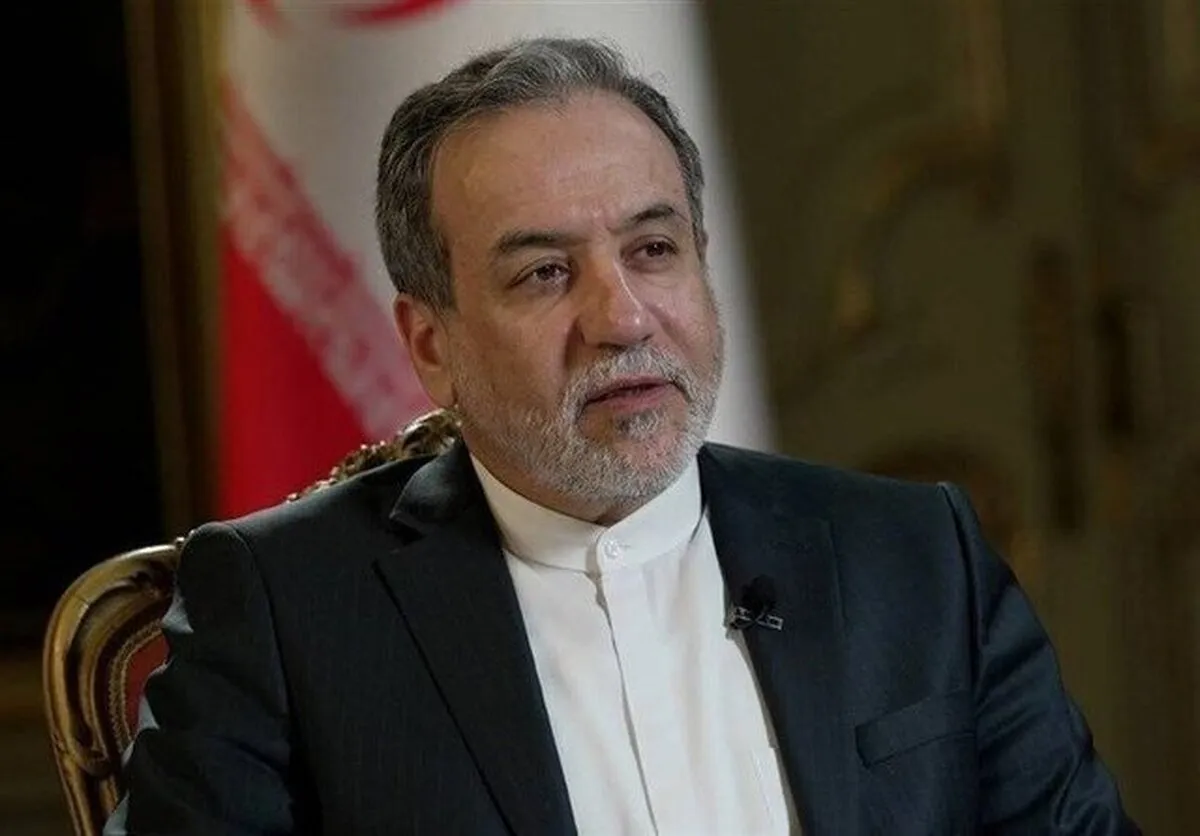
Tehran - BORNA - The Iranian Foreign Minister, stating "I have been in contact with Steve Witkoff, the senior U.S. negotiator," clarified: "However, not in these days, because for several months now, we have decided to suspend these contacts."
Seyyed Abbas Araghchi stated: "We had five rounds of negotiations with the United States and had even set the sixth round for June 15. But two days before that, the Israelis attacked us. This attack was unprovoked and illegal, and subsequently, the United States joined in as well."
In an interview with Russian media, he emphasized: "We are ready for a fair and balanced agreement achieved through negotiation, but we are not ready to accept dictation." Araghchi further noted: "We are prepared to provide full assurance that our program is peaceful and will remain peaceful forever. This is exactly what we did in 2015. At that time, we accepted building trust regarding the peaceful nature of our program in exchange for the removal of sanctions. That process was successful."
The Iranian Foreign Minister remarked: "It is very regrettable that the Agency and its Director General were unable to condemn the aggression and attack on a peaceful nuclear facility that was under the Agency's supervision and safeguards."
In another part of the conversation, he stated: "We remain a committed member of the Non-Proliferation Treaty (NPT) and are ready to cooperate with the Agency. But we have a simple question for the Agency: Please tell us, how should a nuclear facility that has been attacked be inspected? And there is no answer to this question, because there is no precedent in this field."
Araghchi also emphasized: "The Agency must return to its professional duty, avoid any politicization, and reject any requests with political motives. I believe Russia, as a permanent member of the Security Council and one of the prominent members of the Agency's Board of Governors, must insist on this principle; something that, in fairness, I must say Russia has always been doing."
Emphasizing that "enrichment is, first and foremost, our right, and then, a matter of national dignity and pride because it is the achievement of our own scientists," the Iranian Foreign Minister said: "I think by recognizing this right, the United States can do something positive for the non-proliferation regime."
He described the best way to prevent war as being prepared for it, stating: "We are fully prepared, and in fact, we have reconstructed everything that was damaged in the previous aggression. If they want to repeat the same failed experience, they will not achieve a better result."
The following is the full text of Araghchi's interview with the Worlds Apart program on the RT network, conducted during his presence in Moscow:
Host: You are in Moscow; a country where the Ministry of Foreign Affairs has both traditional diplomacy mechanisms and a special task force for engagement with the Trump administration, particularly through the President's special envoy, Steve Witkoff. I know this channel has also been open for Iran. Do you find this path more effective or promising than traditional institutional diplomacy through the U.S. State Department?
Araghchi: The reality is that I have been in contact with Steve Witkoff; however, not in these days, because for several months now, we have decided to suspend these contacts. I was negotiating with him regarding Iran's nuclear program. We had five rounds of negotiation and had even set the sixth round for June 15, but two days before that, the Israelis attacked us. This attack was unprovoked and illegal, and subsequently, the United States also joined in.
It was truly very strange how they decided to attack us in the middle of negotiations. This was a very, very bitter experience for us; and in fact, we had another bitter experience before that, when the U.S. decided to withdraw from the 2015 agreement known as the JCPOA without any justifiable reason.
In truth, the only reason was that a U.S. President did not like the achievements of the previous administration. After this twelve-day war, I was still in contact with Steve Witkoff and we exchanged our views. They insisted on resuming negotiations, but in my opinion, this insistence was accompanied by a completely wrong approach.
Host: Can I ask you about this same approach? Because I heard that after the June attacks on Iran's nuclear facilities, you said that Iran does not respond positively to threats and pressure, but responds to respect and dignity. Do you think the current U.S. administration is still capable of offering such an approach?
Araghchi: This depends on whether they reach the conclusion that negotiating is different from dictating or not. We are ready for a fair and balanced agreement achieved through negotiation, but we are not ready to accept dictation. If they come to us with a fair and balanced idea for a negotiated solution, based on the mutual interests of both sides, then we will consider it. In fact, as you know, we have had bitter experiences even in this year 2025, let alone previous years. We negotiated, but we were attacked at the same time. Once again, we entered negotiations on the sidelines of the UN General Assembly to find a solution for the so-called "Snapback" issue. We presented good ideas, but all of them were rejected. After that, we reached the conclusion that enough is enough. They are not ready for a fair agreement. Therefore, we must wait until the time they reach that point, and then we can talk.
Host: You spoke about time. Six months have passed since the U.S. attacks on Iran's nuclear facilities in Natanz and Fordow, and the extent of the damage is still a matter of debate and speculation. For example, the Pentagon stated in its assessment that Iran's nuclear program has been set back by one to two years. Is this assessment valid in your view?
Araghchi: The reality is that our facilities have been damaged; and seriously so. But there is another reality, and that is that our technology remains intact, and technology cannot be bombed. Our determination and will also still exist. We have a completely legitimate right to the peaceful use of nuclear technology, including enrichment, and we want to use this right.
We developed this technology ourselves. Our scientists have sacrificed for it. Our people have sacrificed; they have suffered from sanctions and now from a very destructive war. Therefore, we cannot waive our rights.
But at the same time, we are ready to provide full assurance that our program is peaceful and will remain peaceful forever. This is exactly what we did in 2015. At that time, we accepted building trust regarding the peaceful nature of our program in exchange for the lifting of sanctions. That process was successful. The U.S., the three European countries, Russia, and China engaged with us using the language of respect. They asked for a fair agreement; trust-building in exchange for the removal of sanctions, and we responded positively. The result was extraordinary. We reached an agreement, and the entire world celebrated it as an achievement of diplomacy. So we have this experience, and we have another experience: the experience of military operations. That experience failed to achieve its goals, but that experience of diplomacy was a successful one. So we have two options ahead of us. The choice is with the United States.
Host: Now the IAEA is requesting access to the damaged facilities, while Iran insists that after the Israeli and U.S. attacks on the infrastructure, inspection methods must be revised. What kind of changes do you want to see in the Agency's approach? Is a mere condemnation of these attacks enough, or do you expect the Agency to reconsider how it operates?
Araghchi: In my opinion, it is very regrettable that the Agency and its Director General were unable to condemn the aggression and attack on a peaceful nuclear facility that was under the Agency's supervision and safeguards. This became a very bad precedent in the history of the Agency. But the issue of inspecting the attacked facilities is a different matter. We remain a committed member of the Non-Proliferation Treaty (NPT) and are ready to cooperate with the Agency. But we have a simple question for the Agency: Please tell us, how should a nuclear facility that has been attacked be inspected? And there is no answer to this question, because there is no precedent in this field.
Therefore, we agreed—and the Agency also accepted—that it is necessary to negotiate regarding a specific method and framework for how to inspect these facilities. This issue is now on the table, and we must sit down with the Agency and talk about it.
Host: Now you are in Russia. This country has also faced a somewhat similar problem with the Agency, as the Agency has refused to condemn military attacks on the Zaporizhzhia nuclear power plant for apparently political reasons. In your opinion, why is the Agency showing such tolerance toward what seems to be a kind of increasing acceptance of "nuclear terrorism"? Do you think Iran and Russia can take joint action in this regard? Because this seems to be a common concern.
Araghchi: The IAEA is supposed to be a professional body, but in practice, it is a political body, or under the influence of certain countries in the Board of Governors, it has become a political body. The Director General of the Agency is actually caught between these forces; forces that expect him to take specific actions. I think this is exactly why the Agency refused to condemn the attack on a nuclear facility that was under its own safeguards. This is the greatest violation of international law.
Bombing a peaceful nuclear facility was considered a major violation of international law by the whole world, yet the Agency, like many European countries, refused to condemn it, and this is very regrettable.
In my opinion, the Agency must return to its professional duty, avoid any politicization, and reject any requests with political motives. I believe Russia, as a permanent member of the Security Council and one of the prominent members of the Board of Governors of the Agency, must insist on this principle; something that, in fairness, I must say Russia has always been doing.
Host: Iran considers uranium enrichment a matter related to national dignity, national pride, and scientific achievement. While you are not willing to waive this right, you have stated that you are ready to assure the Americans that the nature of this program is peaceful. What could satisfy the Americans in this regard? Because as you said, you have cooperated in good faith and yet, it seems nothing has been enough for them. If I may ask a follow-up question: What benefit do you think there could be for the Americans in changing their hostile approach toward Iran?
Araghchi: First of all, enrichment is, first and foremost, our right. And then, it is a matter of national dignity and pride because it is the achievement of our own scientists. I think by recognizing this right, the United States can do something positive for the non-proliferation regime.
When they attacked our nuclear facilities—which were peaceful and under safeguards—they actually delivered the first blow to the non-proliferation regime. This action weakened this regime, which is very important for the peace and stability of the entire world.
The Non-Proliferation Treaty (NPT) is a very important security treaty that is respected worldwide. Based on this treaty, countries that adhere to their commitments under the NPT can benefit from the right to the peaceful use of nuclear technology. When you deprive a specific country of this right, you actually weaken the entire NPT.
Therefore, in my opinion, the best thing the United States can do for the world—not just for our region and not just for Iran—is to respect the NPT and recognize the rights of countries that want to use their rights based on this treaty.
Host: Mr. Minister, before the break, we were talking about the U.S. and Israeli attacks on your nuclear facilities. Since then, the United States has continued to increase its military presence in the region, especially the naval presence. Given what is happening in the region, particularly Israel's military expansionism, do you think this increase in U.S. military presence is currently a factor for stability or instability?
Araghchi: The matter is quite clear; this presence has caused regional instability and increased tension. This is, in fact, an escalation. You see that in the past two years, the Israelis have attacked seven countries in the region and continue their threats.
They continue to violate the ceasefires they have signed, both in Gaza and in Lebanon. Also, the United States, which is the guarantor of these ceasefires, is indifferent to these violations. These are worrying realities that increase the level of tension in the region, raise the level of mistrust toward the U.S., and ultimately, make the region more insecure.
Host: Is there a concern in your country about another attack from the U.S. or even a broader military operation against Iran?
Araghchi: Naturally, we do not rule out this possibility, but we are fully prepared for it; even more prepared than in the past. This does not mean that we welcome another war, but it is precisely to prevent war. The best way to prevent war is to be prepared for it. We are fully prepared, and in fact, we have reconstructed everything that was damaged in the previous aggression. If they want to repeat the same failed experience, they will not achieve a better result.
End Article