Pasteur Institute of Iran Severely Damaged in Aerial Strikes
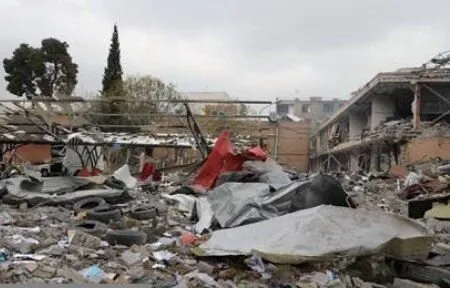
Tehran - BORNA - The most recent strike occurred on Monday, March 30. The resulting blast waves and shrapnel have caused the total collapse of several research buildings and severely disrupted the operations of the country’s oldest medical and scientific institution.
The targeted complex, covering 23,000 square meters, houses 13 National Reference Laboratories that are critical to monitoring infectious diseases such as COVID-19, Mpox, Rabies, Malaria, and Viral Hemorrhagic Fevers. The destruction includes eight specialized health labs dedicated to combating Tuberculosis, Anthrax, and Botulism, as well as damage to two WHO-affiliated centers and three international research networks. While 110 faculty members and 80 Ph.D. students were active at the site, the Institute confirmed that no casualties were reported among the staff and students due to prior safety measures. Diagnostic activities have been rerouted to other branches of the Pasteur Institute to ensure continuity of service.
Founded in 1920 and a key member of the International Pasteur Network, the institute has been at the forefront of vaccine production and epidemic control for over 104 years. Parts of the damaged site are also registered as National Cultural Heritage locations. The targeting of the Pasteur Institute is not merely a regional incident but a flagrant violation of several international treaties and conventions. Under Article 52 of Protocol I additional to the Geneva Conventions, civilian objects, especially those dedicated to science and health, must never be the object of attack. The Pasteur Institute is a purely civilian facility with no military utility, making its targeting a clear war crime under the Principle of Distinction.
According to Articles 18 and 19 of the Fourth Geneva Convention, organized medical centers must be respected and protected at all times. By striking laboratories that handle dangerous pathogens like Anthrax and Plague, the attackers have not only violated Iranian sovereignty but have risked a global biological catastrophe. Furthermore, the strikes violate the 1954 Hague Convention, which prohibits hostilities directed against monuments or buildings of historical and scientific importance. The Institute’s registered heritage status provides it with special protection under international law.
Under the International Covenant on Economic, Social and Cultural Rights (ICESCR), the destruction of vaccine-producing and diagnostic infrastructure is a direct assault on the right to the highest attainable standard of health. This action undermines the global effort to control epidemics, a responsibility shared by all nations. Finally, under the Rome Statute of the International Criminal Court (ICC), intentionally directing attacks against hospitals and places where the sick and wounded are collected is a prosecutable war crime. The systematic destruction of such infrastructure provides a solid legal framework for international authorities to seek the prosecution of the commanders and political leaders of the U.S.-Zionist coalition.
End Article