Zarif in Foreign Affairs: How Iran Should End the War
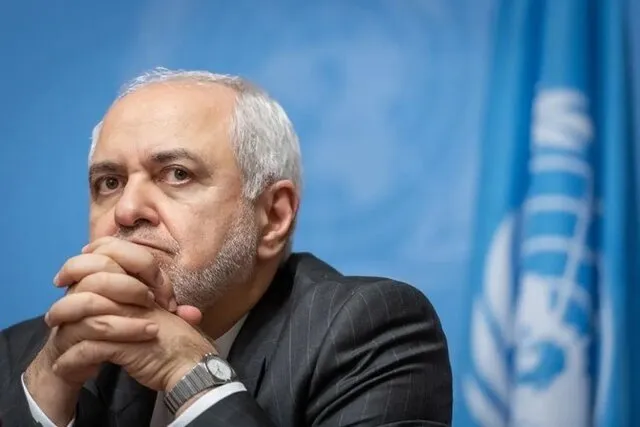
Tehran - BORNA - Mohammad Javad Zarif is an Associate Professor of Global Studies at the University of Tehran and the founder and president of the Payab Institute. Over the past three decades, he has served as Vice President, Foreign Minister, and Iran’s Permanent Representative to the United Nations. Zarif currently holds no official government position, and his views are strictly personal.
The full text of Zarif's article in Foreign Affairs is as follows:
"Iran did not start the war with Israel and the United States. But now, more than a month into this conflict, the Islamic Republic is clearly prevailing. American and Israeli forces have spent weeks relentlessly bombing Iranian soil, killing thousands and destroying hundreds of buildings, all in the hope of toppling the country’s government. Yet Iran has stood firm and successfully defended its interests. It has maintained leadership continuity even as high-ranking officials were assassinated and has repeatedly responded to aggressors while its military, civilian, and industrial facilities were targeted. The Americans and Israelis who began this conflict under the illusion of forcing Iran into submission now find themselves in a quagmire without an exit strategy. In contrast, Iranians have recorded a historic achievement of resistance.
For some Iranians, this success is a reason to continue the war until the aggressors are fully punished, rather than agreeing to a negotiated end. Since February 28, large crowds of proud Iranians have gathered across the country every night, chanting 'No surrender, no compromise, battle with America' to display their steadfastness. After all, the United States has shown that it is not trustworthy in negotiations and does not respect Iranian sovereignty. Based on this logic, there is no reason to engage with the U.S. now or provide it with an 'exit ramp.' Instead, Tehran should consolidate its advantage, continue attacking U.S. bases, and block the flow of trade in the Strait of Hormuz until Washington fundamentally changes its regional presence and approach.
However, while continuing the war with the United States and Israel might be psychologically satisfying, it will only lead to further destruction of civilian lives and infrastructure. Desperate after failing to achieve their objectives, Israel and the U.S. have increasingly turned to targeting vital pharmaceutical, energy, and industrial facilities, as well as indiscriminate attacks on innocent civilians. This violence is also gradually drawing more countries in, raising the risk of a regional conflagration turning into a global crisis. Tragically, international organizations, under bullying pressure from the United States, have remained silent in the face of Washington’s numerous crimes, including the massacre of nearly 170 schoolchildren on the first day of the war.
Therefore, Tehran should use its advantage not to continue the war, but to declare victory and reach a deal that both ends this conflict and prevents the next one. Iran could offer to impose limits on its nuclear program and reopen the Strait of Hormuz in exchange for the lifting of all sanctions—a deal Washington previously rejected but might now accept. Iran should also declare its readiness for a mutual non-aggression pact, in which both countries commit not to attack each other in the future. It could propose economic engagement with the United States that would benefit the people of both nations. All these outcomes would allow Iranian officials to focus less on protecting the country from external threats and more on improving the lives of their people at home. In other words, Tehran can secure the new and bright future that Iranians deserve.
U.S. President Donald Trump, despite his weakened position—or perhaps because of it—continues to make contradictory and confusing statements about negotiations. On Wednesday, Trump delivered a speech in which he simultaneously insulted all Iranians by promising to bomb Iran 'back to the Stone Age where they belong,' while once again claiming—as he has many times—that Washington’s military campaign is only weeks away from completion. But the White House is clearly concerned about rising energy costs (costs created by America's own bombing), and this plan could provide a timely exit for Trump. Indeed, it could turn his massive miscalculation into an opportunity to claim a lasting victory for peace.
Accept the Victory
Iranians are deeply angry with the United States—and not just because of its current aggression. Since the turn of the millennium, the Islamic Republic and its people have been repeatedly betrayed by U.S. officials. They helped the United States in Afghanistan against al-Qaeda after the 9/11 terrorist attacks, only for President George W. Bush to place Iran in the 'axis of evil' and threaten it with attack. President Barack Obama’s administration negotiated and concluded the 2015 nuclear deal (JCPOA), but Iran’s strict and verified compliance did not lead to the normalization of its global economic relations as promised. Nor did that compliance stop Trump from tearing up the deal and pursuing a ruthless 'maximum pressure' campaign: harsh sanctions designed to impoverish 90 million Iranians. These policies continued under President Joe Biden, despite his promise to revive diplomacy.
When Trump returned to power for a second term, Washington acted even more deceptively. The White House announced it was seeking a new deal, and Iran dispatched its most capable diplomats and experts. But Trump quickly showed he was not serious. Instead of employing experienced envoys, he sent two of his closest confidants active in real estate development—his son-in-law Jared Kushner and his golf-partner Steve Witkoff—individuals completely illiterate in geopolitics and nuclear technicalities. When they predictably failed to grasp Iran’s generous proposals, the White House launched its massive armed assault against Iranian civilians.
Consequently, a large segment of the Iranian population considers any talk of ending this war through diplomacy—rather than continued resistance and pressuring the bogged-down aggressors—to be blasphemous. Talking to U.S. officials who have repeatedly betrayed Iran has little popular support. But despite the understandability of this view, the Islamic Republic will ultimately be better off if it can end the war sooner. Continued hostilities only lead to the loss of more precious lives and irreplaceable resources without changing the stalemate, especially as the U.S. and Israel continue to target Iran's infrastructure. While Iran is capable of destroying regional infrastructure in response, this matters little to the U.S., which views its so-called Arab allies as mere shields for Israel. Furthermore, destroying regional infrastructure will not compensate for Iran's losses. Continued war could lead to a U.S. ground invasion, which, while a desperate move that would sink Washington deeper into a quagmire, would offer little gain for Iran. Ultimately, even if the U.S. is forced to pack up and leave, Iran will not be able to translate the gains from its brave resistance into tangible benefits.
If both sides manage to move toward dialogue, they can pursue one of two outcomes. The first is a formal or informal ceasefire. At first glance, this might seem like the best path, as it meets the least resistance. To achieve a ceasefire, Tehran, Washington, and their allies only need to lay down their arms without resolving the root tensions that have plagued their relations for decades.
But any ceasefire will be inherently fragile. Because they will not have resolved their fundamental disputes, the two countries will remain deeply suspicious and skeptical of one another. Therefore, it would take very little—another miscalculation or misplaced political opportunism—for hostilities to resume. Thus, officials should pursue the second option: a comprehensive peace agreement. In other words, they should use this catastrophe as an opportunity to end 47 years of hostility.
The current conflict, horrific as it is, could make reaching such an agreement easier by revealing certain realities about West Asia that Tehran and Washington can no longer ignore. First, it has shown that the United States—even in collaboration with Israel and with financial and logistical support from Gulf partners—is unable to destroy Iran’s nuclear or missile programs. These programs are so deeply rooted and dispersed that they cannot be bombed away. In the nuclear sphere, U.S. and Israeli attacks have only intensified debates over whether Iran should withdraw from the NPT and change its non-proliferation doctrine. These attacks have also clearly shown that reports of the collapse of the 'Axis of Resistance'—Iran's network of regional partners—were greatly exaggerated. In fact, this aggression has revitalized resistance to U.S. foreign policy across the Global South, parts of Europe, and even within the U.S., where some of Trump’s 'MAGA' supporters have rejected his 'Israel-centric' policies.
For the region, this war proves that trying to outsource or buy security from the United States is a losing strategy. For years, Arab countries believed they could ensure their security by paying the U.S. to establish military bases on their soil. Meanwhile, most rejected or ignored Iran’s proposals for regional security arrangements—from the 1985 proposal reflected in UN Security Council Resolution 598 to the 2015 non-aggression pact and the 2019 Hormuz Peace Endeavor (HOPE). Arab nations assumed these proposals were unnecessary because U.S. officials would help manage their relations with Iran and protect them from regional conflict. Instead, the U.S. chose to bomb the Islamic Republic over their verbal—and for some, real—protests, using bases on their soil to execute its campaign. Consequently, Arab countries themselves became battlegrounds, which is exactly what they sought to avoid.
All these outcomes validate Tehran’s long-standing claims about its position and the regional order. But as its confidence grows, Iran also has its own lesson to internalize. It must accept that its nuclear technology did not prevent aggression; rather, it provided a pretext for Israeli and U.S. attacks. Iran has also shown that Israel’s illegal nuclear weapons program cannot protect Israelis from a daily barrage of penetrating missiles and cheap drones. This failure is further reason to doubt that a nuclear program—regardless of its advancement—will guarantee Iran's security. Indeed, Iran's civilian and military officials have all emphasized that the most effective component in the country's successful defense has been its resilient people.
Preparing for Peace
These realities suggest that 'reciprocity' will be key to any agreement, including its first stages. To begin the peace process, for example, all parties in West Asia must agree to stop fighting one another. Iran, in cooperation with Oman, should guarantee the safe passage of commercial vessels through the Strait of Hormuz. But U.S. officials must also allow the Strait to be open for Iran as well. Geography's greatest irony is that, although this Strait is adjacent to Iranian soil, it has been effectively closed to Iran for years due to U.S. sanctions. This has led to widespread corruption within Iran and massive profiteering by some ungrateful neighbors. Thus, even before a final agreement, the U.S. must permit the unhindered sale of Iranian oil and its byproducts and the safe return of the proceeds.
As Iran and the U.S. take these immediate steps, they can begin drafting a permanent peace treaty. A large part of this agreement will likely address nuclear issues. For example, Iran would commit to never seeking nuclear weapons and to diluting its entire stockpile of enriched uranium to an agreed level below 3.67%. Simultaneously, the United States must terminate all Security Council resolutions against Iran, lift U.S. sanctions, and encourage its partners to do the same. Iran must be able to participate actively in global supply chains without hindrance or discrimination. Iran's Parliament (Majlis) would, in turn, ratify the IAEA Additional Protocol, placing all its nuclear facilities under permanent international monitoring. The U.S. has demanded stricter terms, namely zero enrichment, but U.S. officials know such demands are fantasies. They will not obtain from Iran what they failed to achieve in two aggressive wars.
These compromises will not resolve all nuclear disputes, but they will address most of them. Third parties could help solve the biggest remaining challenge: what to do with Iran's uranium. China and Russia, along with the U.S., could help create a fuel enrichment consortium with the participation of Iran and interested Gulf countries, which should then become the only fuel enrichment facility for West Asia. Iran would transfer all its enriched materials and equipment to that facility.
As part of other regional arrangements, Iran, the UAE, Bahrain, Iraq, Saudi Arabia, Oman, Qatar, Kuwait, and Yemen—along with the permanent members of the UN Security Council and possibly Pakistan, Turkey, and Egypt—should begin cooperating in a regional security network to ensure non-aggression, cooperation, and freedom of navigation across West Asia. This network would include formal arrangements between Iran and Oman for the safe and continuous passage of ships through the Strait of Hormuz.
To further solidify peace, Iran and the United States should initiate mutually beneficial cooperation in trade, economy, and technology. For instance, Iran could invite oil companies, including interested American firms, to immediately facilitate exports to buyers. Iran, the U.S., and Gulf countries could all participate in energy and high-tech projects. Washington must also commit to financing the reconstruction of damage caused by the 2025 and 2026 wars in Iran and compensating civilians. Some U.S. officials may resist such payments, but Iranian diplomats will otherwise be unable to move the deal forward. Moreover, the cost of financing Iran's reconstruction is likely much less than the cost of continuing this expensive and unpopular war.
Finally, Iran and the United States would declare and sign a permanent non-aggression pact, committing to refrain from the use or threat of force against one another. Iran and the U.S. would then rescind various terrorism-related designations they have applied to each other. They could explore sending diplomats to their respective Interest Sections, restoring consular services, and lifting travel restrictions for each other's citizens.
Achieving this agreement will not be easy. Iranians will remain deeply suspicious of Washington’s intentions throughout the negotiations, and Trump and U.S. officials will continue to view Tehran with skepticism. China and Russia, perhaps along with some regional governments, may inevitably need to provide guarantees to mitigate these serious mutual concerns.
But this war, for all its horror, has opened a door toward a lasting settlement. Iranians may be very angry, but they can move forward with the confidence that they stood tall against a massive, illegal military aggression from two nuclear-armed powers. U.S. officials may still not like the Islamic Republic, but they now realize that this government is not going anywhere—and that they must live alongside it. Emotions may still run high, and each side will speak of its victories on the battlefield. But history better remembers those who make peace."
End Article