Pezeshkian Warns Macron: Any Threat to Strait of Hormuz Security Will Have Global Consequences
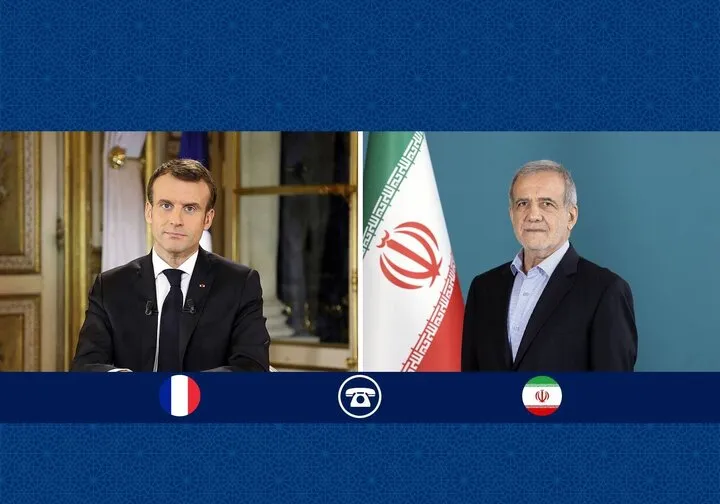
Tehran - BORNA - In a telephone conversation between Masoud Pezeshkian, the President of the Islamic Republic of Iran, and Emmanuel Macron, the President of France, the latest regional developments, the process of the Islamabad negotiations, and the issue of the ceasefire were discussed.
In this conversation, referring to the process of negotiations held in Islamabad, Pakistan, the Iranian president emphasized the seriousness and goodwill of the negotiating team of the Islamic Republic of Iran to achieve a sustainable agreement and stated: Despite the achievement of expert-level understandings between the parties, the excessive demands and the lack of political will of senior U.S. officials have prevented the finalization of the agreement.
Pezeshkian, emphasizing the necessity of adhering to international principles and rules, clarified: The Islamic Republic of Iran is ready to continue dialogues solely within the framework of international laws and regulations and with the aim of protecting the rights of the Iranian nation, and Europe can play a constructive role by encouraging the U.S. to comply with these frameworks.
Stating that Iran's fundamental policy is based on strengthening regional peace, stability, and security and developing constructive engagement with neighbors, the President added: Approaches based on threat, pressure, and military action are not only not a solution, but also increase the complexity of issues and will intensify the self-made problems of the American side. The Islamic Republic of Iran considers diplomacy as the desirable path for resolving disputes and declares its readiness for dialogue within legal frameworks while maintaining national dignity and authority.
Pezeshkian also referred to the recent threat by the U.S. President regarding the Strait of Hormuz and emphasized: The Islamic Republic of Iran has always sought to provide sustainable security for the passage of ships in this strategic gateway, and any threat against the security of this region will bring widespread consequences for global trade. At the same time, Iran is fully prepared to face any scenario within the framework of its national interests.
In another part of his speech, the President, referring to the issue of the ceasefire and the breach of promise by the opposite party in the initial agreement, noted: The conditions of the Islamic Republic of Iran in this regard have been transparently announced, and contrary to some claims, it has been Iran that has emphasized the precise implementation of commitments; a matter that Pakistani officials also acknowledge.
Regarding the nuclear file, Pezeshkian clarified: The Islamic Republic of Iran has previously reached specific agreements with European countries, and its frameworks are completely clear. Iran has never sought action outside of international regulations and still remains ready to continue negotiations within the same framework.
The President, emphasizing the rejection of any double standards in dealing with international issues by Iran, called for the resolution of issues based on justice and recognized global rules and considered a more active role for Europe in this path as necessary.
In this conversation, the French President also referred to his consultations with the U.S. President, emphasized the necessity of including the issue of Lebanon within the framework of the initial ceasefire agreement, and presented his views regarding Iran's nuclear file and developments related to the legal regime of the Strait of Hormuz.
End Article