What China learned from US aggression against Iran
Tehran - BORNA - Politico reported that Beijing is meticulously observing U.S. actions to prepare for potential future conflicts, particularly in the Indo-Pacific region. A major concern remains the decline of U.S. deterrence against China. Despite Pentagon claims that moving carrier groups and 2,500 Marines to West Asia hasn't affected Pacific readiness, some former defense officials believe Washington faces a strategic crisis at the operational level.
Iran’s use of low-cost drones and swarm attacks has reportedly pressured expensive and renowned U.S. defense systems. The high consumption rate of advanced munitions—from Tomahawk missiles to Patriot interceptors—has imposed significant costs on the Pentagon. Analysts suggest China, with its much larger missile arsenal, could employ this same pattern on a far broader scale.
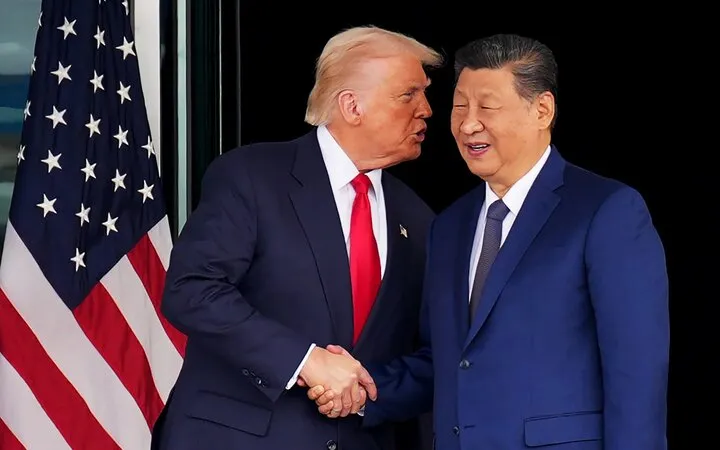
U.S. President Donald Trump is scheduled to visit Beijing in the coming days. Observers suggest this trip is largely due to Washington’s urgent need for China’s assistance to exit the Middle Eastern "quagmire"—a situation that has become a threat to the Trump presidency and his international credibility.
The Telegraph, quoting former CIA analyst Helima Croft, suggested that Trump’s attempts to downplay the impact of Iranian strikes might reflect desperation to find an exit before the U.S. midterm elections. However, any U.S. withdrawal is expected to be perceived as a humiliating retreat in the face of Iran.
Iran’s demands for ending the conflict include the lifting of sanctions, full release of frozen assets, $270 billion in reparations, and uranium enrichment conditions similar to the 2015 nuclear deal (JCPOA).
Meanwhile, China remains resilient despite the closure of the Strait of Hormuz. According to Kpler, China's oil imports in April reached 90% of pre-conflict levels. Beijing has built massive strategic reserves—estimated at 1.5 billion barrels—and holds $6 trillion in usable foreign exchange reserves. Furthermore, China is 85% energy self-sufficient and can run its power grid without gas, utilizing coal and renewables, supported by 46 million electric vehicles already on its roads.
Unlike the United States, China has not faced a domestic gasoline price crisis. The conflict has accelerated the global shift from fossil fuels to solar panels and EVs—industries largely dominated by China.
The conflict has also exposed the Pentagon’s failure to prepare for the era of "cheap AK-47 drones." Beijing is witnessing the U.S. deplete precision munitions that take years to replace and cannot be manufactured without Gallium—a rare element over which China holds a monopoly. Additionally, the war has deprived East Asian allies of Patriot missile systems, as backlogs for pre-paid weapon shipments continue to grow.
U.S. Treasury Secretary Scott Bessent previously warned at Davos that if China’s dominance over Taiwan—the primary producer of semiconductors—intensifies, the U.S. would face an "economic apocalypse." The United States is not expected to be able to replace Taiwan's high-level AI chip production and packaging on a large scale until the early 2030s.
End Article