In tribute to the martyred leader, Araghchi writes: The legacy of the martyred leader is a living roadmap for the future
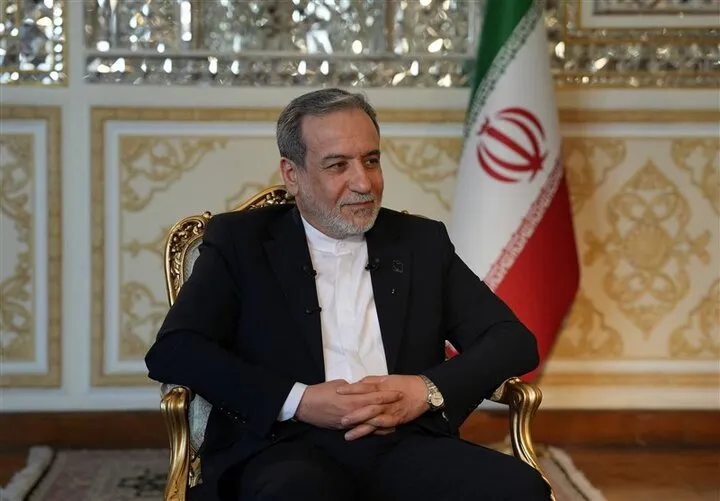
Tehran - BORNA - The Institute for Islamic Revolution Cultural Research has prepared a memorial publication titled "The Martyred Imam" containing notes from prominent scientific, political, cultural, and military figures, to be published on KHAMENEI.IR. What follows is a note by Seyed Abbas Araghchi, Iran's Foreign Minister, titled "The Legacy of Glory: The Enduring Thought of Seyed Ali Khamenei in Foreign Policy."
"When history, at critical junctures, seeks names to record the glory of a nation's resistance, it encounters figures who have transcended not only their own time but also future horizons. The martyred leader Ayatollah Seyed Ali Khamenei was among such steadfast peaks — a figure who, during his years of leadership, elevated diplomacy from the level of cold power relations and merely administrative actions to a realm of meaning, identity, and civilizational mission, transforming foreign policy into the eloquent language of a nation's dignity."
"The difficult experiences of recent years, marked by two aggressive wars imposed by the US and the Zionist regime on our beloved country, clearly demonstrated that diplomacy at historical turning points is not merely a tool for managing relations, but a mirror of national identity and will. The legacy left by the martyred leader in foreign policy is precisely of this nature — a living narrative of the connection between national dignity, political wisdom, and shrewd pragmatism, which carved a distinct position for the Islamic Republic amid the turbulent waves of sanctions, pressure, threats, and war."
"This capital is above all based on the fundamental principle of independence — independence defined not as isolation, but as an active, effective, and non-dependent presence in the international system. In this intellectual framework, diplomacy finds meaning when the nation considers itself the subject of interaction, not an object of transaction. Thus, Iran's foreign policy has always sought to keep dialogue open with the world while maintaining its identity red lines."
"His legacy extends beyond the narrow confines of reductionist realist or liberal theories, resting on a solid and profound foundation of Islamic-Iranian identity — a foundation in which national interests are defined in alignment with values, not in conflict with them. In this framework, the fusion of idealism and realism is a fundamental feature of this school of thought, because the international system is an arena of competing interests, but the absence of ideals reduces diplomacy to a soulless and truthless bargain."
"In the realm of identity, the martyred leader liberated foreign policy from historical dependencies by instilling a spirit of self-belief, establishing a rationality that was 'revolutionary' — not in the sense of emotion, but as a measured connection between ideals and reality. This rationality allowed Iran's diplomacy to remain principled while acting wisely, flexibly, and effectively on the international stage. In the sphere of national interests, by articulating the concept of 'honorable engagement,' a new path was opened in diplomacy — one in which dialogue is conducted not from a position of weakness, but from a position of authority and self-confidence."
"At the level of regional and international engagement, this legacy manifested as norm-setting activism — where support for resistance movements, alongside adherence to the principle of non-interference, offered a balanced model of moral commitment and legal obligation. In this view, diplomacy means participation in redefining meaning and justice in the global system. His regional vision was based on trust in local capacities and historical and civilizational ties — a vision that saw security not as a product of imposed alliances, but as the result of synergy among the region's nations."
"It was based on his teachings that Iran's diplomacy took shape as 'resistance-oriented diplomacy' — a diplomacy that grew and evolved on the foundation of independence, steadfastness, and courage in the face of external pressures. In this framework, resistance does not merely mean confrontation, but alongside it, the use of rationality and diplomatic techniques to advance foreign policy goals is of fundamental importance. Thus, successful and effective diplomacy is a combination of steadfastness in defending principles and prudence in engaging with others — preserving national authority while creating grounds for cooperation and influence."
"The conceptualization of such a school gave the resistance axis in the region an opportunity to look beyond momentary equations and offer a model of strategic action whose effects are not limited to daily politics but manifest at deeper levels of regional and transregional developments."
"The concept of 'resistance diplomacy' holds a central place in this framework — a concept that signifies active deterrence and raising the costs of domination for hegemonic powers, enabling the country's foreign policy to enter global dialogues from a powerful and equal position and play a role in shaping the rules of the game."
"Undoubtedly, what remains of the martyred leader is not merely a memory in history, but a living roadmap for the future — a roadmap that can guide the Islamic Republic of Iran toward constructive, dignified, and effective engagement in the international system. With a profound vision and horizons beyond his time, he liberated diplomacy from passivity and elevated it to 'honorable agency' — a realm in which Iran is not a marginal player but a meaningful and effective actor in global equations, where independence is not distance from the world but the basis for equal interaction and mutual respect."
"And now, in continuation of that thought and glorious past, Iran's foreign policy continues to stand on the shoulders of the thought of the martyred Ayatollah Seyed Ali Khamenei — a thought in which power finds meaning not in domination but in cooperation, and diplomacy is embodied not in compromise but in dignity, wisdom, and steadfastness — a horizon that will always remain open, and history will surely narrate its continuation through the voices of future generations."
End Article