What Was Tehran's 48-Hour Proposal?
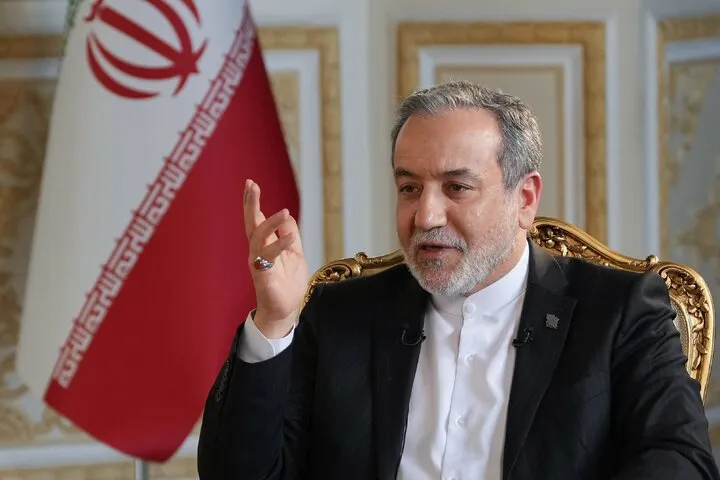
Tehran - BORNA - Iranian Foreign Minister Seyed Abbas Araghchi, in an extensive interview, explained the details of Tehran's 48-hour diplomatic proposal, the status of the Islamabad Memorandum of Understanding, Iran's conditions for reopening the Strait of Hormuz, and the prospects for negotiations with the United States.
The full text of the interview follows:
Question: Mr. Minister, different accounts have emerged regarding Iran's seven-point proposal. Initially, the proposal involved a seven-day timeframe, which was later reduced to two days. Despite this flexibility and the shortened deadline, the United States still did not agree to it. Which specific part of Iran's proposal was unacceptable to Washington? Was the disagreement over the commitments themselves or the sequence of their implementation? Under this initiative, was the United States supposed to fulfill the required commitments and take the necessary measures within 48 hours, with Iran entering nuclear negotiations on the third day? If such a framework had been proposed, why was Washington unwilling to wait even 48 hours for the negotiation process to begin?
Araghchi: We went through a lengthy process in these negotiations before reaching the Islamabad Memorandum of Understanding. Considerable efforts were made to achieve that understanding, which was eventually agreed upon.
The President of the United States signed it, including the Persian version, and the President of Iran subsequently signed its copies as well. In other words, both presidents signed both versions of the text.
However, for reasons that are familiar to everyone, and following the United States' violation of one of the important provisions of that agreement, circumstances once again moved toward confrontation.
After some time, both we and the American side lost our motivation to continue the process on the basis of that memorandum.
Therefore, the Islamabad Memorandum of Understanding is no longer on the table and is no longer operationally relevant.
Nevertheless, the commitments accepted by the United States under that memorandum, and the principle that implementing those commitments could pave the way for a final agreement, remain acceptable to both sides.
On this basis, we incorporated the American commitments under the Islamabad Memorandum of Understanding, along with certain new issues that had emerged in the meantime, including new US sanctions and our demand for their removal, into a seven-day plan.
This plan, which also became known as Iran's seven conditions for reopening the Strait of Hormuz, actually included several provisions. If we were to list them precisely on paper, their number would be slightly more than seven.
Under the plan, the United States was supposed to fulfill the required commitments during the first five or six days. On the sixth day, we would reopen the Strait of Hormuz, and negotiations between Iran and the United States aimed at reaching a final agreement would begin on the seventh day.
We presented this proposal to the Americans indirectly through the Qatari intermediary during our visit to New York in early Mehr [late September and early October] this year.
Since then, over approximately two months, the intermediaries have continued their exchanges. They conveyed American proposals, while the US side indicated that it agreed with Iran's demands, provided that several of its own demands were also added to the plan. Those were demands that we had intended to discuss within the framework of a final agreement.
Extensive discussions took place on this matter, and eventually one or two of the American demands were incorporated into our proposal.
As the US elections approached, and given the limited time remaining before them, the intermediaries recommended shortening the timeframe to accelerate the implementation of the plan.
We had no objection to that suggestion and indicated that we could compress the timetable.
That is why we converted the seven-day plan into a two-day proposal.
Under this arrangement, if the United States fulfilled its commitments on the first day, we would reopen the Strait of Hormuz on the second day.
Question: Therefore, under the two-day proposal, was the United States expected to fulfill its commitments on the first day, followed by Iran's implementation of its commitments and the beginning of nuclear negotiations on the second day? How did this proposal differ from the Islamabad understanding, under which the implementation of commitments was supposed to pave the way for a final agreement?
Araghchi: No. The arrangement was that the Strait of Hormuz would reopen on the second day and negotiations between Iran and the United States aimed at reaching a final agreement would begin on that same day.
In other words, the entire process would take place within two days.
On the first day, the Americans would implement their measures and commitments. On the second day, we would reopen the Strait of Hormuz, and negotiations between Iran and the United States would begin.
I emphasize that negotiations would start on the second day, not that they would necessarily produce a result that same day.
Under the Islamabad Memorandum of Understanding, we had envisaged a 60-day period for negotiations, which could also be extended.
However, the new proposal did not contain such a fixed negotiation period. Negotiations were supposed to begin immediately and continue for as long as necessary.
Therefore, this was an entirely operational plan that incorporated both our demands and those of the other side while opening the way for negotiations.
We presented this proposal to the American side approximately ten days before the US elections.
Had they accepted it, subsequent results and developments might have unfolded differently.
Of course, it fundamentally made no difference to us who won or lost the elections. What matters is our national interests and the fulfillment of our country's demands.
However, the Americans did not respond favorably to the proposal, for whatever reason. Perhaps they were preoccupied with the election atmosphere, perhaps they did not properly understand the proposal, or perhaps the necessary conditions for a positive response were not in place.
In any case, they did not give a favorable response, the elections took place, and the results were what we see today.
Our current position is that the two-day proposal remains on the table.
If the Americans are genuinely serious about reaching an agreement, this proposal can still provide the necessary basis and opportunity for achieving one.
Of course, certain developments have occurred in the meantime that naturally need to be addressed.
Question: What developments?
Araghchi: For example, Trump announced a few days ago that he was no longer interested in reaching an agreement and even told Vance to go on a wild-goose chase!
Question: Do you consider these remarks merely a political and media statement, or have you also observed practical indications that Washington is moving away from diplomacy?
Araghchi: In practice, even before Mr. Trump published that tweet, we had received no response from the American side.
Therefore, if they are genuinely serious about reaching an agreement, our first expectation is naturally that they correct their position.
Of course, it is not particularly surprising for Mr. Trump to adopt a new position every day or even reverse what he said the previous day.
However, our first demand is that he explicitly declare that he wants an agreement.
In addition, we need a series of confidence-building measures to ensure that circumstances are different this time and that the American side is genuinely entering the negotiation process with seriousness.
We have also held discussions with the intermediaries regarding the nature and implementation of these measures.
If these two conditions are fulfilled, we are prepared to discuss our proposal and the manner of its implementation with the American side.
Our demand is entirely clear: the seven conditions we have presented must be implemented for the Strait of Hormuz to reopen.
Of course, if the Americans have proposals or views regarding how these conditions should be implemented, we are ready to discuss them.
How these matters should be put in writing, how they should be structured, and how we can reach an agreement satisfactory to both sides are all issues that can be negotiated.
For example, if they want to shorten the two-day timetable to one day or even two hours, that is not a problem for us.
What matters is the fulfillment of our demands.
If Iran's demands are met, the Strait of Hormuz will reopen.
Even if discussions are needed regarding the details and implementation of these same conditions, we are prepared to enter negotiations at the expert level.
Therefore, we have no problem with dialogue or examining proposals in principle.
However, this depends on the American side first correcting its positions and undertaking the necessary confidence-building measures.
Question: If Iran had accepted one of the US demands concerning the nuclear issue under the two-day proposal and was expected to implement it beginning on the second day, do you believe progress toward an agreement would have been possible? Or were the differences between the two sides so significant that even such flexibility could not have resolved the negotiating deadlock?
Araghchi: They had such demands.
As I mentioned, the two-day proposal did not consist solely of Iran's demands. It also incorporated the demands of the American side.
Therefore, it was a balanced proposal designed to take into account the demands of both parties.
Question: Can Washington's disregard for this proposal be interpreted as an indication that the preference for war has become stronger in the United States and that pro-war factions have gained the upper hand within the country's decision-making structure?
Araghchi: Look, politics in the United States today is extremely complicated. It has always been complicated, but it seems that this complexity has now increased considerably.
Inside the White House, there are different individuals and factions, each attempting to steer Trump toward their own views and approaches.
One faction believes that the United States should go to war.
Netanyahu is also constantly making calls and holding consultations. Every day, he comes up with a new conspiracy in an attempt to push the United States toward war.
Over the past day or two, we have witnessed allegations that I genuinely do not know how to characterize.
They are ridiculous and absurd allegations, including claims that Iran intends to attack Washington with a chemical bomb, assassinate our leaders, or conceal its missiles beneath dams.
These allegations are completely baseless and ridiculous.
What is astonishing, however, is that such claims are accepted not by American society but by American political leaders.
For example, Mr. Bessent, the US Treasury Secretary, goes to a military base and changes his place of residence.
In any case, one side of the equation is Israel.
Netanyahu, who sees his political survival in igniting a third round of war, is trying to drag the United States into yet another conflict.
There are also individuals in the White House and Washington who pursue this approach.
On the other hand, there appears to be another faction that still believes in negotiations and wants to achieve results through diplomacy.
This faction considers negotiations and securing a diplomatic achievement to be an accomplishment in themselves.
Meanwhile, a third faction has recently emerged that believes neither an agreement is achievable nor war is an appropriate option.
Instead, they believe Iran should be forced into submission through economic pressure and sanctions.
Trump himself is operating within this environment, a situation everyone is familiar with.
He constantly shifts between different ideas and approaches and changes his positions.
Question: One of the major and potentially decisive issues in any future nuclear negotiations is the fate of 400 kilograms of uranium enriched to 60 percent. Mr. Mohsen Rezaei recently stated that Iran needs these stockpiles to meet its requirements and has even informed Russia of this position. Do these recent remarks indicate a change in Iran's approach compared with the previous formula? Are options such as downblending or alternative solutions, including arrangements that would not require the stockpiles to leave the country, still on the table?
Araghchi: I believe it is possible to find a formula to resolve this issue.
Of course, we have several clear red lines in this regard.
First, these materials will not leave the country.
Second, these stockpiles will be used in accordance with our needs, however those needs may be defined.
In the meantime, various ideas and formulas have been proposed by intermediaries.
Some of these proposals are worth examining. Some have more positive aspects, while others involve more considerations and drawbacks.
In any case, I believe a fair solution can be found regarding the nuclear material, one that is based on our national interests and also meets the country's needs.
However, this issue cannot be considered or decided upon in isolation from other matters.
It must be examined as part of a broader package.
Ultimately, decisions are made within the negotiating committee of the Supreme Council and are then approved by the Supreme Council itself.
These decisions also go through specific procedures before becoming decisions approved at the level of the country's governing system.
Therefore, decisions on all these matters are made based on the country's interests and are implemented only after the necessary legal procedures and decision-making processes have been completed.
Question: In recent days, discussions about the need to review the country's nuclear doctrine and change Iran's nuclear approach have intensified, particularly among certain sections of the country's intellectual and expert community. What is your view on this issue?
Araghchi: This is truly a broad and serious debate with various dimensions, and it has both supporters and opponents.
Those who believe the country's nuclear doctrine should remain unchanged and those who argue that it needs to be revised — with the question of how it should be revised being a separate issue — both have their own reasoning and arguments.
I believe we should not assume that those calling for a change in doctrine have weak arguments. They also have strong reasoning.
On the other hand, those who emphasize preserving the current doctrine also have solid arguments and reasoning.
Therefore, we are dealing with an entirely serious and strategic debate for the country.
In my view, there is nothing wrong with raising and examining this issue. On the contrary, it is positive that such a debate is being seriously pursued within the country's expert and intellectual circles.
This is because it directly concerns the country's national and supreme interests.
Whatever doctrine we ultimately choose, the decision will have extremely important implications and consequences, both in terms of benefits and potential costs.
Those who believe the nuclear doctrine should change argue that the existing doctrine has failed to protect our nuclear facilities.
They maintain that our membership in and continued adherence to the Treaty on the Non-Proliferation of Nuclear Weapons (NPT), the placement of the country's nuclear facilities under safeguards and International Atomic Energy Agency (IAEA) monitoring, and compliance with existing oversight frameworks have not prevented attacks and the bombing of these facilities.
From their perspective, if these mechanisms have been unable to guarantee the security of our nuclear facilities, we must consider another approach, at least to protect the country's nuclear program.
On the other hand, departing from the current framework and changing the doctrine would also have consequences that are far from simple.
Question: Do Moscow and Beijing actually support changes to Iran's nuclear doctrine, or would they prefer Tehran to remain within the framework of its current nuclear policy?
Araghchi: Russia and China also have opposing positions on this issue.
What matters is that, as of this moment, our doctrine has not changed, and our official positions remain the same as before.
Of course, a debate has emerged in society on this matter, and I see no problem with different viewpoints being expressed and everyone having the opportunity to present their opinions.
As I said, both sides have their own arguments and reasoning.
I do not necessarily agree with all these arguments, but one cannot deny that each is based on a particular line of reasoning.
Therefore, we should allow this debate to continue within the country's expert and intellectual circles and ensure that different perspectives are heard.
Nevertheless, I emphasize that our official position on this issue remains unchanged.
Question: As the situation of "neither war nor peace" continues, we are witnessing a strengthening of the US military presence in the region. Meanwhile, intermediaries are making their latest efforts to prevent an escalation of the crisis and reopen the path to diplomacy. How do you assess the outlook for this situation? Is the continuation of the current circumstances actually in Iran's interests, and can we expect this situation to persist over the coming months? Could other options emerge to break the deadlock if pressures intensify? How do you generally assess the future of this equation?
Araghchi: Look, I completely agree with you that the situation of "neither war nor peace" is by no means desirable.
The same view exists at the highest levels of the country, and we believe this situation must come to an end.
Naturally, there are only two options for moving beyond these circumstances: either war or peace.
No one would argue that war is a good situation.
Therefore, our solution is to move toward a negotiated settlement and reach an agreement.
However, an important point on which I believe there is a consensus is that we seek a good, honorable and dignified agreement.
No one wants an agreement that would undermine our dignity.
We resisted during the war and did not allow the other side to achieve victory.
Therefore, we certainly cannot accept an agreement in the diplomatic arena that would effectively hand victory to the other side.
I believe everyone agrees that just as we emerged victorious in the war, we must also emerge victorious in the agreement.
Of course, we must also recognize that in a war, one side may achieve an absolute victory.
However, when you enter a negotiation process aimed at reaching an agreement, you have effectively accepted that there will be give-and-take.
In any such exchange, it is natural for both sides to make concessions and receive something in return.
Question: In one of your recent remarks before the US congressional elections, you made a noteworthy statement. You said that the United States wanted to extract concessions from Iran, but that Iran would not give Washington any concessions. Could you clarify this point? Where is the line between diplomatic give-and-take and making concessions to the other side?
Araghchi: Yes, but the central issue is what kind of concession we should make.
The point is that after all this resistance, you must not give the other side a concession that it could present as its own victory.
Such a concession certainly must not be granted.
We have legitimate demands.
After all, a war was imposed on us, and we came under attack at a time when we had done nothing wrong and were engaged in negotiations.
No one can deny that we were negotiating on two occasions and were attacked on both occasions.
The third time, we also negotiated, reached an agreement, and that agreement entered the implementation phase.
However, the other side violated it once again, and another war began.
In other words, over the past two years, we have experienced negotiations and war three times.
Therefore, if we are to move beyond the situation of "neither war nor peace," we must reach conditions under which we can be confident that war will not return and that we will not once again find ourselves in the same situation.
To reach that point, we must wait until the necessary conditions are in place and we can achieve a successful outcome.
What is the point of reaching an agreement today if it is violated two months later and war resumes?
The last time, war resumed just 15 days after the agreement.
There was also an interval of approximately eight months between the 12-day war and the 40-day war.
Therefore, we must reach an agreement that is permanent and final, so that we do not witness the return of war.
Consequently, ending the situation of "neither war nor peace" and reaching an agreement is certainly desirable, but only if it is a good agreement.
Not every agreement is worth accepting simply to escape the current circumstances.
We must properly understand the complexities of this issue.
Question: Given recent regional developments, we have seen several countries, particularly Qatar, undertake extensive diplomatic efforts to reduce tensions and mediate, while Pakistan's role appears to have diminished compared with the past. At the same time, some reports and analyses by foreign media suggest that certain Arab countries may not be particularly dissatisfied with the continuation of the current situation, including economic pressure and the blockade against Iran, believing that Iran's economic weakening could benefit them. How do you assess this perspective? Have you observed such an approach among certain Arab governments during diplomatic consultations and discussions with regional countries? Apart from Qatar, which regional countries are making more serious efforts to end the crisis and restore stability? Conversely, are there countries, such as the United Arab Emirates, that might consider the continuation of the current prolonged situation to be in their interests?
Araghchi: All countries in the region oppose war, and the reason is clear.
Their experience during the 40-day war demonstrated to them the consequences that war can have for the region.
However, whether these countries support continued pressure, sanctions and the economic blockade against Iran is a different matter, and I do not agree with that interpretation.
You referred to Trump's claim that certain regional countries, including those he named, had asked him to stop the war but continue pressure and sanctions against Iran instead.
I believe this is a narrative that the United States is attempting to promote.
It is true that regional countries do not want war.
But do they really want a blockade, economic pressure and additional sanctions against Iran?
If such an approach exists, I believe it would be a strategic mistake.
These countries seek lasting peace and naturally do not want war to repeatedly erupt in the region.
We have also told them on numerous occasions that it is impossible for one part of a region to be at peace while another part is at war.
It is not possible for one part of the region to pursue development and prosperity while another faces sanctions, pressure and insecurity.
If we seek lasting peace, we must move toward a peace in which all countries of the region participate.
In other words, peace must be comprehensive and inclusive.
Economic progress and prosperity must also extend to all countries of the region.
Only under such circumstances can we speak of lasting peace.
I believe this understanding exists among many regional countries.
Of course, when we examine individual countries, we may observe differences in their positions and decisions.
Naturally, some countries do not always make the right decisions.
For example, the United Arab Emirates made a wrong strategic decision by establishing relations with Israel.
In my view, that decision was a strategic mistake.
Nevertheless, I believe the countries of the region collectively learned major lessons from this war.
Perhaps the most important lesson is that they cannot rely on forces from outside the region to ensure their security.
American military bases, or bases belonging to any other country, cannot necessarily guarantee the security of their host countries.
Indeed, they may even become a source of insecurity.
Had these bases not been present in the region, they would not have been attacked in the first place.
More importantly, these bases not only failed to protect their host countries but also failed to protect themselves.
Therefore, one of the most important lessons of this war is that security must be endogenous.
In other words, regional countries must take responsibility for ensuring one another's security and rely on their own capacities and regional cooperation.
The second lesson is that security must be comprehensive and inclusive.
We cannot accept a situation in which one country or part of a region is engulfed in war and insecurity while another part enjoys peace and stability.
This principle applies to every region.
The third lesson is the close relationship between peace and economic prosperity and development.
We cannot expect one part of a region to pursue development and progress while another part struggles with economic difficulties.
Question: From the visits and exchanges involving Qatari officials to recent diplomatic trips, communication channels appear to remain active. Are messages still being exchanged on the basis of Iran's two-day proposal? To what extent do Arab countries and regional intermediaries support Iran's diplomatic initiative, and what role are they playing in advancing this process?
Araghchi: The intermediaries, namely Qatar and Pakistan, are engaged in exchanges between us and the United States.
They convey messages, bring messages back, put forward various ideas and proposals, and facilitate discussions about them.
Essentially, that is the role of an intermediary: to move between the two sides and try to find a middle-ground solution.
Therefore, these activities and exchanges are entirely natural, and the intermediaries are performing their duties.
Of course, this does not mean that every aircraft arriving in Iran from Qatar or other countries necessarily carries a negotiator or intermediary.
At present, because of flight-related difficulties, a significant portion of the travel undertaken by our economic delegations to regional countries takes place through charter flights.
Sometimes, regional countries also provide aircraft to transport our delegations and bring them back.
Let me state explicitly that economic exchanges are taking place between us and regional countries.
At the same time, we have never concealed the meetings and contacts conducted within the framework of these mediation efforts.
For example, during my recent visit to Pakistan, I met with Mr. Asim Munir, and we publicly announced that meeting.
Our meeting with the Qatari delegation was not secret either.
There is fundamentally no reason to conceal such meetings because they are neither unusual nor extraordinary.
Exchanging messages, ideas and proposals is a natural part of the intermediaries' responsibilities.
If these intermediaries were ever to stop performing these activities, the question should actually be why they were not fulfilling their duties.
Similarly, if we were to remain in Tehran without conducting diplomatic activities or holding meetings, it would be natural for people to question us about that.
Therefore, these exchanges are a normal part of diplomacy.
However, our communication channels are limited exclusively to Qatar and Pakistan.
Anything else is speculation.
Sometimes, certain countries also attempt to involve themselves in this process.
But at present, we see no reason to change the existing intermediaries, reduce their number or add a new intermediary.
The current process is moving forward, messages are being conveyed, and the exchanges are continuing.
More importantly, all these activities and contacts are subject to full oversight.
Detailed reports are prepared on every meeting, and the information and points raised are conveyed to the relevant authorities.
The responsible bodies then determine the policy and the next steps, including what action should be taken and what response should be provided at the next stage.
Therefore, this process is proceeding entirely under the supervision and management of the country's responsible authorities.
Question: Finally, considering the overall developments and diplomatic activities currently underway, how would you describe the outlook facing the country? Do you believe the balance is tilting more toward war or diplomacy?
Araghchi: We are men of diplomacy, and we still have hope in diplomacy.
End Article