Iranian Red Crescent Chief: Protecting Children in Armed Conflicts Is a Legal Obligation and Shared Responsibility of All States
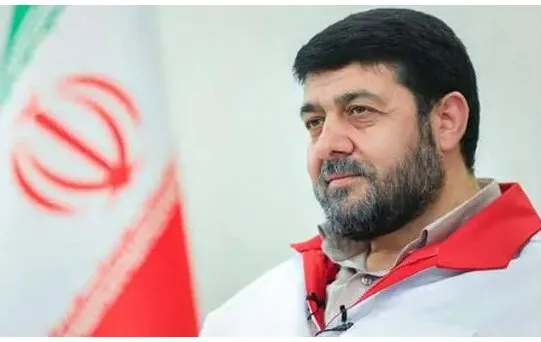
Tehran - BORNA - Pirhossein Kolivand, President of the Iranian Red Crescent Society (IRCS) and Chairman of the National Committee on International Humanitarian Law of the Islamic Republic of Iran, emphasized the need to safeguard children's rights and dignity during armed conflicts, stressing that their protection is not merely a moral obligation but also a legal duty and a shared responsibility of all states and parties to conflicts.
Speaking on the occasion of World Children's Day, Kolivand highlighted the international community's responsibility to protect the rights, dignity and security of children.
He noted that November 20 marks the anniversary of the adoption of the Convention on the Rights of the Child by the United Nations General Assembly in 1989.
"This day provides an opportunity to recall the international community's shared responsibility to protect children's fundamental rights, a responsibility that becomes even more significant given their particular vulnerability during wars and armed conflicts," he stated.
Referring to the humanitarian consequences of the two recent wars and the large number of Iranian children killed and injured, Kolivand said Iranians are commemorating World Children's Day this year while the memory of the children who lost their lives remains deeply embedded in the nation's collective memory.
He added that many families continue to endure the grief of losing their children or live with the physical, psychological and social consequences of the injuries and harm inflicted upon them.
Citing published reports on child casualties during the two wars, the Chairman of the National Committee on International Humanitarian Law stated: "According to a report by the Hengaw Organization for Human Rights, at least 45 children and adolescents lost their lives during the 12-day war in June 2025."
He continued: "Furthermore, according to a letter sent by the Secretary of the Iranian Judiciary's High Council for Human Rights to the United Nations Children's Fund (UNICEF), 383 children were killed and 2,115 others were injured during the 40-day war in Esfand 1404 and Farvardin 1405 [February–April 2026]."
Kolivand emphasized that, according to these reports, at least 428 children lost their lives in the two wars.
He also noted that seven children killed during the second war had not yet reached their first birthday.
Call for Independent Investigation into Minab School Attack
Kolivand identified the attack on Shajareh Tayyebeh School in Minab as one of the most tragic incidents of this period.
Referring to a report by the United Nations High Commissioner for Human Rights concerning the deaths of 168 people, including students, teachers, school staff and some of their relatives, he stressed the need to clarify the circumstances surrounding the incident and ensure accountability.
"Schools are protected under international humanitarian law as long as they retain their civilian character. Attacks against them, in the absence of the necessary legal conditions, may constitute violations of the rules governing the protection of civilian objects," he stated.
Kolivand emphasized that the victims' families and the public have the right to receive transparent and documented information about the incident, including how the decision to carry out the attack was made, and to see an independent and effective investigation conducted.
Compliance with International Humanitarian Law
Explaining the obligations of parties to armed conflicts under international humanitarian law, Kolivand highlighted the principle of distinction.
He stated that this principle requires parties to conflicts to distinguish between civilians and combatants, as well as between civilian objects and military objectives.
Accordingly, direct attacks against civilians and civilian objects are prohibited, and attacks must be directed exclusively at military objectives.
Kolivand further emphasized the principle of proportionality, stating: "Compliance with the principle of proportionality requires parties to armed conflicts to refrain from any attack expected to cause civilian deaths, injuries or damage to civilian objects that would be excessive in relation to the concrete and direct military advantage anticipated."
He added that taking all feasible precautions to prevent or minimize harm to civilians and civilian objects constitutes another fundamental obligation of parties to armed conflicts.
Emphasizing the special protection and respect afforded to children under international humanitarian law and the Convention on the Rights of the Child, Kolivand stated that children's rights to life, health, education, care and necessary protection must not be disregarded during armed conflicts.
He stressed that schools, as safe environments for children's education, development and upbringing, must be protected against attacks that violate the rules of international humanitarian law.
Condemnation of Reported Violations and Demand for Accountability
Expressing profound sorrow over the deaths and injuries of children and other civilians during attacks attributed to Israel and the United States against Iran, Kolivand condemned the reported violations of international humanitarian law and attacks on the lives and security of civilians.
He called on competent international bodies to conduct effective investigations into the attack on Shajareh Tayyebeh School in Minab and other reported incidents, in accordance with the principles of independence, impartiality and transparency, and to publish their findings.
The Chairman of the National Committee on International Humanitarian Law also emphasized the necessity of determining legal responsibilities, holding those responsible accountable in accordance with applicable legal standards, and providing compensation for the losses suffered by victims and their families.
Call for UNICEF Support for Children Affected by Armed Conflicts
Kolivand further called on UNICEF and other relevant international organizations to take effective and coordinated measures to address the immediate and long-term needs of children affected by armed conflicts.
He emphasized the importance of providing medical treatment, physical and psychological rehabilitation, psychosocial support services, and ensuring the continuity of education for affected children.
"Support for children affected by armed conflicts must not be limited to emergency and short-term measures. It must also encompass their safe and sustainable return to normal life and the full enjoyment of their fundamental rights," he stressed.
In conclusion, the Chairman of the National Committee on International Humanitarian Law paid tribute to bereaved families and children affected by the conflicts.
He reaffirmed the commitment to continued efforts to pursue truth, justice and accountability and to defend every child's inalienable right to life, security, health and education.
End Article