Pezeshkian to Pakistani PM: Mutual Respect, Adherence to Pledges Preconditions for Any Sustainable Accord
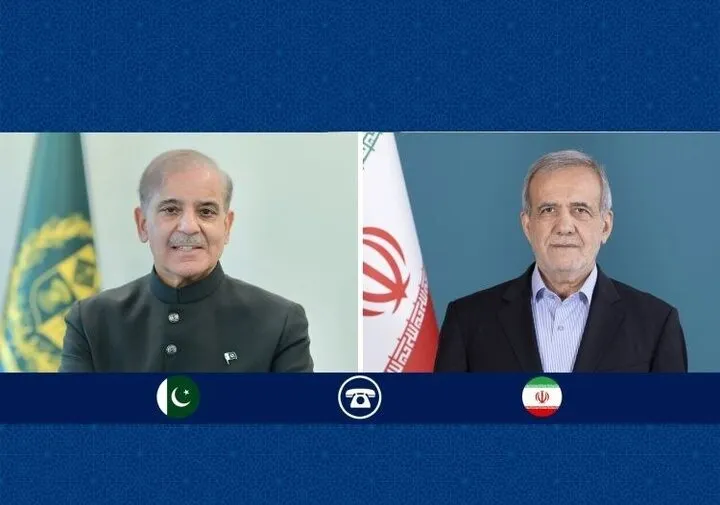
Tehran - BORNA - President Pezeshkian opened the conversation by expressing his gratitude for the presence of a high-level Pakistani delegation at the funeral and commemoration ceremonies of the martyred Leader of the Islamic Revolution, describing it as a testament to the robust strategic ties and deep historical, cultural, and religious bonds shared by the two nations.
He also commended the responsible positions and efforts of the Pakistani government in supporting de-escalation and advancing diplomatic initiatives during recent regional challenges.
Pointing to the current geopolitical landscape, the Iranian President remarked: "In the present situation, alongside diplomatic efforts to stabilize the ceasefire and prevent the crisis from expanding, a dual trend has emerged. On one side, the Zionist regime and factions backing escalatory policies, and on the other, the US government—by reneging on its obligations—are seeking to disrupt existing processes and obstruct the establishment of tranquility in the region."
Dr. Pezeshkian underscored that the Islamic Republic of Iran has consistently acted responsibly and in good faith regarding its engagements and the implementation of its commitments. "The natural expectation is for other parties to remain equally committed to their obligations and refrain from adopting stances or taking actions that undermine trust and complicate diplomatic processes. Mutual respect and practical commitment to obligations are preconditions for any sustainable and successful agreement," he added.
The President further noted that the decision-making and negotiation tracking process in Iran is carried out within the framework of the macro-policies of the establishment and under the guidance and supervision of the Supreme Leader, Ayatollah Sayyid Mojtaba Khamenei. He expressed hope that a responsible approach by all sides would preserve the current window of opportunity to strengthen regional peace, security, and stability.
Turning to bilateral economic cooperation, Dr. Pezeshkian stressed the need to accelerate the implementation of joint agreements and urged relevant bodies to become more active in the sectors of trade, agriculture, transportation, and industry to fully utilize mutual capacities. He highly praised the constructive roles played by PM Shehbaz Sharif and Pakistan's Chief of Army Staff, General Asim Munir, in helping defuse tensions and reinforcing peaceful initiatives.
For his part, Pakistani Prime Minister Shehbaz Sharif stated that the attendance of his country's high-level delegation at the funeral ceremonies was a duty stemming from the brotherly relations between the two neighbors.
Expressing concern over recent regional frictions and the potential for renewed escalation, Sharif emphasized the necessity of continued political efforts, restraint by all sides, and the creation of a suitable environment to secure a durable ceasefire. He reiterated that Islamabad remains fully prepared—alongside other regional initiatives, including the efforts made by the government of Qatar—to continue its role in advancing diplomatic paths and reducing tensions.
Highlighting Iran's pivotal position in regional dynamics, the Pakistani Prime Minister expressed confidence that the high-ranking officials of the Islamic Republic will manage the current situation with prudence and wisdom, concluding that Pakistan is determined to seriously continue its consultations and cooperation with Iran.
The two leaders concluded their conversation by reinforcing the importance of maintaining continuous political contacts and closely monitoring the implementation of bilateral economic and trade agreements.
End Article