Iran's ambassador to Russia outlines six strategic lessons Russians learned from two recent wars on Iran
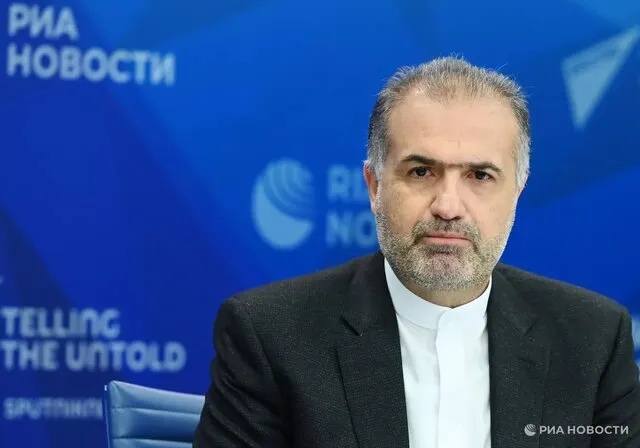
Tehran - BORNA - Kazem Jalali discussed the Russian perspective on the two recent wars on Iran, stating: "Based on comprehensive research we have conducted on Russian think tanks and intellectual centers, several important points have been emphasized."
Russians believe they must revise their understanding of the Iranian nation
He said the first point is that Russians believe they must revise their understanding of the Iranian nation. "In West Asia, whenever a foreign power has attacked a country, part of that country's population has sided with the foreign force to overthrow their government. But Iran is the only country where, after the war began, the people stood behind their flag, land, country, and government."
Jalali noted that extensive articles have been published in Russia introducing the Iranian nation as a people with a great civilization and unique characteristics that cannot be compared to other nations.
Jalali's account of Putin's remarks about the Iranian nation
Referring to a meeting between Iran's Foreign Minister and the Russian President, Jalali said: "When Mr. Araghchi spoke about the Iranian nation's resistance to Mr. Putin in St. Petersburg, after his remarks, the Russian President emphasized: 'You spoke very little about the Iranian people. I am the President of Russia and I communicate with many world officials. The entire world admires your nation.'"
Jalali added: "I believe the Iranian people and even officials are not yet fully aware of the greatness of what the Iranian nation has achieved. In my meetings with Russian officials and people, I have repeatedly heard them say they bow their heads in respect to the Iranian nation. Today, when I appear in various forums as a representative of the Iranian nation, I can clearly feel that perceptions have changed compared to the past."
Iran's armed forces performed far stronger than expected
Jalali noted that from the Russian perspective, the US and Israeli armies are not as powerful as previously thought, while Iran's armed forces performed far stronger than earlier assessments. He added that many countries thought Iran would not last more than a week, but the resistance of Iran's armed forces changed global military calculations.
He emphasized that numerous articles have been published in Russia about the necessity of re-evaluating the capabilities of Iran's army, IRGC, and armed forces.
Iran won the war, Russian official told ambassador
Jalali said a Russian official close to Putin told him: "Our conclusion is that Iran has won this war." He added that this assessment is not limited to officials and is also reflected in Russian think tanks.
Cohesion of Iran's political structure
The third point noted by the Russians, Jalali said, is the cohesion of Iran's political structure. "They believe that unlike many regional wars, no official fled the country and no diplomat sought asylum."
He added that Iran's Foreign Ministry and embassies were active in media and public diplomacy, conveying the Islamic Republic's narrative to the world.
Comparison with the Ukraine war
Jalali said comparisons are being made between Iran's war and the Ukraine war, and some Russian thinkers are examining what lessons Russia should learn from Iran's war experience.
Six strategic lessons Russians have drawn from Iran's war
Jalali outlined the lessons: First, sanctions are a prelude to war, aimed at weakening economies to prepare for military action. Second, Western pressure is a marathon, not a sprint. Third, retreat increases the enemy's appetite, and making concessions does not mean the end of pressure.
Fourth, the West's strategy is shifting toward the physical elimination of leaders. Fifth, internal divisions can serve as a green light for foreign intervention. Sixth, one should not rely solely on trade partners, as economic partners are not necessarily military allies, and every country must rely primarily on its internal capacity.
The non-Western front faces common threats
Iran's ambassador to Russia concluded that there is a consensus in Russian political and academic circles that countries of the non-Western front face similar threats and patterns, making Iran's experience strategically important for them.
End Article