From Luigi Pesce to Erich Schmidt: Story of Persepolis’s Oldest Photographs
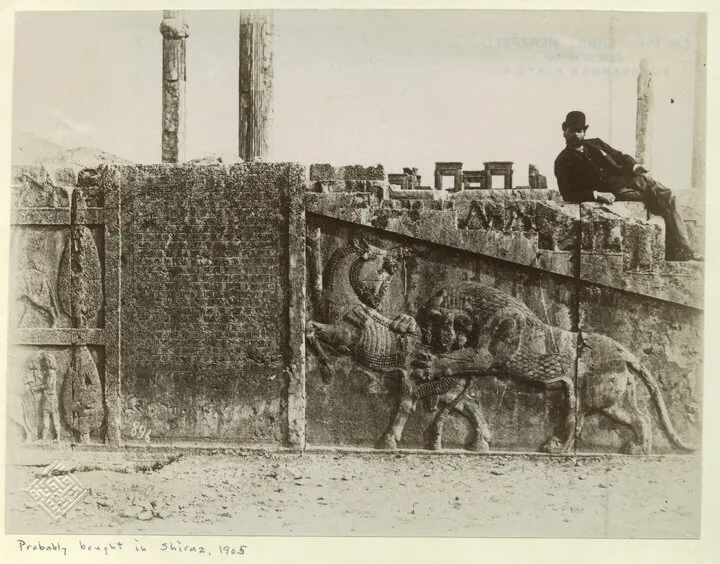
Tehran - BORNA - Luigi Pesce, who had traveled to Iran to provide military training to the Persian army, documented a landscape vastly different from the one millions of tourists recognize today. At the time, major portions of the palaces remained buried under centuries of soil, and the Eastern Staircase of the Apadana Palace was completely hidden from view.

Historical records credit Pesce as the first photographer to document Persepolis, Pasargadae, and Naqsh-e Rostam. He presented an album of his work to Qajar monarch Naser al-Din Shah on April 29, 1858. Another copy was dispatched to King Wilhelm I of Prussia, an album that eventually found its way into the collection of the Metropolitan Museum of Art in New York.

Nearly three decades later, Antoin Sevruguin, a prominent Armenian-Iranian court photographer of the Qajar era, traveled to Marvdasht to document the ruins. Having already photographed a vast portion of Iran’s historical heritage, Sevruguin made multiple expeditions to the site between the late 19th and early 20th centuries, capturing a comprehensive collection of images roughly between 1898 and 1902.

In 1931, German archaeologist Ernst Herzfeld, representing the Oriental Institute of the University of Chicago, launched a formal research and excavation project at Persepolis, with photographer Hans von Busse later joining the team.

Herzfeld’s first major undertaking was the excavation of the Apadana Palace. Between 1931 and 1934, the team unearthed the bulk of the Apadana’s Eastern Staircase from beneath layers of mud-brick debris. Ironically, this debris had acted as a protective shield for centuries, preserving the site's intricate reliefs from weather-induced erosion.


Following the conclusion of Herzfeld’s mission in 1934, Erich F. Schmidt assumed leadership of the project, continuing excavations until 1939.

Between 1935 and 1937, Schmidt utilized his personal aircraft to capture an unprecedented series of aerial photographs of Iran’s ancient sites, which were later compiled and published in his seminal book, Flights Over Ancient Cities of Iran.
End Item