What does 'Alamut' mean?
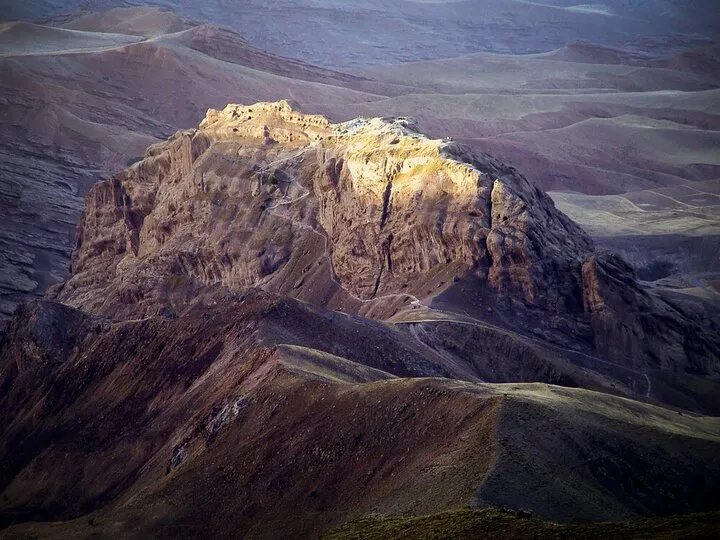
Tehran - BORNA - Following the inscription of Alamut Castle and its associated fortifications on the UNESCO World Heritage list, the Dr. Mahmoud Afshar Foundation has republished a text by Manouchehr Sotoudeh on the etymology and historical description of the fortress.
According to the foundation, the word Alamut is composed of two parts: "Al" and "Amut." The word "Al" is still alive in the language of the people of Rudbar-e Alamut and neighboring regions in Gilan and Mazandaran, where it means eagle. In the local dialect, farmers use the phrase "Alleh tora bezanad" — may the eagle strike you — to refer to birds that damage their crops. The word also appears in place names such as "Alleh Neshanin Band," meaning a hill where eagles roost.
In Mazandaran, the word is pronounced as "Ale" or "Alle," while in Gilan it appears as "Aloq" or "Aloq." In Loora, the eagle is also referred to as "Ale."
The second part of the word, "Amut," is derived from the verb "to teach" or "to train." Ibn al-Athir wrote: "Alamut lies on the border of Daylam. Alveh means eagle, and the second part, Amut, means teaching in the Daylami dialect." Zakariya al-Qazwini noted: "Alamut is in the Rudbar region between Qazvin and the Caspian Sea. Alveh means eagle in Persian, and Amut means training. The castle was named so because an eagle directed a king to this fortress."
Hamdallah Mustawfi also wrote: "The castle was originally called 'Alah-Amut,' meaning the eagle's nest where the young are trained. Over time, it became Alamut." Based on these accounts, it can be concluded that Alamut is a compound word meaning "eagle trainer" or "eagle-trained."
The foundation has also republished a description of the fortress from the "Shahnameh-ye Changizi" by Shams al-Din Kashani. The poem recounts the arrival of Hulagu Khan at Maymun-Dez, describing the fortress as so high that it rivaled the sky. The poem notes that its builders had constructed it with such precision that it was considered impregnable, and that even eagles flying at great heights had never seen its roof in their dreams.
End Article