Aref: Iran holds upper hand in diplomacy
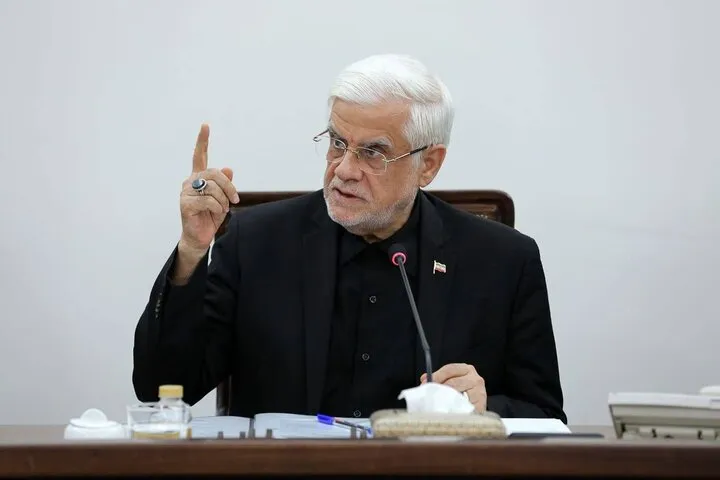
Tehran - BORNA - Mohammad Reza Aref made the remarks during a meeting with a group of former ambassadors.
He emphasized that the government considers Iran's ambassador in any country as the President of the Islamic Republic in that country, stressing that ambassadors play a key role in enhancing the country's political standing and expanding interactions with other nations.
Aref said that with a strong pool of experienced diplomats and Iran's civilizational heritage, Iran claims to hold the upper hand in diplomacy.
He praised Foreign Minister Abbas Araghchi as a prominent, courageous, patient, and reserved diplomat, adding that the diplomatic apparatus's efforts resulted in a memorandum of understanding that even government critics consider valuable.
The First Vice President noted that human resources are Iran's most important comparative advantage, as demonstrated in the two recent wars, where military officers and young, motivated scientists made significant advances between the conflicts.
Aref expressed regret over laws such as the ban on employing retirees, which has deprived Iran of experienced personnel, including former ambassadors who could serve as a think tank for the government. He recalled that a similar body had been formed for former ministers but was not properly utilized by subsequent governments.
He said Iran has now entered a post-war phase and must use all domestic capacities to navigate this period. "The enemy failed to achieve any of its declared objectives in the war, and today the world expects a greater role from post-war Iran. We believe in dialogue and will defend national interests through negotiations."
During the meeting, several former ambassadors shared their views. Morteza Sarmadi noted that the true meaning of diplomacy has not yet been fully realized in Iran, and that some interpret diplomacy as submission to the other side's demands.
Gholamreza Ansari pointed to US budget plans for 2027, which seek to integrate Israel into the US military and security structure, warning that Iran must prepare for this scenario.
Mohammad Khazaei emphasized that former ambassadors still maintain deep knowledge of their areas of expertise and can assist the Foreign Ministry.
Ahmad Dastmalchian called for structural reform in the Foreign Ministry to make it more agile. Jafar Mohajer stressed that diplomatic achievements have not been properly explained to the public, leading to misconceptions about diplomats. Jafar Hashemi called for reviving the International Relations School of the Foreign Ministry.
Mehdi Nabizadeh suggested that retired diplomats be given research missions. Ali Saqaeian noted that in some countries, the retirement age for diplomats is 75. Mansour Moazami proposed that international deputies of executive bodies be selected from Foreign Ministry diplomats. Nosratollah Tajik stressed that national cohesion is essential for foreign policy success. Bahman Hosseinpour emphasized that economic cooperation with neighbors should be a priority. Abdullah Norouzi noted that domestic laws have deprived the Foreign Ministry of experienced personnel, though efforts to form a former ambassadors' body as a think tank have begun in recent years.
End Article