The legacy of Suhrawardi: A call to revisit the light of wisdom
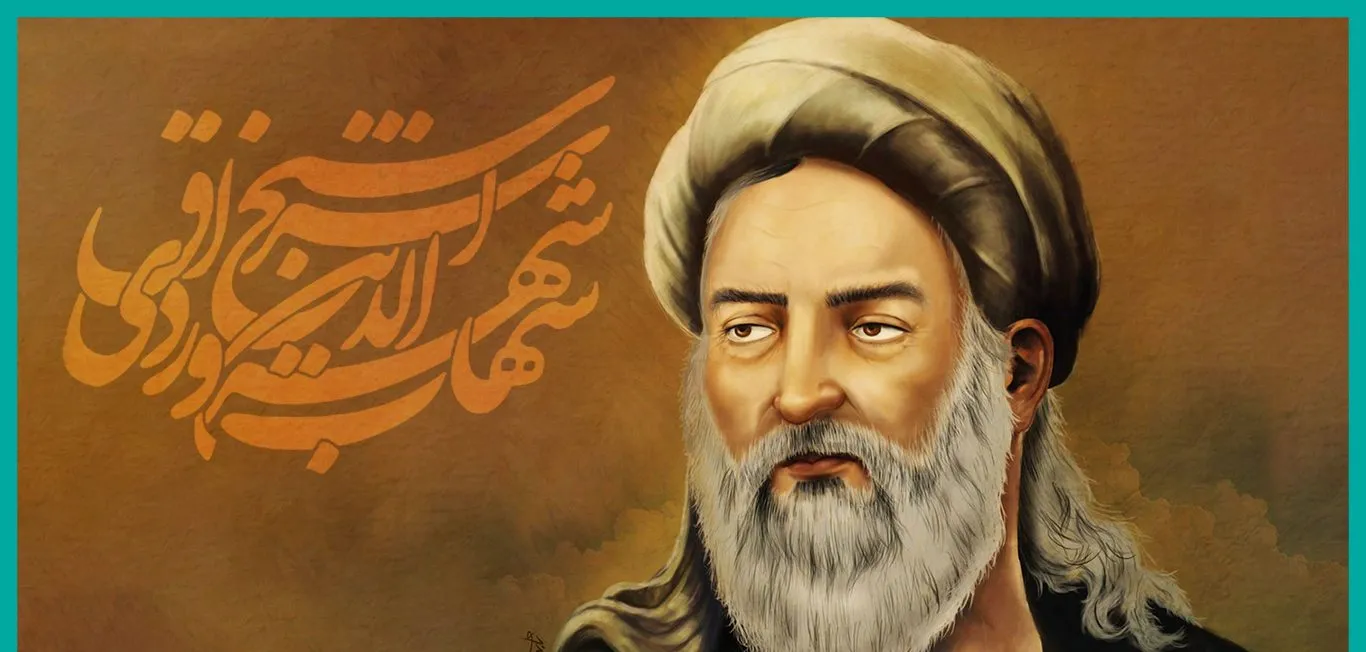
Tehran - BORNA - Suhrawardi, often referred to as "Sheikh al-Ishraq" (the Master of Illumination), is a unique figure in the history of Iranian and Islamic thought. He brought together philosophy, mysticism, theology, and spirituality into a single coherent framework, bridging diverse intellectual traditions in a way that continues to inspire researchers and seekers of knowledge.
His "Hikmat al-Ishraq" (The Philosophy of Illumination) is not merely a philosophical text but a spiritual roadmap. Suhrawardi spent much of his short but fruitful life in travel and study, seeking masters of sacred sciences. He ultimately concluded that the path to truth lies in detachment from worldly attachments and in the practice of spiritual discipline.
According to scholars, Suhrawardi's thought is best understood through the concept of "spiritual observation" — a method in which the philosopher, like an astronomer observing the heavens, contemplates the spiritual realm and reveals what others cannot see. This observation requires spiritual training and inner purification.
Suhrawardi did not reject reason; rather, he completed it with intuition and spiritual practice. For him, the complete philosopher is one who unites knowledge and action. A society reaches happiness only when these two dimensions are not separated.
Suhrawardi as a bridge between ancient and Islamic Iran
One of Suhrawardi's most important roles is his function as a cultural and spiritual bridge. He revealed the deep kinship between the wisdom traditions of ancient Iran and the monotheistic, revelatory teachings of Islam. The seeds of wisdom planted in pre-Islamic Iran flourished in the Islamic period, and Iran was able to preserve its historical identity through philosophy, mysticism, literature, and ethics.
Suhrawardi, more than any other figure, stands at the forefront of this civilizational flourishing. His works, from beginning to end, testify to the deep relationship between the sapiential and prophetic traditions of ancient Iran and the Qur'anic revelation.
The Red Intellect: A roadmap for contemporary humanity
One of Suhrawardi's most important works, "Aql-e Sorkh" (The Red Intellect), offers a profound response to the crisis of modern humanity. Contemporary humanity is lost, suffering from disconnection from its origin and the forgetting of its true self. In this treatise, Suhrawardi lays out a path for salvation.
The Red Intellect describes the journey of the soul: its creation, its intimacy with the sacred realm, its descent, its bewilderment, and ultimately its path to liberation and ascent. Suhrawardi teaches that human beings are beings of light, not prisoners of the material world. If the earth is taken as the final destination, the soul suffers alienation and homelessness. True peace is achieved when a person, in the light of wisdom, reconciles reason, faith, and intuition, and transcends absolute attachment to the material world.
The spiritual station of the Imam in Illuminationist thought
One of the lesser-known dimensions of Suhrawardi's philosophy is his deep engagement with the teachings of the Ahl al-Bayt and his explanation of the spiritual station of the Imam. Suhrawardi holds that the world is never empty of a person who is the bearer of divine proof and signs. The Imam is God's vicegerent on earth, and the survival of the world and its connection to divine grace depends on the existence of such a perfected human being.
Suhrawardi distinguishes the true vicegerent of God as one who, in addition to reasoning ability, possesses "talqi" — a receptive, illuminative knowledge. True leadership, in this view, is not based on outward power but on spiritual and intellectual perfection.
A living wisdom for today
Suhrawardi's legacy is not a relic of the past; it is a living, breathing wisdom that speaks to the challenges of contemporary life. In an age of information overload, human beings are still in crisis — not due to a lack of knowledge, but due to a poverty of meaning and a distance from the light of wisdom. Suhrawardi reminds us that truth is not reached by reason alone, but requires inner light and self-purification.
His thought calls for a return to the luminous horizon of wisdom. It invites us to see the crisis of our time not as a failure of science, but as a forgetting of the transcendent dimension of existence. In this sense, Suhrawardi's Illuminationist philosophy is not only a historical achievement but an ever-present possibility for re-enchanting the world with meaning, justice, and light.
End Article