Pakistan foreign ministry: Iran-US talks ongoing despite clashes
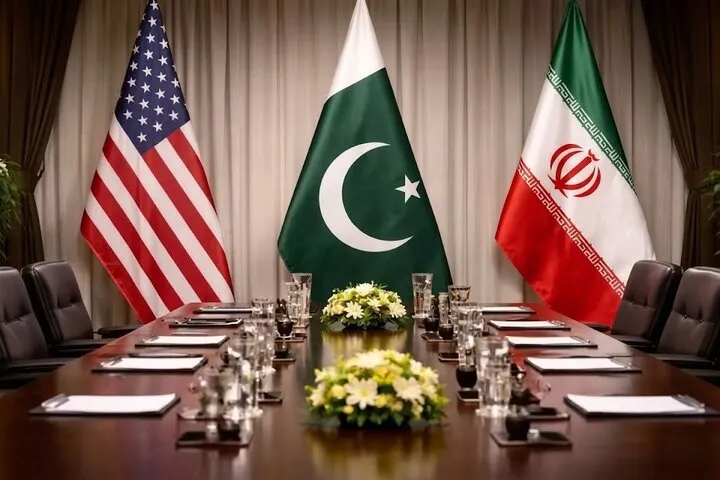
Tehran - BORNA - Tahir Andrabi said during his weekly press conference in Islamabad that Pakistan, acting as a mediator in the Tehran-Washington talks, welcomes all efforts aimed at maintaining the cessation of hostilities and resuming dialogue between Iran and the United States.
Andrabi’s statements follow a new wave of exchange of fire between Iran and the U.S., triggered by the ongoing hostilities and threats from the U.S. military against Iran in the region, which drew a decisive response from Iranian armed forces.
In recent days, informed sources in mediating nations—including Qatar, Pakistan, and Oman—reported positive progress in de-escalation talks, outlining a plan for the reopening of the Strait of Hormuz, a two-week ceasefire, and a return to negotiations.
According to Pakistani newspaper The Nation, Andrabi added that Pakistan remains actively engaged and will continue its role, stating that discussions between the parties to normalize the situation are underway.
The spokesperson emphasized that Pakistan is exerting its utmost efforts to bring both sides back to the Islamabad Memorandum to overcome all obstacles in accordance with the spirit of the understanding and the June 22 Joint Statement by Pakistan and Qatar. He called on both sides to exercise maximum restraint and fully commit to resuming technical-level talks to implement the agreement.
Andrabi had similarly noted on Thursday that de-escalation talks between Iran and the United States remain active despite the exchange of fire, particularly regarding the Strait of Hormuz, stressing that dialogue and diplomacy remain the only viable path forward amid ongoing tensions in West Asia.
Shortly after signing the war-ending memorandum of understanding, the United States violated Clause 5—which clearly enabled the reopening of the Strait of Hormuz under Iranian arrangements—by attempting to direct vessels through illegal and unsafe routes to undermine Iran’s sovereign rights as a coastal state.
Following Iran’s response in stopping these vessels, the U.S. military repeated its acts of aggression against Iranian national sovereignty and territorial integrity, striking military and civilian targets, including bridges, water treatment facilities, and maritime control towers at Iranian ports. Washington also resumed an illegal naval blockade of Iranian ports. Iran's response to this aggression under Operation Nasr 2 sparked a new round of military confrontation between the two sides.
Recent clashes have continued under Operation Nasr 2, with Iranian armed forces launching heavy drone and missile strikes against U.S. bases in Kuwait and Jordan in response to recent U.S. military actions, including a strike on a residential area on Qeshm Island.
End Article