Islamabad memorandum: What the US wanted, what Iran achieved
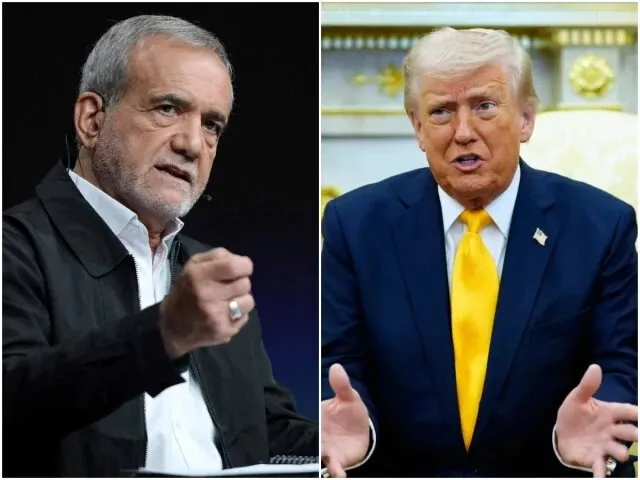
Tehran - BORNA - Talks over an agreement with Iran resumed in February 2026 following the US breach of commitments and the 12-day war, with President Donald Trump making a series of shifting and sometimes contradictory statements throughout the process about both the talks and his conditions. At one point Trump said any deal with Iran "should go beyond the nuclear issue" and must include limits on Iran's ballistic missile arsenal. After US forces again attacked Iran during the negotiations, Trump continued making contradictory claims during and after the subsequent 40-day war. When the resumption of talks through Pakistani mediation was raised, he claimed: "They've agreed to send back the nuclear dust to us," and "They're not agreeing to the deal we want, and we have to get this finished properly."
At another point during the consultations, Trump said he had "studied Iran's 14-point plan" and found it unacceptable, adding: "I just read the answer from Iran's so-called representatives — I don't like it. Totally unacceptable!" On Iran's proposal he also said: "I think it's very weak. After reading the nonsense they sent us, I found it the weakest response. I didn't even finish reading it. I said I'm not wasting my time on it."
Trump's focus on enrichment and uranium
Trump sought to use the negotiations to achieve his own goals, particularly on uranium enrichment, and made several comments about Iran's enriched uranium stockpile. "We were thinking about doing that early on, but it takes time — about a week and a half, which is a long time to be in enemy territory," he said. He also said enriched uranium "should either be handed over to the US immediately for removal and destruction, or preferably destroyed in coordination with Iran, at the same site or another acceptable location, under the supervision of the [International Atomic Energy] Agency or an equivalent body."
US position on sanctions
Trump repeatedly said during the talks that sanctions would not be lifted. "We have control of the money they claim is theirs. We will keep control of that money. Whenever they behave properly and do the right thing, we'll let them access their money. There's no talk of lifting sanctions at all — they're going to give up their highly enriched uranium, not in exchange for lifting sanctions," he said. Even as Tehran and Washington neared a deal, Trump said any war-ending agreement must include Iran's commitment to opening the Strait of Hormuz and destroying its uranium stockpiles, though he said Lebanon would not be part of any short-term agreement with Iran.
What the US proposed
The US pushed for its usual maximalist demands in this round of talks as well, with Trump repeatedly saying he rejected Iran's proposals. Washington's 15-point plan included the following main provisions:
Iran agrees never to seek or pursue nuclear weapons.
Iran agrees not to pursue enrichment.
Iran will not stockpile enriched uranium.
All enriched material will be handed to the International Atomic Energy Agency or diluted and returned to the fuel cycle; Natanz, Isfahan and Fordow will be taken offline.
Iran agrees not to design or build data-x-items used in enrichment or conversion, such as centrifuges.
The Agency will have full inspection and monitoring access to Iran's activities, including Iran's adoption of the Additional Protocol.
Iran will distance itself from proxy groups and refrain from arming or financing them.
The Strait of Hormuz will be recognized as a free shipping lane, with all parties agreeing not to close it or disrupt free trade through it; a protocol will be agreed so that no party feels threatened.
An agreement will be reached on missile numbers and range among all Persian Gulf states, in a way that creates deterrence without being provocative.
Iran has the right to a prosperous future and to benefit from all its economic and human capacities.
Three months of Pakistani mediation
Roughly three months of negotiations mediated by Pakistan followed, with frequent shuttle diplomacy between officials of the two countries. Pakistani officials, including the interior minister and army chief Asim Munir, traveled to Tehran on several occasions carrying messages between the two sides.
First round of talks
The first round of talks, mediated by Pakistan, was held in Islamabad with representatives of both countries. Iran's delegation was led by Parliament Speaker Mohammad Bagher Ghalibaf and included Iran's foreign minister, while JD Vance, the US vice president, represented Washington.
Final negotiations
The final round of talks was held in Switzerland with negotiators from both Iran and the US. Pakistani Prime Minister Shehbaz Sharif, army chief Field Marshal Asim Munir and Interior Minister Mohsin Naqvi took part as mediators. Once agreement was reached, the presidents of Iran and the United States signed the Islamabad memorandum remotely.
What Iran and the US agreed
Iran and the United States reached the agreement in good faith on June 18, 2026, following a long period of consultation and negotiation mediated by Islamabad. The government and many institutions within the Islamic Republic — including resistance groups — described it as a major achievement in which Iran secured its maximum objectives vis-à-vis the United States.
Full text of the Islamabad memorandum
Iran, the United States and their allies in the current war declare an immediate and permanent end to military operations on all fronts, including in Lebanon, and commit not to initiate any war or military operation against each other going forward, to refrain from the threat or use of force against one another, and to guarantee Lebanon's territorial integrity and sovereignty. The final agreement will confirm the permanent end of the war on all fronts, including Lebanon, and the remaining provisions of this article.
Iran and the United States commit to respecting each other's sovereignty and territorial integrity and to refraining from interference in each other's internal affairs.
Iran and the United States commit to conducting negotiations and reaching a final agreement within a maximum of 60 days, extendable by mutual consent.
Immediately upon signing this memorandum, the United States will begin lifting its naval blockade and any harassment or obstruction against Iran, and will fully end the blockade within 30 days. During this period, ship traffic will be set at a level commensurate with pre-war traffic, as determined by Iran. The United States also commits to withdrawing its military forces from Iran's periphery within 30 days of the final agreement.
Upon signing this memorandum, Iran will make its best effort to arrange for the safe, cost-free passage of commercial vessels between the Persian Gulf and the Sea of Oman, and vice versa, for a period of 60 days. Commercial shipping traffic will begin immediately and be fully established within 30 days, accounting for the need to clear technical and military obstacles and for Iran to conduct mine clearance. Iran will hold talks with the Sultanate of Oman on the future administration and maritime services in the Strait of Hormuz, in line with applicable international law and the sovereign rights of the strait's coastal states, with other Persian Gulf coastal states also to be consulted.
The United States commits to working with its regional partners to establish a definitive, mutually agreed program for Iran's economic reconstruction and development, funding at least $300 billion. The implementation mechanism for this program will be finalized within 60 days as part of the final agreement. The United States will issue all approvals, waivers and licenses required for related financial transactions.
The United States commits to ending all sanctions against Iran — including UN Security Council resolutions, IAEA Board of Governors resolutions, and all unilateral US sanctions, primary and secondary — according to a timetable to be agreed as part of the final agreement. Both sides acknowledge the fundamental importance of ending these sanctions and state their intention to address the matter urgently in negotiations in order to reach mutual agreement.
Iran reaffirms that it will not produce or acquire nuclear weapons. Iran and the United States have agreed to resolve the status of stockpiled enriched material through a mutually agreed mechanism, in line with the timetable set out in Article 7, at minimum through on-site dilution under IAEA supervision. The two sides also agree to discuss enrichment and other matters related to Iran's nuclear needs based on a satisfactory framework to be agreed in the final agreement. The final agreement will confirm the provisions of this article, and both sides acknowledge the fundamental importance of the above nuclear issues and their intention to address them urgently in order to reach mutual agreement.
Iran and the United States agree to maintain the status quo until the final agreement: Iran will maintain the current status of its nuclear program, and the United States will impose no new sanctions on Iran and will not deploy additional military forces in the region.
The United States commits to immediately issuing, upon signing this memorandum and until sanctions are lifted, Treasury Department waivers for the export of Iranian crude oil, petrochemical products and their derivatives, and all related services, including banking transactions, insurance and shipping.
The United States commits to making Iran's restricted or frozen funds and assets fully available for use upon implementation of this memorandum. The United States and Iran will bilaterally agree on the procedure for releasing these funds during the negotiations. These funds — whether held in their original accounts or transferred — must be made fully usable for payment to any ultimate beneficiary designated by the Central Bank of Iran. The United States commits to issuing all necessary approvals and licenses in this regard.
Iran and the United States agree to establish an implementation mechanism to monitor the successful execution of this memorandum and future compliance with the final agreement.
Following the signing of this memorandum, and contingent on the commencement and continued implementation of Articles 1, 4, 5, 10 and 11, Iran and the United States will begin negotiations on the final agreement solely with respect to the remaining articles.
The final agreement will be confirmed by a binding UN Security Council resolution.
What the US didn't get
A comparison between what the US sought in its 15-point plan and what it ultimately obtained shows Iran was able to defend the country's legitimate interests within the Islamabad memorandum.
Nuclear weapons
Washington's plan had demanded that "Iran agree to never seek or pursue nuclear weapons." What the two sides ultimately agreed to instead was that "Iran reaffirms it will not produce or acquire nuclear weapons" — a provision whose permanence is contingent on US compliance with its obligations under the long-term agreement.
On dilution of enriched material, Trump's plan had called for all material to be handed to the IAEA or diluted and returned to the fuel cycle, with Natanz, Fordow and Isfahan taken offline. The 14-point memorandum instead states that Iran agreed only to negotiate on minimal dilution of enriched material, on Iranian soil, after the US takes concrete and irreversible steps. No firm commitment was made, and nuclear-related negotiations were deferred until after tangible, irreversible US action — a matter that will only be discussed further if both sides agree.
Resistance groups
The US president's initial plan had demanded that "Iran distance itself from proxy groups and refrain from arming or financing them." This provision was removed from the text of the Islamabad memorandum, with it specified that the matter can no longer be placed on the negotiating agenda — meaning the US has permanently agreed not to pressure Iran over its support for resistance groups. Iran, contrary to the US's original demand, is understood to have forced Washington to immediately halt its war against resistance groups, particularly Lebanon's Hezbollah.
Strait of Hormuz
On opening the Strait of Hormuz, Trump had sought recognition of the strait as a free shipping lane, with all parties agreeing not to close it or disrupt free trade through it, under a protocol designed so no party would feel threatened. Under the Islamabad memorandum, the two sides instead agreed that commercial shipping traffic between the Persian Gulf and the Sea of Oman would open within 30 days, with the safe-passage arrangements left to Iran. In effect, Iran committed only to opening a route for commercial vessels, with all such traffic to be governed by mechanisms and procedures announced by Iran itself.
Missile program
The US's 15-point plan had also called for an agreement on missile numbers and ranges among all Persian Gulf states, designed to create deterrence without being provocative. This provision was removed from the memorandum and barred from being added to the agenda — meaning the US has permanently agreed not to raise demands on Iran's missile program. Iran's defense capabilities are, in effect, not and will not be the subject of any talks or agreement.
Key provisions of the Islamabad memorandum
Among the most significant data-x-items included in the signed memorandum, secured over US objections through Iranian insistence on its rights, were: the release of all of Iran's blocked assets during the 60-day period; an end to the war against Iran's regional allies and unified fronts; Iranian management of the Strait of Hormuz; suspension of oil and petrochemical sanctions during the 60-day period, allowing Iran to earn foreign currency revenue; a UN Security Council resolution; establishment of a monitoring mechanism; withdrawal of US forces from Iran's periphery; respect for Iran's sovereignty and territorial integrity and a commitment not to interfere in its internal affairs; and a US guarantee to respect Lebanon's territorial integrity and sovereignty — which implies a requirement that Israel withdraw from occupied Lebanese territory.
Hezbollah's reaction: the resistance's view of the agreement
Given Iran's insistence on halting attacks on Lebanon, Hezbollah Secretary-General Sheikh Naim Qassem, speaking at the central Ashura ceremony after the Iran-US agreement was announced, congratulated the Iranian people, the resistance movement and the region's nations and states on the outcome. He thanked Iran "for linking the Lebanese front to the resistance and the nation's readiness for sacrifice, and for forcing the Israeli regime to halt its aggression." He said: "The goal of this war was to topple Iran's system, but America's show of force was broken, and Washington's colonial plan against Iran failed."
In a separate address marking the [Islamic] Revolution's martyred leader, Qassem said that without Iran, the ceasefire in Lebanon would not have been achieved after the resistance's steadfastness. "We remain committed to this option, because it has proven effective and represents added strength for us," he said. "Everyone must work to free Lebanon from the shadow of American tutelage. We benefit from our relationship with Iran."
It can fairly be said that the Islamabad memorandum, reached amid a full-scale war launched by the United States and Israel for a second time in February/March 2026, was one of the most significant diplomatic achievements running parallel to Iran's battlefield resistance — a result shaped by the state's sovereignty. The agreement was endorsed by many countries in the world and the region. Within less than two weeks, however, repeated US interference and violations created the conditions for a complete breakdown, with both sides eventually abandoning their commitments. The memorandum might have cooled the region's conflict in the short term and, through further negotiation, in the longer term as well — but American maneuvering and breaches of the agreement, and efforts to circumvent it, began from the very first day of implementation, as if Washington had never intended to honor it from the start.
At the same time, reaching the agreement was itself a major achievement for Iran, coming in the midst of an all-out war waged by the US and regional states and attempts to destabilize Iran's domestic situation. It sent a message of unity and cohesion to the outside world, as the Islamic Republic's leadership — despite differences of view and occasional coordination gaps — managed to bring all branches of government to accept and implement the memorandum. The role of the government and the Iranian president personally in securing and implementing the agreement is notable: without the president's effort and willingness to take part in one of the most unprecedented political and diplomatic events in Iran's history — the remote signing by the presidents of both countries — the memorandum might never have reached the implementation stage at all. Although the US president, known for his contradictory statements, did not honor the agreement he himself signed, Iran once again demonstrated to the world which side broke its word.
End Aricle