Iran-Iraq tech cooperation enters strategic phase
Tehran - BORNA - Telecom cooperation between Tehran and Baghdad had, in recent years, mainly taken on an operational, service-oriented character, particularly ahead of the Arbaeen pilgrimage. That scope has now expanded to more strategic areas, including communications infrastructure development, cybersecurity, the digital economy, new technologies and cooperation between the two countries' tech companies.
Iran's Communications and Information Technology Minister Sattar Hashemi arrived in Baghdad on July 15 at the head of a delegation, on a trip aimed at coordinating communications services for Arbaeen pilgrims as well as deepening bilateral cooperation between Iran and Iraq in telecommunications and IT.
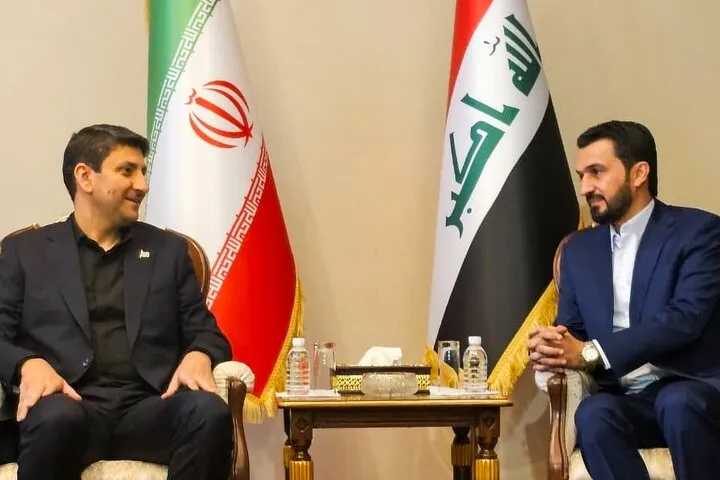
During the visit, Hashemi met with Iraqi Communications Minister Hayyan Abdul Ghani Abdul Zahra al-Awadi [as identified in Iraqi state media as Mustafa Jabbar Sanad in the source] to discuss areas of cooperation between the two countries. The trip also included specialized meetings with Iraqi telecom operators aimed at improving roaming quality, strengthening communications infrastructure, and resolving connectivity issues along shared border routes.
According to Iran's Communications Ministry, one tangible outcome of the talks was an agreement to provide free internet access to Arbaeen pilgrims along the Najaf-Karbala route — a step that, alongside improved roaming services and stronger network coverage along the pilgrimage route, reflects the role communications infrastructure plays in facilitating social and people-to-people ties between the two countries.
The significance of Hashemi's Baghdad trip was not limited to Arbaeen-related services, however. During the talks, the two sides also discussed transferring Iranian experience in areas including cybersecurity, the digital economy, e-health, space technology and communications research — signaling that Tehran and Baghdad are defining new areas of cooperation that go beyond service delivery toward knowledge and experience transfer, joint market development, and private-sector participation from both countries.
Hashemi also traveled to Karbala, where he met with the custodian of the shrine of Imam Hussein and the governor of Karbala province, and stressed the importance of expanding joint cooperation to improve telecommunications services for pilgrims.
This cooperation comes as both countries, given the growing dependence of public, economic and social services on digital infrastructure, have prioritized network security and resilience. Iran, drawing on its experience developing communications infrastructure and its domestic capabilities in cybersecurity, network resilience and fiber-optic expansion, has expressed readiness to share this experience with Iraq. Iraq's communications minister had previously pointed to Iran's capabilities in defending communications infrastructure and cybersecurity, stressing Baghdad's readiness to expand comprehensive cooperation and draw on Iran's experience.
The next step in this cooperation came today with Iraqi Communications Minister [Mustafa Jabbar Sanad]'s visit to Tehran. He traveled to Iran at Hashemi's official invitation to attend the 29th Elecomp International Exhibition and continue talks between the two countries on the future of communications and technology cooperation.
The Iraqi minister's presence at Elecomp carries particular significance, as the exhibition is one of Iran's most important information and communications technology events, showcasing the latest products and services from tech firms, knowledge-based companies, startups and digital-economy players. Elecomp 2026 features more than 350 participants across 14 halls, covering fields including artificial intelligence, cybersecurity, software and hardware, digital services and innovative businesses.
On the sidelines of the exhibition, an "Iran-Iraq Specialized Forum" will also be held to examine opportunities for joint cooperation in communications and IT — an event expected to enable direct dialogue between companies, operators and tech-sector figures from both countries.
Hashemi's invitation to his Iraqi counterpart to attend Elecomp, and Baghdad's acceptance of that invitation, reflects efforts by both countries to energize technology diplomacy and build direct links between Iran's and Iraq's innovation ecosystems. Within this framework, knowledge-based companies and digital-economy players — alongside government agencies — could become key actors in this new phase of cooperation.
The momentum did not stop after Iran's communications minister returned from Baghdad. On Aug. 23, Hashemi met with Iraqi Ambassador to Tehran Yasser Abdul-Zahra al-Hajjaj to discuss expanding bilateral cooperation — a meeting held ahead of the Iraqi communications minister's trip to Iran, reflecting the continuity of consultations between the two countries in communications and IT.
Taken together, these developments show that Iran-Iraq technology relations are taking shape on several levels simultaneously: communications services for pilgrims, infrastructure and data-exchange capacity development, cybersecurity and network resilience, technical knowledge transfer, digital-economy development, and building links between the two countries' tech companies.
While Arbaeen remains one of the most important proving grounds for operational cooperation between the two countries' communications networks, the outlook for Tehran-Baghdad cooperation extends well beyond that event — toward both continued infrastructure development and the emergence of joint markets and cooperation in the digital economy and new technologies. The Iraqi communications minister's presence at Elecomp and the Iran-Iraq Specialized Forum could mark an important step in translating these government-level talks into operational cooperation between companies and technology players from both countries.
End Article