US attrition turns each American loss into an advantage for Iran: Lebanese analyst
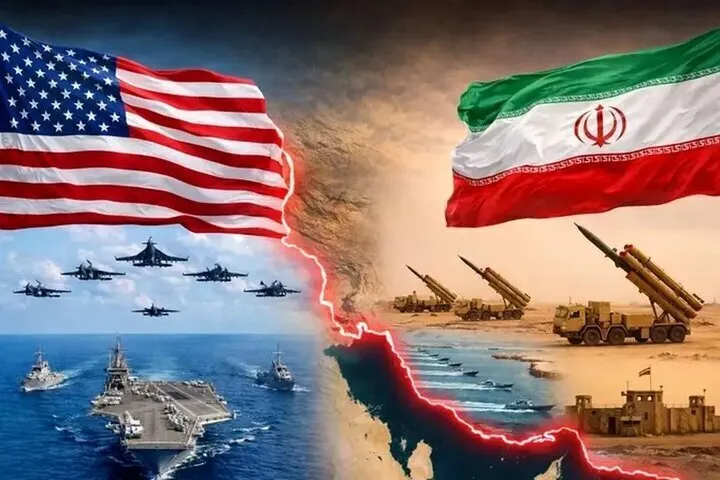
Tehran - BORNA - In an article published by Al-Binaa newspaper under the title “A war decided by points: Iran advances with every point America loses,” Qandil wrote that wars are not all judged by the same standards of victory and defeat.
Existential and decisive wars, such as World War II or the American Civil War, are based on comprehensive mobilization and broad domestic consensus, he said, with the objective of eliminating the opposing side or forcing its complete surrender.
A war of attrition fought by a major power beyond its own borders, however, is often a war of choice that begins with promises of a quick victory but, once the initial strikes fail to achieve their objectives, turns into a prolonged conflict for which neither the domestic front nor the industrial base has been adequately prepared.
Qandil said this creates an asymmetrical equation.
What begins as a war of choice for the stronger power becomes a war of survival for the weaker side. The United States can end the war and return home without putting its own existence at risk, he argued, while Iran cannot “leave Iran” or abandon the elements of its power and sovereignty.
Washington therefore needs to achieve its stated objectives in order to claim victory, while Tehran only needs to prevent those objectives from being realized.
“The United States needs a decisive victory, while for Iran, standing its ground is enough,” he wrote.
Qandil argued that the war can no longer be settled through a final strike because Washington is unable to occupy Iran or eliminate its political system, while the initial attacks also failed to destroy Tehran’s ability to retaliate.
He said the conflict will instead be decided “on points,” but under an unusual scoring system: Iran gains not only through points of its own, but also through every point the United States loses.
First point: Oil prices
Qandil identified oil prices as the first major pressure point.
He wrote that Brent crude had again climbed to around $97 a barrel after exceeding $100 during previous rounds of escalation.
The price of diesel in the United States, he added, had reached a record $5.85 per gallon, while gasoline had risen to $4.15 per gallon, representing an increase of around 39% since the beginning of the war.
According to Qandil, Iran does not need to completely close the Strait of Hormuz.
It only needs to keep navigation through the waterway unstable and drive up transportation and insurance costs.
Every additional dollar added to the price of a barrel of oil, he argued, ultimately feeds into transportation and food costs, inflation and interest rates, turning into what he described as “a daily vote against the war” inside the United States.
Second point: US strategic oil reserves
Qandil identified the US Strategic Petroleum Reserve as the second pressure point.
He wrote that Washington announced in March that it would release 172 million barrels from the reserve as part of an unprecedented international release totaling 400 million barrels.
By the end of August, he said, the US reserve had fallen to 286.6 million barrels, its lowest level since 1982, and could decline further once the planned releases are completed.
Qandil argued that Iran benefits either way.
If Washington stops drawing down the reserve, oil prices rise. If it continues withdrawals, the United States reduces the stockpile available for future emergencies.
“The strategic reserve can contain today’s price, but it does so at the expense of America’s ability to manage tomorrow’s crisis,” he wrote.
Third point: Air defense inventories
The third point, according to Qandil, concerns US air defense stocks.
Citing US estimates, he wrote that roughly two-thirds of Patriot missile inventories and around half of THAAD stocks had been used.
Prewar THAAD inventories were estimated at around 452 interceptors, he said, while one US official had described the remaining stockpile as “very low.”
Qandil argued that individual interceptor missiles cost millions of dollars and can take as long as two years to replace.
As a result, shooting down an Iranian missile may appear to be a tactical success, but it can become a strategic loss if it consumes scarce and expensive munitions also intended for a possible confrontation with China or for the defense of Europe and South Korea.
Iranian missiles and drones, by contrast, are cheaper and faster to replace, he argued.
Iran therefore does not need to penetrate US defenses in every wave of attacks, Qandil wrote. It only needs to force those defenses to activate.
“Every successful interception protects a target today, but reduces the ability to protect that same target tomorrow,” he said.
He added that every US interceptor fired in the Persian Gulf also reduces the pool of weapons potentially available for a future conflict in the Pacific.
Fourth point: The US domestic political front
Qandil identified domestic US politics as the fourth pressure point.
Citing a Reuters/Ipsos poll, he wrote that President Donald Trump’s approval rating had fallen from 40% at the beginning of the war to 33%, while only 31% of Americans supported the conflict.
With congressional elections approaching in November, Qandil argued, the war can no longer be presented as a rapid victory.
Instead, it increasingly combines higher fuel prices, growing military expenditures, depleted weapons inventories and the absence of a clear endgame.
He said Vice President JD Vance exposed that dilemma when he refused to describe the confrontation as a “war,” while also being unable to say when it would end.
Washington, meanwhile, has more than 50,000 military personnel and around 20 warships deployed in the region.
According to Qandil, refusing to call the conflict a war while forces and attacks continue does not indicate that the war is ending. Rather, it reflects how difficult it has become to defend it before American voters.
Fifth point: Failure to internationalize sanctions
The fifth point, Qandil argued, is Washington’s failure to build an international consensus around sanctions against Iran.
He pointed to the US decision, for the first time in its current campaign, to sanction a Turkish bank over allegations that it transferred Iranian oil revenues from China.
According to Qandil, the move demonstrates that the blockade and sanctions regime is fundamentally American rather than international, with even some NATO-member countries and institutions unwilling to fully comply.
Without China, Russia and major Asian economies joining the sanctions campaign — something he argued recent Shanghai Cooperation Organization developments have shown to be unrealistic — sanctions may harm Iran but will not be able to suffocate its economy or force Tehran to surrender.
A war decided by points
Qandil said the points are accumulating: higher oil prices, dwindling US petroleum reserves, declining interceptor stocks, widening domestic political divisions, approaching elections and Washington’s failure to internationalize its sanctions campaign.
The United States may be able to destroy facilities, assassinate commanders and intercept missiles, he argued, but those military achievements lose their strategic value if they fail to produce a political outcome.
If the war ends with Iran still standing, retaining the ability to resist pressure and negotiate on an equal footing, Qandil wrote, Washington may have carried out numerous military attacks but Iran will have won “on points.”
Under such circumstances, he argued, the cumulative pressure of attrition will continue tightening around Washington and eventually push the United States back toward a political solution and renewed mediation.
Qandil concluded that just as Washington found it difficult to accept the memorandum of understanding but ultimately did so, a return to that understanding — or an agreement of comparable substance — could again emerge as the eventual outcome, driven primarily by the cumulative costs of the war.
End Article