Ghalibaf: Era of ‘proportionate responses’ is over
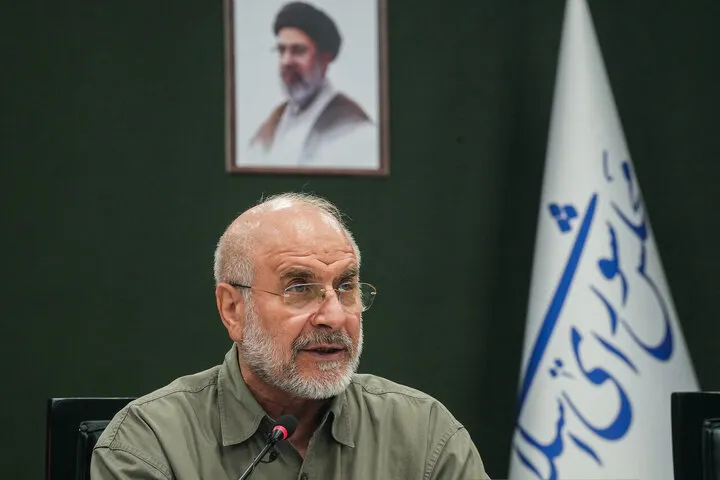
Tehran - BORNA - Speaking during a virtual open session of Parliament on Sunday, Ghalibaf began by commemorating the Sept. 8, 1978 uprising in Tehran, known as Black Friday, saying the killing of protesters by the Pahlavi regime strengthened the course of the Islamic Revolution and demonstrated the Iranian people’s willingness to resist oppression.
“The battlefield today is the same battlefield,” he said. “We are on the path of struggle and resistance.”
Ghalibaf said that while Iran’s adversaries have mobilized their capabilities to pressure the Iranian people, the combined efforts of state institutions and public resistance would enable the country to defeat its adversaries in the economic arena, just as he said it had done in military and diplomatic confrontations.
He said Iran is currently in the midst of a “full-scale war” and argued that heavy strikes by Iranian forces on US bases had left American leaders desperate.
According to Ghalibaf, US officials have resorted to rhetoric and the use of artificial intelligence to generate images and videos related to the battlefield.
“The Americans must have understood by now that the era of ‘proportionate responses’ is over,” he said.
“Our strikes in the recent operations against the aggressor’s bases were only the beginning. If they have not understood this yet, they should do so before it is too late: the rules of the game have changed.”
“From now on, any aggression against Iran’s interests and security will receive a response that is faster, heavier and more painful,” Ghalibaf stressed.
Turning to domestic economic issues, the parliament speaker said Iran’s most important battle today, alongside the military confrontation, is over production and people’s livelihoods.
He pointed to sharp currency fluctuations, inflation, unemployment and market management as major challenges placing serious pressure on households.
Ghalibaf said that in a year designated under the theme of “resilient economy under national unity and national security,” authorities must rely on domestic production and the technological capabilities of young experts to develop both immediate and lasting solutions.
He also warned that intensified sanctions were aimed at disrupting Iran’s supply chains and energy management.
“Through creating new capacities, smart management of imports, encouraging production and utilizing the capabilities of our elites, we must build a barrier against the greed of foreign powers,” he said.
“People who have stood against the bloodthirsty American enemy even at the cost of their lives will endure hardship, but they will not tolerate mismanagement and negligence,” Ghalibaf added. “They expect us to manage this battlefield quickly, and that is their undeniable right.”
The parliament speaker identified “internal cohesion” and “external deterrence” as two key tools in confronting Iran’s adversaries.
“Any statement or action that weakens these two fundamental pillars is not only contrary to rational judgment but also inconsistent with the repeated recommendations of the Leader of the Islamic Revolution,” he said.
Ghalibaf said the Leader’s emphasis on avoiding any portrayal of Iran and its political system as weak should be treated as a strategic guideline across all fields.
He stressed, however, that this did not mean ignoring problems or criticism of government performance.
Rather, he said, addressing shortcomings should become a central priority in official meetings, accompanied by concrete plans to resolve them.
Ghalibaf also commemorated Mahmoud Kaveh, an Iranian commander killed during the Iran-Iraq war, describing him as a longtime friend and comrade who had served in some of the most difficult fronts following the Islamic Revolution.
He concluded by honoring those killed during the Islamic Revolution and the recent imposed wars and expressed hope that victory would soon bring reassurance to the Iranian people.
End Article