Trump’s Iran gamble strengthens Tehran, weakens US power
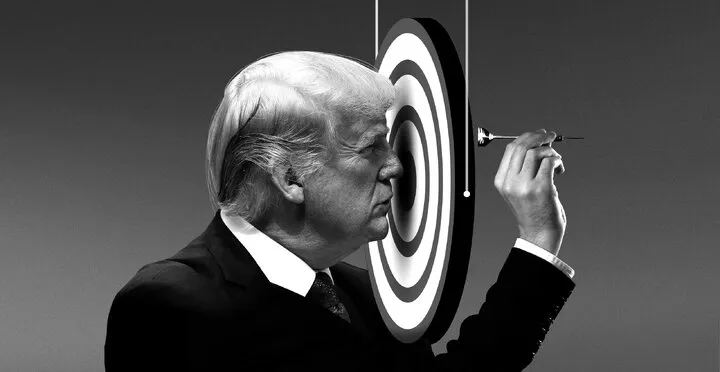
Tehran - BORNA - In an article titled “Trump’s Flawed Foreign Policy,” Chinese analytical outlet US-China Focus examined the consequences of Washington’s war against Tehran, arguing that Trump’s approach has been marked by improvisation, conflicting signals and an absence of coherent strategic planning.
Chinese analyst Zhang Zhixin, the author of the article, wrote that the Iran war has exposed deep weaknesses in Trump’s policymaking.
According to the outlet, the conflict, which began in February 2026 with the joint US-Israeli military aggression against Iran, has revealed fundamental flaws in the foreign policy thinking of Trump and his administration.
The article said the war has imposed considerable political and economic costs on Trump, including higher gasoline prices, declining support among voters and, ultimately, a foreign policy agenda increasingly deadlocked ahead of the 2026 midterm elections.
Improvisation and strategic incoherence in White House
Pointing to deep divisions within the Trump administration, Zhang wrote that the White House does not even have an internal consensus on the objectives of the war against Iran.
Trump’s public statements have contradicted those of Vice President JD Vance and other members of his administration, the analyst noted.
While Trump has repeatedly said that “preventing Iran from obtaining a nuclear weapon is the number one objective,” Vance said in early September, according to NBC News, that “lowering fuel prices” was in fact the war’s top objective.
The Atlantic has written that Trump’s Iran policy has “lost its last threads of coherence,” while Britain’s Guardian said Trump’s “wildly zigzagging” messaging over the war exposed “the absence of a strategy and a profound ignorance of the adversary.”
According to the Chinese analysis, Trump has repeatedly swung between threats of major escalation and sudden diplomatic overtures, creating a cycle of “bluff and retreat” that critics have likened to “Trump’s Groundhog Day.”
Misreading Iran’s intentions and capabilities
Citing the Washington-based Defense Priorities think tank, Zhang wrote that Trump’s war was built on “exaggerations and misconceptions” about Iran.
Trump presented four main justifications for military action against Iran: Tehran’s nuclear activities, its support for allied forces in the region, its ballistic missile program and its treatment of protesters.
US-China Focus argued that those arguments effectively portrayed what it described as Iran’s defensive posture as an offensive one.
The outlet said the war has so far failed to achieve any of Trump’s stated objectives and has instead strengthened Iran’s regional position by demonstrating the resilience of the Islamic Republic.
No clear exit strategy
According to Zhang, perhaps the most damaging revelation has been that Trump entered the war against Iran without a clear strategy for getting out of it.
Trump initially said the conflict would last “only a few weeks” and would be over by mid-April. Six months later, however, the war continues without a clear path toward an exit, the article said.
Reuters recently reported that Trump now faces a “menu of bad options”: accepting an interim arrangement that would grant Iran unprecedented control over the Strait of Hormuz, escalating military action at the risk of prolonging the conflict, or maintaining the current unstable status quo.
According to the Chinese outlet, none of those options offers Trump a face-saving exit from a war he had expected to be short and decisive.
Erratic shifts undermine US credibility
US-China Focus also pointed to what it described as contradictions in Trump’s foreign policy beyond Iran.
The article said Trump scaled back joint military exercises with South Korea after Seoul declined to assist Washington in its military campaign against Iran, describing the move as being based on what Trump called his “very good relationship with Kim Jong Un,” even though the North Korean leader has never agreed to abandon his nuclear program.
Trump also threatened Oman, a longstanding US regional partner, with bombing over Muscat’s attempts to mediate between Washington and Tehran, the article said.
Foreign policy analyst Max Boot has described Trump’s approach as “zigzagging” and concluded that such a policy toward Iran is “doomed to fail.”
Political costs ahead of US midterms
The Chinese outlet said the Iran war is having increasingly serious consequences for Trump’s presidency as November’s midterm elections approach.
According to the article, the conflict has become deeply unpopular with the US public and contributed to a decline in Trump’s approval ratings.
High gasoline prices resulting from disruptions in global oil markets have also intensified economic pressure on American voters, it said.
With early voting for the midterms beginning in some US states in September, Reuters has reported that Trump is approaching the elections “bereft of foreign policy victories,” while the Iran war has become a political liability for a president who returned to power promising to avoid foreign interventions and focus on the economy.
Strategic paralysis and erosion of military capabilities
Zhang argued that the Iran war has also paralyzed Trump’s broader foreign policy agenda.
“The Iran war quagmire has brought Trump’s wider foreign policy agenda to a halt,” the analyst wrote.
He said crises ranging from Ukraine to Gaza remain unresolved while Washington has become increasingly unable to devote sufficient attention to other international challenges.
“The Pentagon has been consuming munitions at a staggering pace, reducing military readiness for contingencies in other theaters, potentially for years to come,” Zhang wrote.
He added that some experts have warned the Iran war could complicate Washington’s contingency planning for the defense of Taiwan and raise questions about US credibility in the Indo-Pacific.
Washington’s allies losing confidence
US-China Focus further argued that Washington’s handling of the Iran war has weakened its relationships with traditional allies.
European governments facing higher living costs as a result of the conflict have become increasingly critical of US policy, the article said.
Persian Gulf countries hosting US military bases have meanwhile come to question whether Washington can be relied upon in times of crisis, according to the analysis.
Trump’s public threats against Oman and his unilateral decision to scale back exercises with South Korea have sent allies a message that US commitments may not be dependable, it added.
Long-term strategic consequences
US-China Focus concluded that the Iran war has produced results contrary to Trump’s stated objectives.
The conflict has transformed Iran’s potential leverage over the Strait of Hormuz into “tangible and durable leverage,” the outlet wrote.
Even if the war ends, Iran’s increased leverage over the strategic waterway is likely to remain, giving Tehran a strategic advantage it did not possess before the conflict, according to the analysis.
Jonathan Panikoff, a former US intelligence officer, has warned that Russia, North Korea and other countries are “watching closely” and drawing lessons from perceived US weaknesses.
The Chinese outlet concluded that the growing global perception of US weakness and strategic incoherence could significantly erode Washington’s international standing.
End Article