Capture of US underwater drone a setback for Pentagon, chance for Iranian reverse-engineering: Reuters
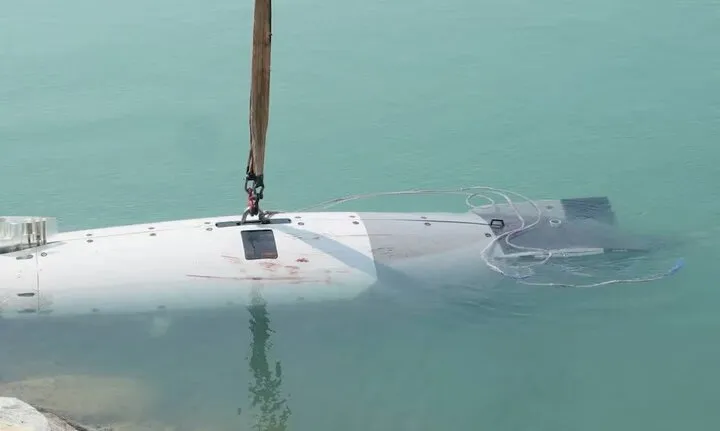
Tehran - BORNA - The Islamic Revolution Guard Corps (IRGC) Navy announced earlier this week that its forces intercepted and seized a US Dive-LD autonomous underwater drone at the entrance of the strategic Strait of Hormuz following a complex intelligence and operational maneuver. Delivered to the US Navy in 2025, the vessel is part of a new generation of uncrewed systems designed for long-range reconnaissance and multi-day autonomous missions.
According to Reuters, while US military officials and manufacturer Anduril Industries have sought to downplay the capture, the incident provides Iran with a valuable physical blueprint, drawing direct comparisons to Tehran’s 2011 capture of the US RQ-170 Sentinel stealth aerial drone, which Iranian defense industries later reverse-engineered into operational domestic platforms.
Analysts cited by the news agency observed that while the seizure may not instantly tip the regional military balance, it represents a clear narrative victory for Tehran and an embarrassing setback for Washington’s effort to project technological superiority.
Bryan Clark, senior fellow and director of the Center for Defense Concepts and Technology at the Hudson Institute, told Reuters that Iranian engineers will almost certainly dismantle the vessel. Pointing to Tehran's proven track record of reverse-engineering captured Western aircraft, Clark stated that Iranian engineers "can definitely reverse-engineer mechanical systems," even if software components feature built-in protections.
The capture has also highlighted a clear divergence in messaging between the US military and the drone’s manufacturer.
Attempting to minimize the loss, US Navy Captain Tim Hawkins, a senior official with US Central Command (CENTCOM), claimed the vessel was a "defective, older model" that was floating dead in the water and carried no classified sonar, radar, or sensitive data.
However, Anduril markets the Dive-LD as its most reliable and flexible large autonomous underwater vehicle, capable of operating autonomously for up to 10 days in harsh marine environments. The platform also serves as the foundational testbed for Australia’s high-profile "Ghost Shark" UUV program.
Addressing the loss on social media platform X, Anduril founder Palmer Luckey noted that the mass-produced system was built for high-risk "attritable" operations and had operated successfully for months within CENTCOM's area of responsibility prior to being lost.
The incident sparked swift commentary from Iranian diplomatic channels online. Iran’s Embassy in Ghana posted on X that the autonomous vessel was retrieved "like a plastic bottle from a fishing net" in a strategic waterway subject to strict surveillance, adding sarcastic condolences to "whoever was holding the joystick." Similarly, Iran’s Embassy in Hyderabad quipped about an upcoming "unboxing ceremony" by Iranian reverse-engineers.
End Article