Building an Infrastructure of Trust for Funding Science
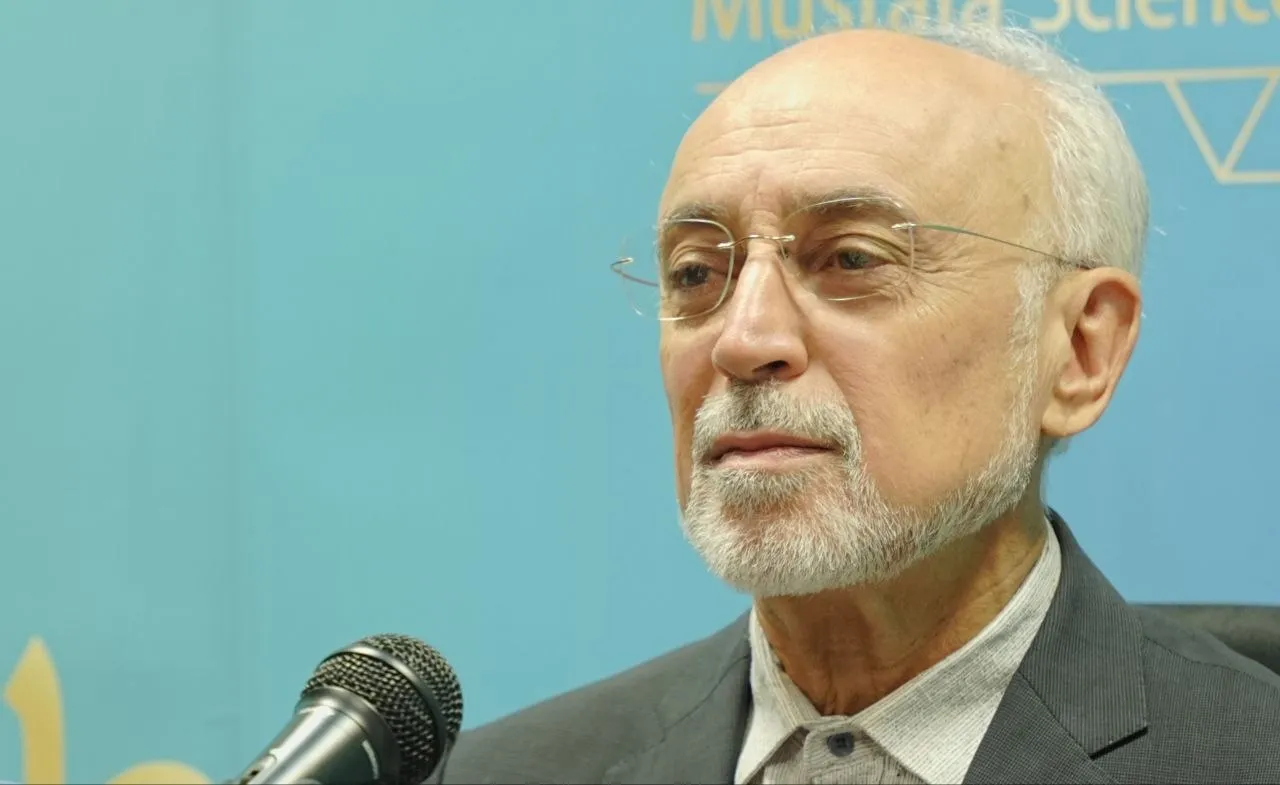
Tehran - BORNA - During a meeting unveiling the Foundation's new funding platform to facilitate the participation of supporters around the world, Salehi stated, “Just as the Foundation has worked over the past years to form a network of scientists from the Islamic world, now a global network of benefactors must also be created alongside this network."
Pointing out the borderless nature of science, Salehi added, “Knowledge and thought cannot be confined to a special geography. Neither can scientific progress occur without interaction and exchange between scientists. From the beginning, the Mustafa(pbuh) Prize was established with this vision; namely, creating a connection between the scientific capacities of the Islamic world and the international scientific community.”
He posed the central question: “If the production and exchange of knowledge can be global, why shouldn’t support for science be global as well?”
Thus, Salehi reiterated that in addition to the network of scientists, a network of those who wish to contribute to the advancement of science can be created. “The platform being introduced today is a step towards facilitating this cross-border partnership.”
Regarding the use of cryptocurrency as part of the Foundation’s new approach to financial support, Salehi stated: “Cryptocurrency is not an end for us; rather, it is a tool. We are concerned with how to make it easier for anyone around the world to participate in supporting science, young scientists, and scientific projects.”
Salehi noted that new financial technologies and digital assets can reduce some geographical restrictions on international partnerships and that the Mustafa(pbuh) Science and Technology Foundation aims to use this potential in the service of science.
“So it would be better to think of this plan not as the Foundation’s cryptocurrency project, but as part of its efforts to globalize participation in science funding.”
Referring to the potential of scientific endowment in Islamic civilization, the Chairman of the Board of Directors of the Mustafa(pbuh) Science and Technology Foundation emphasized that the principle of endowment has not changed. Rather, what can be altered in accordance with today's needs are the tools and mechanisms for its realization. “Nowadays, the benefactor might want to contribute to curing a disease, developing a technology, supporting a young scientist, or advancing a project at the frontiers of knowledge.”
He noted that part of the resources for the Rasul Medal are also provided from endowments made by Mustafa(pbuh) Prize laureates. According to Salehi, “Today’s honored scientist becomes tomorrow’s supporter of science.”
He explained the importance of participating in scientific projects through this platform: “Suppose a reputable project in the area of cancer treatment, water, energy, artificial intelligence, or a cutting-edge technology needs funding. Instead of simply contributing a sum of money to an institution, an individual can be informed on what cause they are supporting, what group is behind it, and what the funds will be used for.”
The realization of one of the basic principles of endowment, namely loyalty to the intentions of the benefactor and trustworthiness in the use of resources, is one of the main values of this plan, Salehi points out.
He described building trust as a “central concern” for the Foundation. “If technology can make this process more transparent and traceable, then we have gone beyond a payment gateway and built an infrastructure of trust for funding science.”
Pointing to the Foundation’s main asset, that is its scientific network and credibility, he said, “This platform can be used to evaluate the project, ensure scientific competence, and monitor its implementation.”
He outlined the vision of the platform around four key elements: “a scientific problem, a scientist, a reputable scientific institution, and a benefactor.”
The motivation for starting this project, according to Salehi, was more than simply creating a new way to help the Foundation. He considered one of its goals to be supporting scientific projects between Muslim countries through the financial contribution of individuals from different parts of the world. “If this happens, science funding itself will also become a tool for networking and science diplomacy.”
Asked about funding sources for the MSTF, Salehi emphasized the private status of the institution, stating that the foundation does not have a government budget and relies on endowments, donations, and the participation of non-governmental organizations. “Of course, the sustainability of resources is of fundamental importance for a scientific institution; but the issue is not just about covering the foundation's expenses. We need to work towards creating an ecosystem for financing scientific research.”
Some of the components of this ecosystem, he stated, are scientific endowments, participation by industries and businesses, the use of legal capacities and tax incentives, crowdfunding, and international collaborations. “The more diverse, sustainable, and participatory the sources of science, the greater the possibility of long-term planning and continued support for scientists.”
Lastly, Salehi emphasized the role of new technologies in bridging the gap between science supporters and leading scientists, and expressed the ultimate purpose of this project: “Just as science knows no borders, participation in building the future of science should not stop at borders.”
End Article