Pezeshkian: BRICS Summit Was Positive and Fostered Multipolarity
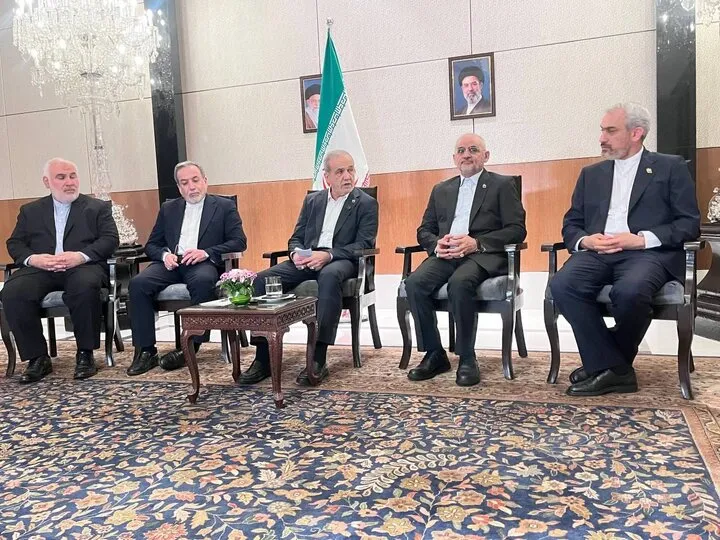
Tehran - BORNA - Speaking at the end of the summit in New Delhi on Sunday, Pezeshkian noted that BRICS currently comprises 11 core members, with 10 additional nations having applied to join. He emphasized that the joint sessions featured constructive discussions focused on resilience, innovation, cooperation, and sustainability.
The Iranian president highlighted that a shared objective among attending leaders was increasing national resilience and countering unilateralism. He stated that participating nations expressed dissatisfaction with global coercion and stressed the necessity of building a multipolar world order. Strengthening mutual cooperation, he added, helps nations withstand external pressures across economic, political, security, and commercial spheres.
Reviewing his diplomatic engagements on the sidelines, Pezeshkian pointed to productive meetings with the prime minister and president of India, noting that the historic and cultural ties between the two nations paved the way for expanded humanitarian and bilateral communication. He also highlighted discussions with the prime ministers of Malaysia and Ethiopia, the president of South Africa, and brief exchanges with the leaders of Russia and China.
A notable moment of the trip was his meeting with the Crown Prince of Abu Dhabi following regional tensions in the Persian Gulf. Pezeshkian described the talks as a step toward leaving past differences behind and shaping a collaborative future, noting that foreign ministerial-level follow-ups yielded positive interactions. Furthermore, discussions with Egypt's president reflected shared regional concerns and mutual empathy.
Highlighting the key points of the summit's final declaration, Pezeshkian stated that member states strongly condemned attacks on nuclear facilities and civilian infrastructure, called for restraint and respect for national sovereignty, and opposed unilateral sanctions. The declaration also expressed support for Iran's accession to the World Trade Organization, the expansion of trade using national currencies to reduce dependence on Western financial systems, and broader reforms of global governance and financial institutions.
End Article