Iran envoy: Barring atomic chief from IAEA conference is 'blatant abuse of power' by Austria
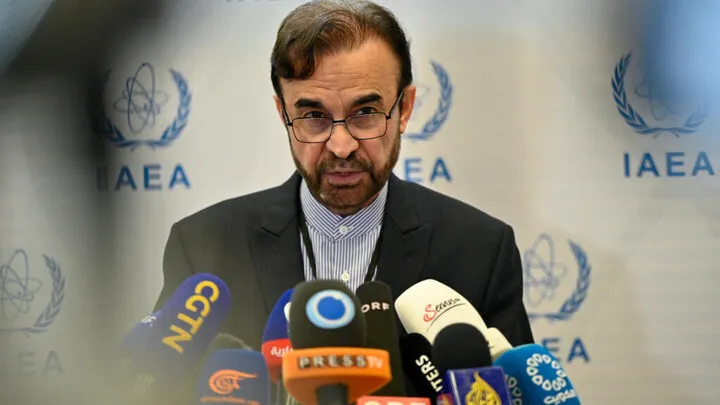
Tehran - BORNA - Reza Najafi, Iran's permanent representative to the international organizations in Vienna, told the IAEA General Conference that preventing the presence of Iran's vice president and atomic energy chief was "certainly not a minor administrative issue or human error, but a serious violation of our country's rights as a member of this agency."
Najafi said the move violates the principle of sovereign equality enshrined in Article IV, Paragraph C of the IAEA Statute, which guarantees equal rights for all members and their enjoyment of the benefits of membership.
The ambassador said the action undermines Iran's right to attend the General Conference through a representative of its own choosing and weakens the privileges necessary for representatives to carry out their duties, as provided for in the Statute and the Agreement on Privileges and Immunities.
He said preventing Iran's full and effective participation contradicts both the letter and spirit of the legal framework governing attendance at IAEA meetings, stressing that equal representation and participation are treaty-based membership rights that cannot and should not be undermined.
Najafi described the move as a violation of the host country's obligations under the Headquarters Agreement between the IAEA and Austria, which requires the host state to take all necessary measures to facilitate the entry of member state representatives into Austrian territory and to issue their visas as quickly as possible. He stressed that this obligation is binding and unconditional for accredited representatives.
The Iranian envoy warned that blocking the head of a delegation from attending the agency's highest policy-making body not only disrupts the normal work of Iran's delegation but also weakens the conference itself and calls into question the legitimacy of its proceedings.
"We call on the host country to immediately remedy this violation," Najafi said. "We expect immediate corrective action and demand guarantees that such incidents will not recur."
He said the host country must adhere to its obligations and the conference must protect the integrity of its proceedings, warning that anything less would set a "dangerous precedent for all members."
Najafi said multilateralism cannot function if such practices continue, adding that selective treatment of representatives' attendance contradicts the spirit of the agency, the text of the Headquarters Agreement and the fundamental rules of diplomatic relations.
He reaffirmed, however, that Iran remains committed to the agency's mission and the conference's work, and does not intend to delay the proceedings or obstruct its work.
The Iranian ambassador concluded by calling the prevention of Iran's delegation head "a blatant abuse of power and procedures by the host country," saying it undermines Austria's standing as a neutral and professional host of international organizations and will affect member states' views and positions toward the host country.
Najafi said the situation resulted from the host country's failure to implement its explicit legal obligations, adding: "This failure is unjustifiable and has no legal basis."
The 70th IAEA General Conference opened Monday morning in Vienna. According to reports, Behrouz Kamalvandi, spokesman for the Atomic Energy Organization of Iran, will address the conference.
End Article