Expert: US aggression against Iran became pretext for implementing 'Munir Doctrine'
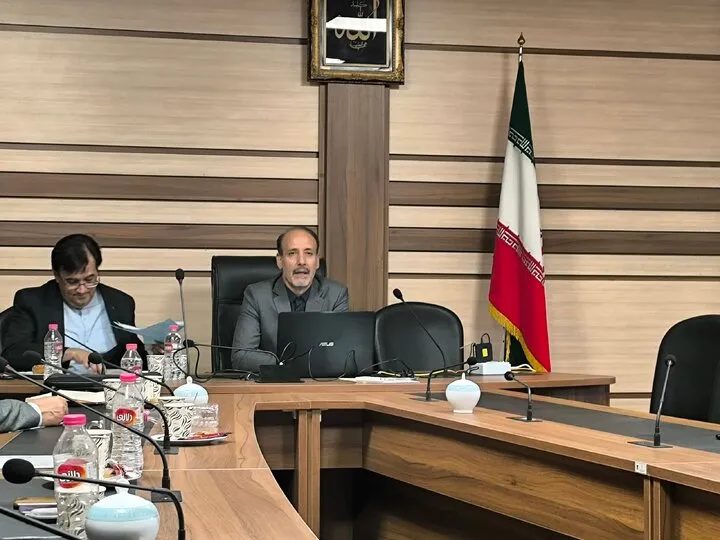
Tehran - BORNA - Nozar Shafiei, associate professor of regional studies at the University of Tehran, made the remarks at a scientific session titled "South Asia in the Mirror of the 40-Day War: Positions and Challenges," held Monday at the university.
'Mecca Pact' born of the 40-day war
Referring to the Mecca Pact recently signed between Saudi Arabia, Pakistan and Turkey, Shafiei said crises pass through several stages — onset, escalation, de-escalation and consequences — and can lead to the destruction of countries and coalitions, or to the creation of new ones.
"The Mecca Pact is a new coalition that, in my view, originates from the 40-day war," he said. "This coalition is a stamp of approval on the ineffectiveness of the previous coalition — that is, the regional coalition dependent on America."
Pakistan's motives
Shafiei said Pakistan has strong incentives to fill its own security vacuum, and that Saudi Arabia, as the inviting country, asked Pakistan and Turkey to join the pact.
"The Mecca Pact does not mean replacing the US-dependent coalition; it runs parallel to it and aims to strengthen it," he said. "We in Iran should not be too happy that America is leaving. Iran's goal is the non-interference of extra-regional countries in the region, while Pakistan and Turkey are both defined as countries outside the Persian Gulf regional sphere."
Shafiei said the region's geopolitics is changing, with major consequences — particularly for Turkey, which has various challenges with Israel. Pakistan, meanwhile, is signing various agreements with regional countries.
"The main reason for Pakistan's dynamism is that Pakistan's economy is tied to stability in the West Asian region," he said.
Energy dependence and the Munir Doctrine
Shafiei noted that 100 percent of Pakistan's imported energy comes from the region, and said that given this economic significance, the main driver of Pakistan's moves is the Munir Doctrine — that of Asim Munir — with the current war providing the ground for its implementation.
"The Munir Doctrine says Pakistan must redefine its identity," he said. "Under this doctrine, Pakistan must become the center of regional security, and the 40-day war became an opportunity for Pakistan to do so. A Pakistan that until yesterday was a peripheral country has now turned itself into a peace broker and tied its interests to the region."
Shafiei said Asim Munir holds a view known as "two nations," according to which Muslims and Hindus cannot coexist — and on that basis, Pakistan is saying goodbye to South Asia and bringing its interests into the West Asian region.
Balance of power and Israel
Shafiei said Pakistanis believe the regional balance of power has been disrupted by Israel.
"Pakistani public opinion is strongly opposed to Israel, and in this regard Islamabad is seeking to create a balance of power against Israel," he said.
Turkey as technology arm, Pakistan as military, Saudi Arabia as economic
Shafiei said the Mecca Pact should be viewed in light of Turkey's role as the technology arm, Pakistan's as the military and nuclear arm, and Saudi Arabia's as the economic arm — though he noted Pakistan has never spoken of its nuclear power within the pact.
He stressed that if a conflict erupts between Iran and Saudi Arabia, Pakistan will not enter the conflict.
"We see the same in Yemen," he said. "Pakistan and Turkey abandoned Saudi Arabia in the Houthi case."
Iran's three options
On how Iran should respond to such alliances, Shafiei said Tehran has three options.
"It would be a pure mistake for Iran to take the path of confrontation with this pact," he said. "This pact has left the path of membership open. In this regard, Iran can join the pact and gain institutional power, and by joining, close the pact to countries dependent on and aligned with America — and by strengthening this institution, weaken America in the region."
The third option, he said, is to ignore the pact and remain outside it.
'A new development'
Shafiei said some argue the Mecca Pact has in fact revealed previous covert pacts, while others see it as a long-term solution should the US-dependent coalition weaken.
"In any case, this pact is a new development, and if Iran joins it, its orientation can be managed and it can be beneficial for the Islamic Republic," he said.
He stressed that in crises, a strategic figure like Asim Munir can define a new doctrine for himself and present a country facing crisis as a global solution.
"When national interests are on the agenda, such solutions take shape, and I hope such discussions are useful for the Islamic Republic of Iran," he said.
End Article