Pezeshkian to Fox News: Iran will resist until the last moment, remains open to lawful deal
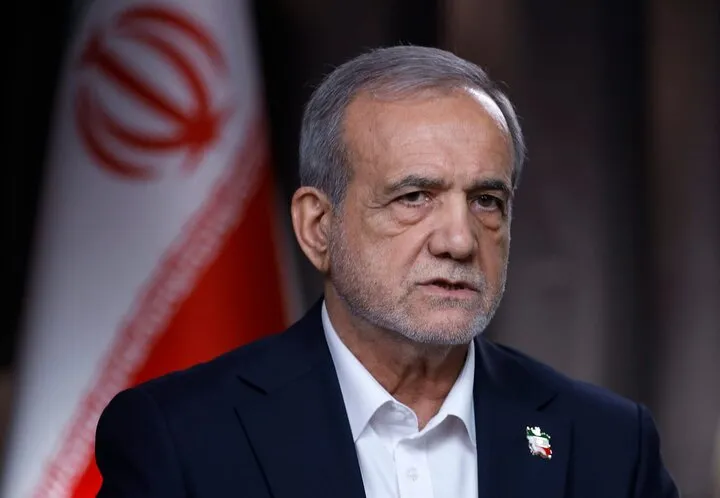
Tehran - BORNA - Speaking in an interview with Fox News on the sidelines of the 81st session of the United Nations General Assembly in New York, Pezeshkian addressed whether Tehran chooses war or diplomacy: "We did not choose war; war was imposed on us. We do not seek conflict, but whenever we are attacked, we are compelled to defend ourselves. We have never initiated a war, but if they choose to continue aggression against us, we will respond firmly."
The Iranian president emphasized that Washington’s sustained economic coercion is aimed at forcing Tehran into submission outside legal frameworks. "The relentless pressure they impose on us is designed to force our surrender outside the legal boundaries of international law, which is impossible," he said.
Asked what concessions Iran is willing to offer to secure a deal, Pezeshkian pointed to Tehran’s commitment to the framework agreed upon in Pakistan. "We have no issue. We reached an understanding with your president that was signed. That agreement was concluded, and on that basis, we were and remain ready to move forward," he noted.
Addressing maritime transit tensions in the Strait of Hormuz, Pezeshkian stated that American military aggression precipitated the current standoff. "We had not closed the Strait of Hormuz; it was open. They attacked us without legal basis. They assassinated our Supreme Leader, our scientists, our military commanders, and state officials," he said.
Responding to a question regarding Yemen’s Ansarullah movement, Pezeshkian dismissed assertions of operational control from Tehran: "Ansarullah is responsible for its own decisions; they take no orders from us. We maintain communication with them as actors resisting conditions imposed upon them in the region, but there is no command hierarchy."
On the issue of Iranian sovereign assets frozen abroad, including in China, Pezeshkian refuted allegations of overseas funding networks. "One of our pressing challenges is that our funds are frozen in China. Regarding allegations that we provide financial support across the region: we are currently unable even to repatriate our own funds from countries to which we supplied commodities, let alone transfer those assets elsewhere," he clarified.
When questioned about domestic protests, Pezeshkian defended the right to peaceful assembly while drawing a firm line against armed unrest: "Anyone who wishes to protest has every right to do so. We have engaged in direct dialogue with many demonstrators; our duty is accountability to the public. Protesting is an absolute right, but not with weapons."
Criticizing Washington's policy, he added: "Trump repeatedly claimed he wanted to bring a 'gift' to the Iranian people, but the gifts they delivered were precision-guided missiles, heavy munitions, and destruction. What they truly pursue is orchestrating chaos to pave the way for the collapse of the state, governance, and society."
Regarding the potential impact of upcoming US midterm elections on negotiations, Pezeshkian stated: "If the current US administration intends to reach an agreement within the framework of international law, that is welcome. Before or after elections, what difference does it make to us?"
"I deeply believe human beings should never cause the demise of another. When we can resolve differences through dialogue, we must not resort to bloodshed," Pezeshkian said, adding that regional escalations were spurred by Israeli provocations. "They imposed this conflict on us, but we do not wish to prolong it. It is Washington that must decide whether it wishes to end this."
"We will resist until the last moment. We face economic hardships, but we will endure and overcome every challenge," the president concluded.
The Islamabad Memorandum of Understanding originally outlined a 60-day window for technical talks on Iran's nuclear program following its implementation. However, that timeline lapsed amid repeated US strikes on Iranian targets and non-compliance with maritime arrangements established for the Strait of Hormuz. Tehran, which previously adhered to the Joint Comprehensive Plan of Action (JCPOA) under strict IAEA monitoring, has maintained that it will not forfeit its inalienable right to peaceful nuclear technology under the NPT, while remaining open to an agreement trading verifiable oversight for comprehensive sanctions relief.
End Article