Iran ready to implement Hormuz deal, permit IAEA inspectors if US accepts proposal: Pezeshkian
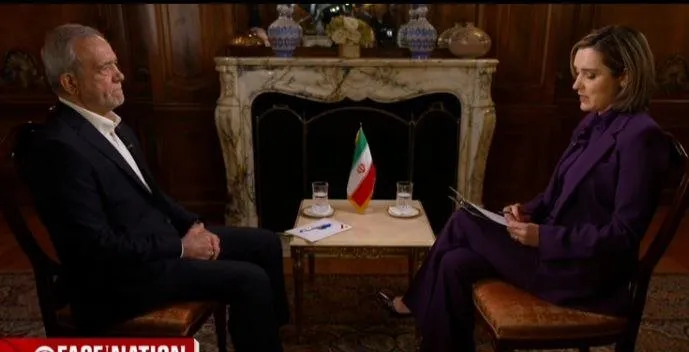
Tehran - BORNA - Speaking in an interview with CBS News’ Face the Nation on the sidelines of the UN General Assembly in New York, Pezeshkian addressed the prospect of direct diplomacy with US President Donald Trump, pointing to a persistent atmosphere of deep-seated mistrust between the two nations.
Asked whether he would have considered meeting Trump during the summit, Pezeshkian emphasized that substantive terms must precede any dialogue, noting that American military strikes conducted during previous diplomatic tracks remain a major barrier to direct engagement.
"If the United States accepts Iran’s latest proposal to reopen the Strait of Hormuz, Tehran will strictly abide by its commitments," Pezeshkian said, questioning Washington's reliability in light of renewed sanctions and non-compliance with signed understandings.
Regarding the timeline for reopening maritime transit through the waterway, the Iranian president indicated that implementation would begin immediately upon formal acceptance by Washington. He reiterated that the responsibility for the collapse of the memorandum of understanding reached earlier this summer rests entirely with the US side.
Addressing verification protocols, Pezeshkian confirmed that Tehran is prepared to grant access to International Atomic Energy Agency (IAEA) inspectors under a negotiated framework. Asked directly whether UN inspectors would be allowed entry, he responded, "That is absolutely correct," noting that inspection parameters could be finalized during negotiations.
Pezeshkian reiterated Iran’s official doctrine against weapons of mass destruction, stating that developing nuclear weapons remains religiously forbidden (haram). Even if individual voices within the country advocate for such capabilities, he noted, they are doctrinally prohibited from pursuing that path.
In another part of the interview, Pezeshkian addressed foreign policy coordination, stating that decisions are formulated through structured consensus involving a six-member consultative body comprising representatives from government ministries, the legislature, security apparatus, and state institutions, in close consultation with the Leader of the Islamic Republic, Ayatollah Seyed Mojtaba Khamenei.
Responding to assertions by the host that Iranian officials operated from bunkers during past hostilities, Pezeshkian dismissed the claims, clarifying that state leadership did not govern from shelters, as administering national affairs would have been impossible under such circumstances.
End Article