Iran’s Armed Forces vow to counter any fresh aggression with ‘new technologies’
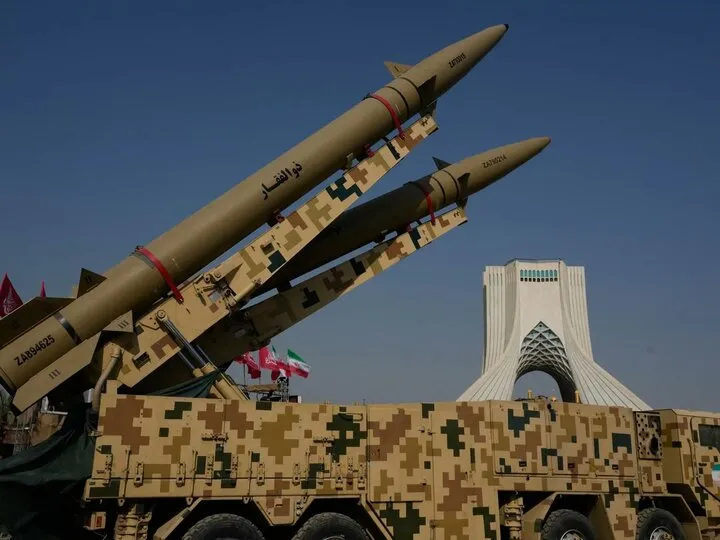
Tehran - BORNA - Brigadier General Abolfazl Shekarchi delivered the warning on Saturday, noting how the Armed Forces had developed their military capabilities through a shift towards asymmetric warfare and increased reliance on domestically produced defense technologies.
Advances in Iran’s defensive might, he said, had rendered the country stronger than it was before the last two rounds of unprovoked American-Israeli aggression that took place respectively last June and from February 28 until April 7 this year. “Iran’s Armed Forces are in very good condition,” he said.
“Iran’s missiles and drones have become more advanced and more powerful, and this time, we have surprises in store for the enemy. We will respond to any potential aggression by the enemy with new military technologies,” Shekarchi said.
From wartime shortages to domestic defense self-reliance
Shekarchi said Iran’s efforts to strengthen its military capabilities began during the Iran-Iraq war of the 1980s, when the Armed Forces sought to improve their combat capabilities and adopt new technologies.
“During the first Imposed War, while defending Iran, the Armed Forces sought to enhance their combat capabilities and make use of the latest technologies. A clear example was the launch of Iran’s missile-development program during the war,” he said.
The spokesman described the shift in defense doctrine following the country’s 1979 Islamic Revolution as another major development, saying Iran moved away from conventional warfare towards asymmetric warfare, and describing the transition as “the most important change” taking place in the doctrine following the victory of the Revolution.
“Conventional methods are vulnerable to asymmetric warfare,” Shekarchi said.
He explained that Iran’s asymmetric approach focuses on countering expensive and heavy weapons with less costly, but effective and practical defense equipment, underlining, meanwhile, that “asymmetric warfare tactics are based on self-sacrifice, conviction, and spirituality.”
‘Post-Revolution Iran surpassed adversaries’
Shekarchi contrasted Iran’s shortages during the first Imposed War with its current defense-industrial capabilities.
“During the first Imposed War, they would not even sell Iran suture thread for treating our fighters. Post-Revolution Iran has moved from dependence on imports of suture thread and barbed wire to producing the defense requirements of the day,” he said.
“Post-Revolution Iran competed with its adversaries and even surpassed them.”
Secrecy as a source of military surprise
Turning to the enemy’s miscalculation, Shekarchi said maintaining secrecy over military capabilities was an established principle within the Armed Forces.
“If the enemy had even an ounce of sense, it would not have attacked Iran,” he said, referring to the latest round of unprovoked American-Israeli aggression against the Islamic Republic. “In the Armed Forces, the principle is to safeguard information in order to create surprise for the enemy,” he said.
“The enemy has realized that its calculations regarding Iran’s resilience and defensive capabilities were wrong. Iran possesses unique components of national power, and the presence of the people in the streets and on the battlefield was a fundamental pillar of Iran’s victory in the war against the enemy. The people and the Armed Forces were fully prepared to fight the American-Zionist enemy.”
‘Strait of Hormuz under Iran’s management’
Shekarchi also addressed the Strait of Hormuz, asserting that control over the waterway rested with Iran and warning vessels against attempting to use illegal routes to cross the chokepoint.
Iran closed the chokepoint following the launch of the latest round of unprovoked American-Israeli aggression.
The Islamic Republic and the United States agreed on a 60-day reopening period as part of a Pakistan-mediated memorandum of understanding in June, but American violations forced the country to reestablish the closure.
End Article