Ghalibaf: If our security is not guaranteed, no infrastructure will be safe
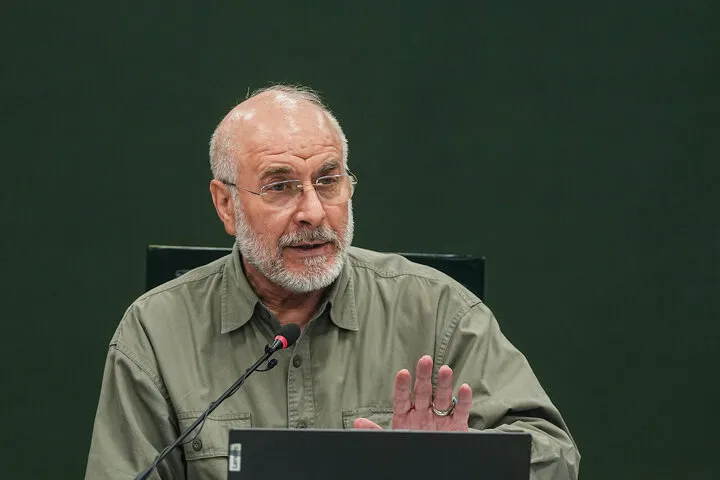
Tehran - BORNA - Addressing an online open session of the parliament on Tuesday, Ghalibaf commemorated the martyrs of the eight-year imposed war, the 12-day and 40-day battles, and the country’s security defenders, while also highlighting the legacy of the late Hezbollah Secretary-General Seyed Hassan Nasrallah.
"We are in the second anniversary of the martyrdom of Seyed Hassan Nasrallah. He was not just a military commander or a religious jurist, but a strategist who shifted the balance of power in the region in favor of the oppressed and the movement of Imam Khomeini," Ghalibaf stated. "He transformed Hezbollah from a guerrilla group into a deterrent force that redefined the region's security equations."
The speaker emphasized that the resistance structure, now under the leadership of Sheikh Naim Qassem, continues its path with vigor. "The enemy assumed that by eliminating commanders, it could halt the resistance in Lebanon. However, experience and the developments of the past two years have proven that the resistance is not reliant on individuals; it is an established structure that has driven the enemy into a deadlock in every scenario," he noted.
Reflecting on the anniversary of the breaking of the siege of Abadan during the Iran-Iraq war, Ghalibaf drew parallels between historical and contemporary challenges. He recounted how the Ba'athist regime attempted to force Abadan's surrender through heavy bombardment, cutting off pipelines, and destroying power and water networks. "The steadfastness of the resilient people of Abadan, alongside the bravery of the fighters of Islam, neutralized this plot, and the year-long siege was broken within 48 hours."
Directing his remarks to the younger generation, Ghalibaf warned that ongoing US efforts to impose a naval blockade, close air corridors, and exert maximum pressure on Iran's commercial arteries will fail, just as they did in the past, provided there is serious planning and management in economic sectors and military responses akin to those of 1981.
"A nation with such a brilliant and deep-rooted history should never be intimidated by blockades and threats. If the American enemy's calculus fails to grasp this fundamental truth, it will continue to receive heavy blows from the Iranian nation," he asserted.
Ghalibaf strongly criticized the "frivolous" rhetoric of the US President at the UN General Assembly, stating that such insults to the Iranian nation demand a clear response. "The Americans must know that the era of intimidating and threatening to destroy this civilized nation is over. The leaders in the White House must realize that the mature and history-making Iranian nation will never retreat in the face of posturing, rhetoric, or air and commercial blockades. The response of the Islamic Republic of Iran to any aggression or adventurism will be harsh, regret-inducing, precise, and swift."
Responding specifically to recent US claims regarding the Strait of Hormuz and maritime transit, Ghalibaf reiterated a long-standing strategic warning: "As we have stated previously, in a region where we cannot sell oil, no one else will sell oil, and if our security is not guaranteed, no infrastructure will be secure."
The Parliament Speaker also praised President Masoud Pezeshkian's "clear and dignified" address at the UN General Assembly, commending him for representing the voice of an ancient civilization and a proud revolutionary nation that refuses to bow to threats and hegemony.
Referencing a recent message from the Leader of the Islamic Revolution, Ghalibaf described it as a precise formulation of a defense and civilizational doctrine. He stressed that while Iran has successfully built a deterrent structure and altered the balance of threat, this external power must be backed by domestic economic stability and public satisfaction.
"We cannot build a balance of power on the battlefield while delaying the resolution of the people's economic issues," he emphasized. "As representatives of the people in the parliament and as government officials, we are all obligated to translate this directive into efficient and tangible decisions to meet the rightful expectations of the great nation and the esteemed Leader of the Revolution."
Ghalibaf concluded by highlighting the urgent priority of safeguarding the people's livelihoods, restoring the purchasing power of workers and retirees, and implementing structural economic reforms, particularly concerning state-owned enterprises, in coordination with the government.
End Article