Regional Countries Must Ensure Their Own Security: Iran’s SNSC Secretary
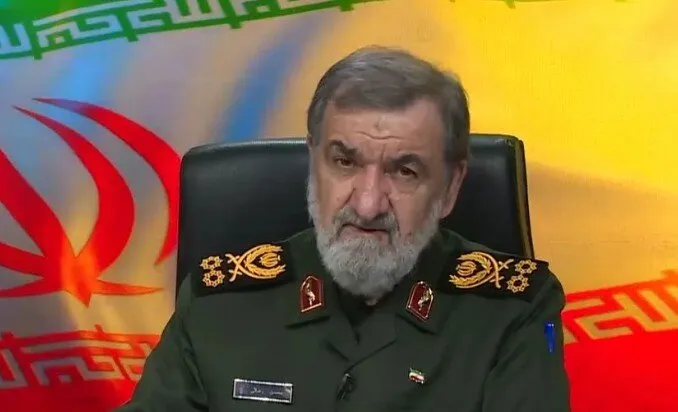
Tehran - BORNA - Secretary of Iran’s Supreme National Security Council (SNSC) Mohsen Rezaei has emphasized the need for new regional security arrangements, saying foreign powers must leave the region and regional countries should assume responsibility for maintaining their own security and stability.
Speaking in a televised interview about the recent quadrilateral meeting in Tehran, Rezaei said Iran’s victories in recent conflicts, including the 12-day, 40-day and 17-day wars, and the heavy defeats suffered by the United States had demonstrated that Washington was not a guarantor of security but rather a source of instability.
He said Israel’s unlawful aggression against Lebanon, Syria, Gaza and Jordan had raised fundamental questions about the future of regional security.
“What will the future order of this region look like? How will security arrangements for the 25 countries of West Asia be established, and through what mechanisms will that security be maintained?” he asked.
Iranian Nation Capable of Determining the Fate of Superpowers
Rezaei said a new perception was emerging that the United States might withdraw from the region in the coming years, raising questions about whether China, Russia or regional countries themselves would assume responsibility for security.
He also questioned whether Israel could establish a proxy hegemony on behalf of the United States in the region.
The SNSC secretary said these questions had emerged as a result of the Iranian nation’s resistance and the heavy defeats suffered by Washington.
He emphasized that recent developments had demonstrated the Iranian nation’s ability to influence the fate of major powers.
“The Americans sought to instill fear in the Iranian nation, but the Iranian people dealt a major blow to the United States,” he said.
Rezaei added that the consequences of Iran’s resistance had extended to Europe.
He referred to US Secretary of State Marco Rubio’s visit to Italy, saying it had effectively initiated a process for Europe’s return to West Asia, with Britain potentially assuming a leading role instead of the United States.
He also noted that China and other Asian powers were exploring ways to increase their involvement in the region.
According to Rezaei, US President Donald Trump had also considered whether countries maintaining friendly relations with Washington could serve as alternatives to direct American involvement.
However, he said attempts to establish new alliances over the past two years had demonstrated that no sustainable regional arrangement could emerge without taking Iran’s position into account.
“Any security arrangement that is to be established must recognize and consider Iran’s position,” he stressed.
Rezaei said the leaders of the three countries participating in the Tehran meeting had themselves requested visits to Iran to discuss regional security arrangements.
He clarified that the talks did not address the Mecca Pact or developments in Yemen.
Instead, he said the central issue in the official discussions was how the region’s future security arrangements should be established.
Rezaei added that the visiting delegations had expressed strong opposition to Israel, reflecting their concerns and information about potential Israeli threats against their own countries.
He said these shared concerns had helped the participants reach a constructive understanding.
Foreign Powers Must Leave the Region
Rezaei said the quadrilateral meeting had identified four areas of discussion, including the defense of Muslim populations against Israel, Israeli withdrawal from southern Lebanon and southern Syria, and developments in Gaza and the West Bank.
Referring to the statement issued following the meeting, he said the four countries had discussed future regional arrangements and agreed to continue consultations.
He added that the foreign ministers of the three participating countries might visit Iran again for further discussions.
The SNSC secretary said the Tehran meeting could provide a foundation for establishing a new regional security framework.
“We believe foreign powers must leave the region, and regional countries must safeguard their own security,” he stated.
Rezaei said he had emphasized the importance of unity in maintaining security and the role of division in generating instability.
He also referred to the historical involvement of foreign powers in the region, including the Soviet Union, the United States, Britain and Russia.
According to Rezaei, these powers had repeatedly intervened in regional affairs, undermining the interests of regional countries to advance their own objectives or settle disputes among themselves.
He described the discussions in Tehran as constructive and said they had laid a suitable foundation for the future of regional security.
Regional Security Cannot Be Established Without Iran
Rezaei said a new regional order developed internally, without interference from countries outside the region, could establish its own principles and rules.
He added that he had explained to the visiting delegations how Iran had defeated the United States and outlined Washington’s military objectives and plans.
According to Rezaei, Iran’s ability to withstand 5,000 NATO flights into the region and resist the combined military power of the United States and Israel demonstrated the potential strength of cooperation among regional countries.
“If a country like Iran can withstand such pressure, the combined strength of four countries would be far greater and could establish lasting security in the region,” he said.
Rezaei emphasized that Iran must participate in any future regional security arrangements.
“Security cannot be established without Iran’s participation. Therefore, Iran must be included in any security arrangement,” he stated.
Referring to remarks by French President Emmanuel Macron and the German Chancellor, Rezaei said both leaders had initially welcomed Israel’s attacks against Iran.
He recalled the German Chancellor’s statement that Israel was doing the “dirty work” Europe wanted done.
However, Rezaei said European leaders were now acknowledging the severe economic and political consequences of the war against Iran.
He referred to Macron’s remarks linking domestic unrest in France to the war and Germany’s acknowledgment of economic difficulties resulting from the conflict.
He also cited Ukrainian President Volodymyr Zelensky’s comments connecting rising diesel prices to developments in the Strait of Hormuz.
War Against Iran Has Affected People Worldwide
Rezaei said the war against Iran had produced extensive international repercussions, affecting the lives of people across the world.
He attributed these consequences to Iran’s resistance, its military achievements and its position in the global economy.
“If something happens to the Iranian nation, it is not only the Iranian people who suffer. The entire world is affected by the consequences,” he said.
Rezaei added that Trump was facing questions during election campaign appearances about why he had initiated the war.
He said the conflict had generated consequences that continued to occupy public attention worldwide.
The SNSC secretary emphasized that Iran’s geographical position, capabilities and civilization had contributed to the global impact of the war.
He said American households had experienced sharp increases in fuel, gasoline, heating and general living costs as a result of the conflict.
Rezaei argued that even the Vietnam War had not produced economic repercussions of comparable global scope.
Turning to diplomatic developments, he said recent diplomatic exchanges had begun more than a month earlier following repeated American requests for negotiations.
“We told them that we would not negotiate with them, but we would communicate our conditions. There will be no negotiations until those conditions are fulfilled,” he said.
Rezaei explained that Washington had requested Iran’s conditions in writing through Pakistani and Qatari intermediaries, while Iraq had also undertaken mediation efforts that remained incomplete.
He said Tehran had submitted seven conditions and made clear that neither the Strait of Hormuz would reopen nor negotiations would begin until those demands were implemented.
“We must first see a change in American behavior. We will not return to the diplomacy of the past,” he stressed.
Iran Takes Diplomacy Seriously but Will Not Retreat from National Rights
Rezaei said Washington’s initial response to Iran’s seven conditions had attempted to dilute Tehran’s demands.
He added that the American side had also introduced issues intended for later stages of negotiations into the preliminary discussions.
Iran subsequently informed the mediators that the response was unsatisfactory.
Following further diplomatic efforts, including a visit to Iran by Asim Munir and additional consultations with Qatari representatives, a second proposal was presented.
Rezaei said the second proposal represented an improvement over the first, but Iran remained concerned about the possibility that Washington might use negotiations to prepare for another military attack.
He said Foreign Minister Seyed Abbas Araghchi had conveyed Tehran’s concerns to the American side, emphasizing that Iran remained deeply suspicious of Washington’s intentions.
According to Rezaei, Tehran warned that the United States might enter negotiations and launch another attack against Iran following the elections.
He said the third American response was considerably better than the previous proposals.
“In this response, there was a degree of clarity, and they indicated that the Americans were prepared to accept Iran’s seven conditions,” he stated.
However, Rezaei said several ambiguities remained, prompting Araghchi to communicate additional questions to the mediators.
He added that further responses had been received and discussions had entered a new round.
“We take diplomacy seriously, but we will under no circumstances retreat from the rights of the Iranian nation,” he emphasized.
Iran Maintains Strong Presence in Strait of Hormuz
Addressing the latest diplomatic developments and Iran’s seven conditions, Rezaei emphasized that the Strait of Hormuz would remain closed until all Tehran’s demands and the interests of the Iranian nation, including financial matters, were fully secured.
He explained that the current conditions differed from the arrangements discussed under the Islamabad agreement.
According to Rezaei, the Islamabad agreement referred to the strait operating under “Iranian arrangements” but also included language concerning compliance with international law, creating room for differing interpretations.
He said Iran’s seven conditions now included the establishment of a joint shipping corridor between Iran and Oman, which had already been approved by both countries.
Rezaei added that the corridor would be registered internationally and that vessels using it would pass through a waterway under Iranian management.
“This is completely clear and leaves no room for ambiguity,” he said.
Referring to financial arrangements associated with passage through the strait, Rezaei said new mechanisms had been proposed to ensure that payments would not be deferred as they had been in the past.
He emphasized that Iran’s current conditions also included stronger verification mechanisms and implementation guarantees.
Rezaei said Tehran would first seek changes in American behavior through the implementation of its conditions before considering discussions on other issues.
He explained that any future nuclear negotiations would likewise begin with recognition of Iran’s rights rather than the acceptance of restrictions.
The SNSC secretary said Iran, as a member of the Treaty on the Non-Proliferation of Nuclear Weapons (NPT), possessed 22 rights under the treaty and intended to exercise them.
He added that future developments, including the possibility of another war, could raise questions about whether Iran would continue its NPT membership.
However, he emphasized that Iran remained entitled to its rights as long as it was a member of the treaty.
Rezaei said those rights included nuclear exchanges and cooperation with other countries.
He stressed that Iran would not abandon its national rights or accept restrictions before those rights were recognized.
The SNSC secretary said Tehran was awaiting Washington’s latest response, which could arrive the following day.
He added that a satisfactory response could pave the way for an agreement concerning the proposed shipping corridor in the shared waters of Iran and Oman, under Iranian management.
Rezaei reiterated that reopening the Strait of Hormuz would not be possible until all seven conditions and Iran’s national interests had been fully secured.
He clarified that the seven conditions contained several additional requirements and could amount to approximately 11 individual demands if counted separately.
“All these conditions remain in force and have not changed,” he stressed.
Rezaei added that the same approach would apply to future nuclear discussions, with Tehran demanding full recognition of its nuclear rights before accepting corresponding obligations.
The SNSC secretary also criticized International Atomic Energy Agency (IAEA) Director General Rafael Grossi, accusing him of serving Israeli interests.
He said Iran had undergone extensive IAEA inspections for more than two decades and maintained that the available records demonstrated that its nuclear activities had not deviated from peaceful purposes.
Rezaei argued that previous IAEA directors general had acknowledged Iran’s compliance in written reports, while Grossi had raised concerns about possible deviations.
He reaffirmed Iran’s commitment to international law.
Rezaei Confirms Receipt of Letter from US Vice President
Responding to a question about a letter from US Vice President JD Vance, Rezaei confirmed that the message had been delivered to Iran’s Foreign Ministry through an American intermediary.
He said Araghchi had subsequently forwarded the letter to him.
“I have read the letter, but I have not yet responded,” Rezaei stated.
He noted that the tone of the message differed significantly from that of an earlier letter sent by Trump to the martyred Leader of the Islamic Revolution.
“The tone of this letter has completely changed,” he said.
Rezaei described the change as a positive indication of Iran’s strengthened position.
However, he declined to disclose the letter’s contents, noting that Washington had also refrained from publicly discussing its details.
No Official Decision Made on Changing Iran’s Nuclear Doctrine
Addressing speculation about a possible change in Iran’s nuclear doctrine, Rezaei said no new official decision had been adopted by the government or the country's governing authorities.
He acknowledged that discussions had emerged about whether Iran should maintain its previous nuclear doctrine in the event of another war.
However, he emphasized that no formal decision had been taken.
Rezaei said public concerns about the issue were understandable given the attacks on Iran’s nuclear facilities despite Tehran’s cooperation with IAEA inspections.
He maintained that Iran had accepted extensive inspections, including monitoring systems that transmitted information from its nuclear facilities to the agency.
The SNSC secretary reiterated that neither the Supreme National Security Council nor the Cabinet had adopted a decision to change the country's nuclear doctrine.
He added that preliminary initiatives appeared to have begun in Parliament, but no official government decision had been made.
SNSC Responsible for Diplomatic Policymaking During Wartime
Rezaei also addressed Iran’s diplomatic decision-making structure, emphasizing that the country's institutions had demonstrated their ability to maintain continuity during wartime.
He said the Islamic Republic’s governing structure had continued functioning despite the martyrdom of senior officials and military commanders during the recent war.
Rezaei noted that the country had continued to be administered effectively during the nine-day period before the selection of a new Leader.
He said these developments demonstrated that Iran's institutional structure was not dependent on individual officials.
The SNSC secretary also emphasized the unity of Iran's senior leadership, saying the President, Parliament Speaker, Judiciary Chief and members of the Supreme National Security Council shared a common position on war, diplomacy and efforts to overcome economic pressure.
He acknowledged that officials might hold different expert opinions but said collective decision-making ultimately produced a unified position.
Rezaei explained that during wartime, diplomatic policymaking falls under the responsibility of the Supreme National Security Council.
Under normal circumstances, however, diplomatic affairs are handled by the government and the Foreign Ministry.
He noted that the SNSC is chaired by the President and includes the Foreign Minister and senior military commanders.
Rezaei emphasized that Iranian officials remained united under the leadership of the Leader of the Islamic Revolution.
Leader of Islamic Revolution Fully Informed of National Affairs
Referring to recent meetings between senior officials and the Leader of the Islamic Revolution, Rezaei said Imam Sayyid Mojtaba Khamenei had increased his meetings with government and military officials.
He said he had personally attended a meeting with the Leader lasting more than two hours.
According to Rezaei, the discussions covered diplomacy, national defense, resistance, public livelihoods and the role of the Supreme National Security Council and its secretariat in coordinating economic affairs.
He added that the Leader had provided guidance on political, economic, security and defense coordination.
Government Pursuing Plans to Improve Public Livelihoods
Turning to domestic economic conditions, Rezaei said the government was pursuing measures to improve public livelihoods and reduce economic pressure.
He referred to plans involving essential goods subsidies and salary increases, expressing hope that their implementation would help ease economic difficulties.
National Unity No Less Important Than Iran’s Missiles
Concluding his remarks, Rezaei emphasized the importance of national unity and social cohesion in strengthening Iran's security and resilience.
“National unity and cohesion are no less important than our missiles,” he stated.
He stressed that national solidarity should not be limited to political affairs but should also extend to economic activity, entrepreneurship, cultural affairs and public communication.
Rezaei said unity and social cohesion were essential to strengthening Iran’s position in the face of external pressure.
He also highlighted developments involving the Resistance Front in Lebanon, Yemen and other countries, saying international public opinion toward Iran had undergone positive changes.
The SNSC secretary concluded that Iran’s achievements belonged to the Iranian nation and should be preserved and strengthened.
End Article