Baghaei: Decision on Sharm el-Sheikh Participation Made in Line with National Interests
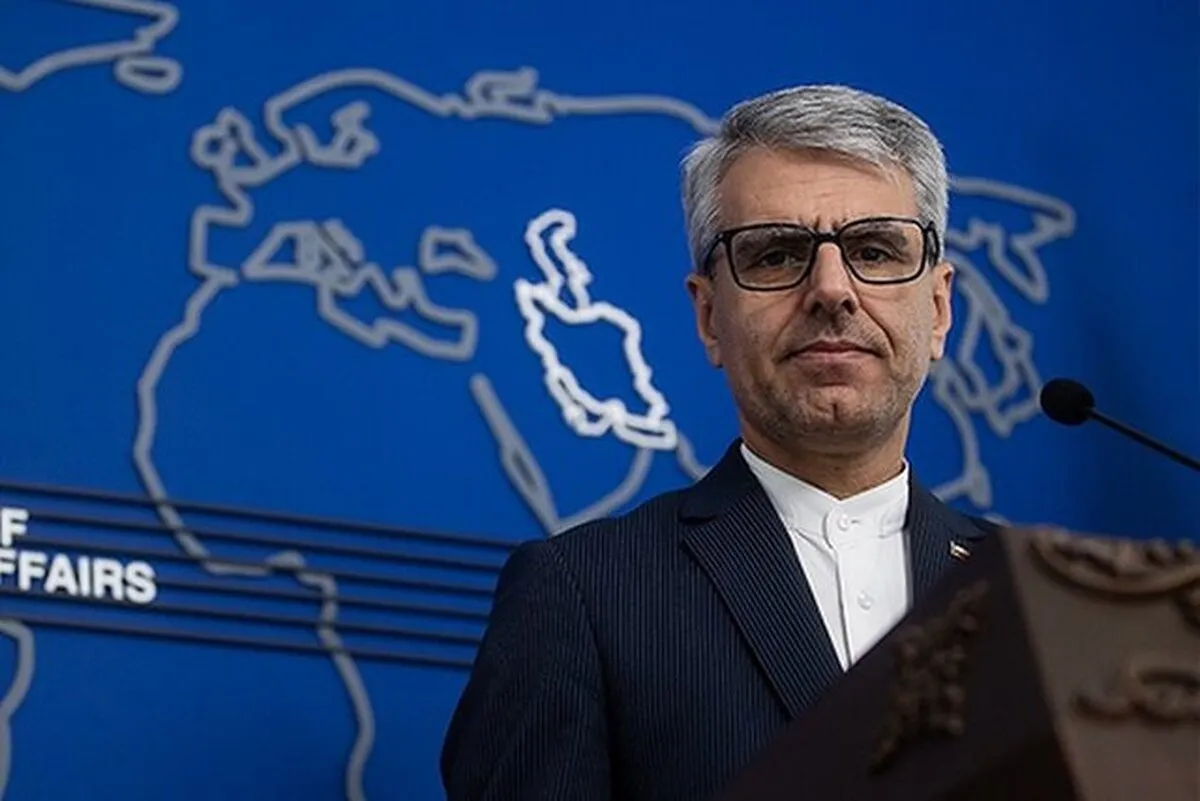
Tehran - BORNA - Iranian Foreign Ministry Spokesman Esmail Baghaei said the top international issue remains the situation in Gaza and Palestine, emphasizing that the decision regarding Iran’s participation in the Sharm el-Sheikh summit was taken based on what best serves the country’s national interests.
Speaking at his weekly press conference on Monday, Baghaei stated, “The foremost issue in international affairs continues to be the developments in Gaza and Palestine. After two years of atrocities committed by the Zionist regime, a consensus was finally reached that these crimes must come to an end. We have expressed our position on this matter very clearly.”
Iran Following Up Seriously on Release of Mahdieh Esfandiari
Commenting on the case of Mahdieh Esfandiari, an Iranian citizen detained in France, Baghaei said Tehran is pursuing the issue with seriousness and determination.
“The necessary arrangements on our part have been made, and we hope her release will take place as soon as possible,” he added.
Invitation to Sharm el-Sheikh Summit Came from Egypt’s President
In response to a question about whether Iran had been invited to the Sharm el-Sheikh summit by the United States or Egypt, Baghaei clarified:
“We received an official invitation from the President of Egypt addressed to President Pezeshkian.”
He explained that the positive and negative aspects of attending or not attending the summit were carefully reviewed both within and outside the Foreign Ministry.
“Ultimately, a decision was made and announced that best ensures the interests and welfare of the country,” he said.
Iran’s Regional Role Not Defined by Physical Presence at Events
Baghaei dismissed claims that Iran’s absence from the summit could limit its regional influence.
“Regional and international influence is not determined by mere physical participation in an event. Iran’s role and impact go far beyond that,” he noted.
He added that over the past two years, Iran has been among the most active countries exerting pressure on the Zionist regime and its supporters to halt the genocide in Gaza, maintaining effective interactions with regional and Islamic countries toward that goal.
“We continue to work actively and are confident that Iran’s influence will be felt wherever necessary,” the spokesman affirmed.
Iranian Ambassadors Return to European Posts after Consultations
Baghaei also confirmed that Iran’s ambassadors to Germany, France, and the United Kingdom, who had been recalled to Tehran for consultations, have now returned to their respective missions following a series of meetings.
Baghaei Criticizes Nobel Peace Prize Selections
In response to a question regarding this year’s Nobel Peace Prize, Baghaei said such awards should not be considered a valid measure of genuine commitment to peace.
“Some nominees and recipients of these awards have no clear record of advancing peace — in some cases, quite the opposite,” he stated.
He noted that several past laureates included Israeli leaders and U.S. politicians known for their roles in wars and aggression.
“When you look at this pattern, it would not be surprising if one day even Netanyahu claimed he deserved the Nobel Peace Prize — even if he never receives it,” Baghaei added pointedly.
Iran Will Continue to Defend Itself against Foreign Aggression
Asked about former U.S. President Donald Trump’s claim that attacks on Iran’s nuclear facilities “paved the way for peace in Gaza,” the spokesman said:
“That is a question for the Americans themselves to answer.”
He stressed that the Islamic Republic of Iran has always defended its national interests decisively, using all available capacities to counter any foreign adventurism or aggression.
“Iran has done so in the past and will continue to do so whenever necessary,” Baghaei concluded.
Iran's main demand has always been to stop the crimes and massacres in Gaza
Referring to the country's official positions on the developments in Gaza and Trump's peace plan, Baghaei stated: "The position of the Islamic Republic of Iran on the main issue has been fully explained in two very clear statements—the first on October 4 and the second on Thursday.
Emphasizing Iran's continued support for any action and movement that leads to stopping the killing and genocide in Gaza, he added: "If you follow the course of Iran's diplomatic actions in the past two years, our main demand has always been to stop the crimes and massacres in Gaza, end the cruel siege of this region, provide the possibility of sending humanitarian aid, and allow the occupiers to withdraw from Gaza."
Referring to Iran's multilateral efforts in international forums, Iran's Foreign Ministry spokesman noted: "We have called for a summit of the Organization of Islamic Cooperation on several occasions, and we have also pursued the same issue at the United Nations level." In all bilateral interactions and consultations, these issues have been raised continuously, and we have called on governments and the international community to cooperate in realizing them.
Emphasizing the urgency of stopping the crimes in Gaza, he stated: These are urgent issues, and every day that the killing and crimes stop sooner will be in the interest of the human community and humanity. What happened in the past two years was not simply a violation of international law and global norms, but a clear assault on morality and humanity.
October 7th did not happen in a vacuum
Referring to the words of the UN Secretary-General in the past two years, Baghaei said: October 7th did not happen in a vacuum. The issue must always be before our eyes: a nation has been deprived of its rights for 80 years, and until the right to self-determination of the Palestinian people is realized, we cannot hope to resolve this issue.
He also stated in response to a question referring to the media and cognitive dimensions of the Zionist regime’s military attack against Iran: “It was quite clear to us that, simultaneously with the Zionist regime’s military attack, a multi-layered media campaign and cognitive warfare against the Islamic Republic of Iran was designed and implemented.”
He stated that the goal of this operation was to instill completely inverted narratives of reality, create a cover for the Zionist regime, and create divisions in Iranian public opinion, adding: What had been repeatedly warned about by domestic media outlets and various officials has now been stated with evidence by Western media outlets.
The Foreign Ministry spokesman, referring to the Zionist regime’s intolerance of criticism of its policies, stated: “This regime does not tolerate any criticism, protest, or opposition to its policies, even in Western societies, including the United States.” A targeted campaign has been underway to destroy individuals and media outlets that are trying to present a more balanced narrative of regional developments.
Baghaei emphasized: Unfortunately, sometimes the media has been widely used by Zionists and some Western countries as a tool of cognitive warfare against the Islamic Republic of Iran and regional countries.
We expect Oman to restore the reputation of the Iranian company as soon as possible
The spokesman for the Ministry of Foreign Affairs of the Islamic Republic of Iran also emphasized in response to a question about the publication of some reports in the Omani media about the deaths of several citizens of this country in connection with the consumption of bottled water exported by Iran: The quality of Iranian exported water is clear to everyone and the main issue in this regard is the reputation of the Iranian company, which unfortunately was tarnished in this process.
Referring to the diplomatic measures taken in connection with this issue, he announced: Yesterday, the charge d'affaires of the Omani embassy was invited to the Ministry of Foreign Affairs. Earlier, the Embassy of the Islamic Republic of Iran in Muscat had raised this issue in contact with the competent Omani authorities.
Citing reliable information, the Iranian diplomatic spokesman stated: "Based on our investigations, this incident was the result of a family feud and the water bottle at the scene was deliberately poisoned. However, the Omani media, without conducting a minimum investigation and simply because of the presence of a water bottle, concluded that the deaths of these people were caused by drinking water. We regret this incident and the deaths of these people, but this type of undocumented conclusion is unacceptable."
Referring to the actions of the Economic Diplomacy Department of the Ministry of Foreign Affairs, he added: "Necessary measures have been taken to protect the commercial rights of Iranian companies abroad. We expect our Omani friends to shed light on this matter as soon as possible, and to restore the reputation of the Iranian company and to remove the ambiguity from the points raised."
The Foreign Ministry spokesman emphasized: "This type of media treatment is in no way appropriate for bilateral relations, and it is expected that such issues will be addressed with greater care and responsibility."
Iran and Pakistan have a strong determination to confront terrorists
He also said about the terrorist actions of the Jaish al-Dalum group in the eastern regions of Iran and the cooperation between Iran and Pakistan to confront this terrorist group, considering that the group is headquartered in Pakistan: Unfortunately, in recent years, Iran, Afghanistan and Pakistan have sometimes faced terrorist actions by terrorist groups, and confronting these terrorist groups requires regional cooperation.
Regarding the recent terrorist actions of the mentioned group in the east of the country, Baghaei said: Iranian law enforcement and security authorities have provided their information and evidence in this regard in contact with neighboring parties. We and Pakistan have a strong determination to confront terrorists because we are aware of the consequences of insecurity on the borders of the two countries and its impact on bilateral relations.
The Foreign Ministry spokesman continued: We hope that the set of agreements that have been reached with Pakistan in the last two years to confront terrorism will be fully implemented.
Iran is in a position to adequately confront any threat
He also responded to the question that, considering Trump’s peace plan and the developments that have taken place, has this increased the level of threats against Iran or the level of opportunities? He noted: We carefully evaluate every development, event, action, and reaction in the international environment. We evaluate and pay attention to the opportunities and threats that may arise from a development and an international trend.
Baghaei noted: Regarding this issue, we have been studying all aspects of the issue since the time this issue was raised and even before that.
He added: Alhamdulillah, Iran is in a position to adequately confront any threat and identify the necessary opportunities from every challenge and use them to secure its interests.
Iran's relations with China and Russia are not affected by developments
The Foreign Ministry spokesman also responded to a question about whether we have yet witnessed practical action by China and Russia to counter the sanctions resulting from the implementation of the snapback and that some believe that Iran has accepted the following FATF agreements, including the CFT, due to the insistence of China and Russia, saying: An example of the practical action of these two countries in opposing the implementation of the snapback can be seen in the form of their negative vote in the Security Council for the activation of the snapback and the joint letter of Iran, China and Russia to the Security Council opposing the snapback.
He added: If they did not believe in this, they would not have taken such a clear stance. Their public and legally justified stance based on legal evidence will show its legal effects in terms of the continuation of Iran's relations with these two countries.
Baghaei added: We are in continuous consultation with China and Russia and we are confident that our relations with these two countries in various fields will not be affected by these developments.
Ratifying conventions such as the CFT will facilitate banking and trade relations with different countries.
In response to the second question, this senior diplomat of the Islamic Republic of Iran also said: We make decisions based on our interests, and considering the ratification of conventions such as the CFT as important international documents has been on our agenda, and decisions have been made and will be made in relation to them, considering the benefits and interests it has for the country.
Baghaei said: Ratifying these conventions will have side effects such as facilitating banking and trade relations with different countries, but in general, decisions in the country regarding these matters are made based on studies and the resulting benefits and losses.
Normalization of relations should not lead to normalization of the crimes of the Zionist regime
The Foreign Ministry spokesman also responded to the question that it is said that in view of the developments in Gaza and Trump's peace, we may witness Saudi Arabia joining the Abraham Accords in the future and what is your opinion on this matter, and addressed the questioning reporter, saying: The answer to these questions is analytical.
He added: What I can say is that in any action by the countries of the region, the nature of the Zionist regime and the issue of Palestine must be considered, and what is presented as normalization of relations should not lead to normalization of the crimes of the Zionist regime.
He added: The Zionist regime has abused the normalization of relations in recent years to continue its crimes and genocides.
Any tension in relations between Afghanistan and Pakistan could have consequences beyond their borders
In response to the question of whether Iran is ready to mediate between Pakistan and Afghanistan, the Foreign Ministry spokesman said: As I briefly mentioned in the introduction to this meeting, one of the important points for us is the issue of security and stability in the surrounding environment. Afghanistan and Pakistan are both our Muslim neighbors, and we believe that any tension in relations between these two countries could have consequences beyond their borders.
He added: Yesterday, we issued a statement and clearly stated our position in this regard. The Islamic Republic of Iran has called for dialogue and restraint from both sides and emphasizes that the differences between Afghanistan and Pakistan should be resolved through dialogue and interaction.
The attack on the Sumud convoy is subject to prosecution in terms of human rights
This senior diplomat of the Islamic Republic of Iran said regarding the arrest of the members of the Sumud convoy: This act was also a terrorist act, and the manner of the attack on the convoy and their arrest, and the numerous reports indicating torture and inappropriate treatment of these people, are all subject to prosecution in terms of human rights, and part of it is the responsibility of their respective governments. However, given that international norms have been violated, it is an international responsibility for countries to raise this issue in international meetings.
Diplomacy is not on hold
The spokesperson for the Ministry of Foreign Affairs regarding the Foreign Minister's remarks regarding the possibility of interacting with the International Atomic Energy Agency and what is the current status of Iran's relations with the International Atomic Energy Agency? He said: We are still a member of the NPT and are committed to the Safeguards Agreement. We tried to create the necessary framework for interaction with the Agency within the framework of the understanding that was established with the Agency, but the opposing parties did not appreciate this opportunity and the approach along with the goodwill of the Islamic Republic of Iran.
He added: We had clearly stated from the beginning that if a hostile action is taken against Iran, including an attempt to restore the canceled resolutions, the Cairo understanding will not be possible and will not be implemented.
Baghaei continued: Therefore, the opposing parties, especially the three European countries, are the main factor in the current situation. Of course, as I have said before, diplomacy does not take a break; but it is not the case that we can say specifically at this time that there is a plan to contact, consult or hold a meeting with them in the coming days.
Baghaei also responded to the question that the US President, upon his arrival in the occupied territories this morning, once again spoke of cooperation with Iran and announced that Iran is the next issue, and given these words, is it possible for Iran to cooperate with Washington in this area, saying: No country and governance system can make decisions without considering previous records in the field of interactions with countries.
He added: We have a very bitter experience with America, especially in the last few months when we witnessed the military aggression of the US and the Zionist regime against Iran.
Baghaei emphasized: In the future, we will also make the necessary decision with our eyes open and in line with Iran's interests and interests with any party that the regime reaches a conclusion with which diplomacy and dialogue are in line with the interests of the country.
The Iran, Azerbaijan, and Russia meeting shows the importance of Iran's intra-regional coordination with its neighbors
In response to a question regarding the trilateral meeting of Iran, Azerbaijan, and Russia to be held today, Baghaei also said: This meeting is one of the mechanisms that has been formed, along with several other regional frameworks, for consultation and coordination of positions on a range of issues, including economic, trade, security and other matters.
He added: This indicates the importance that Iran and its neighbors attach to strengthening stability and security through intra-regional coordination.
Resolution 2231 must be terminated on time
The Foreign Ministry spokesman also said in this meeting, in response to a question regarding the expiration date of Resolution 2231: October 18 is the end date of Resolution 2231 and the restrictions contained in it. We believe that this resolution must be terminated on time.
He continued: "We should note that the Security Council has not made a new decision; what is being discussed under the title of "restoring the repealed Security Council resolutions" is the result of an action by three European countries. We also recall that the five resolutions that were unanimously approved from 2006 to 2010 on the Iranian nuclear issue, that is, with the positive vote of all five permanent members of the Security Council, are now supposed to be returned according to three European countries, while this action has been met with the explicit opposition of China and Russia. Therefore, from a legal point of view, we are witnessing a kind of chaos and the responsibility for this situation lies with the three countries that initiated this process."
The spokesman for the diplomatic service of the Islamic Republic of Iran noted: "Given that the principle of this action is illegal and contrary to the well-known procedures included in the JCPOA and Resolution 2231, we expect various countries to refrain from implementing it. The positions of Russia and China in this regard have also been clearly reflected to the UN Secretariat."
Baghaei once again emphasized: From the perspective of the Islamic Republic of Iran, Resolution 2231 must be terminated at the appointed time, and the action of the three European countries, which were trying to impose their political interests on the Security Council, should not have any legal value or practical effect.
The presence of Iran and China in the Human Rights Council Advisory Committee can be useful and constructive
The Foreign Ministry spokesman also said in this press conference regarding some of the reactions to the election of Iranian and Chinese representatives to the Human Rights Council Advisory Committee: It is truly strange that such an atmosphere has been created in response to the election of representatives of two countries to participate in an advisory committee of the Human Rights Council.
He continued: These reactions only indicate the totalitarian mentality and hegemonic nature of countries that are trying to dominate all international institutions in various dimensions.
"The Islamic Republic of Iran is a member of the United Nations and an observer member of the Human Rights Council, and therefore, it has the full right to nominate its representatives to attend any of the sections related to the work of the Human Rights Council. We are confident that the presence of Iran and other countries, including China, can be useful and constructive, as such a combination will help create a more balanced view of human rights and other international issues in the relevant institutions," Baghaei added.
End Article