Araghchi: E3 Has No Legal Right to Trigger JCPOA Snapback Mechanism
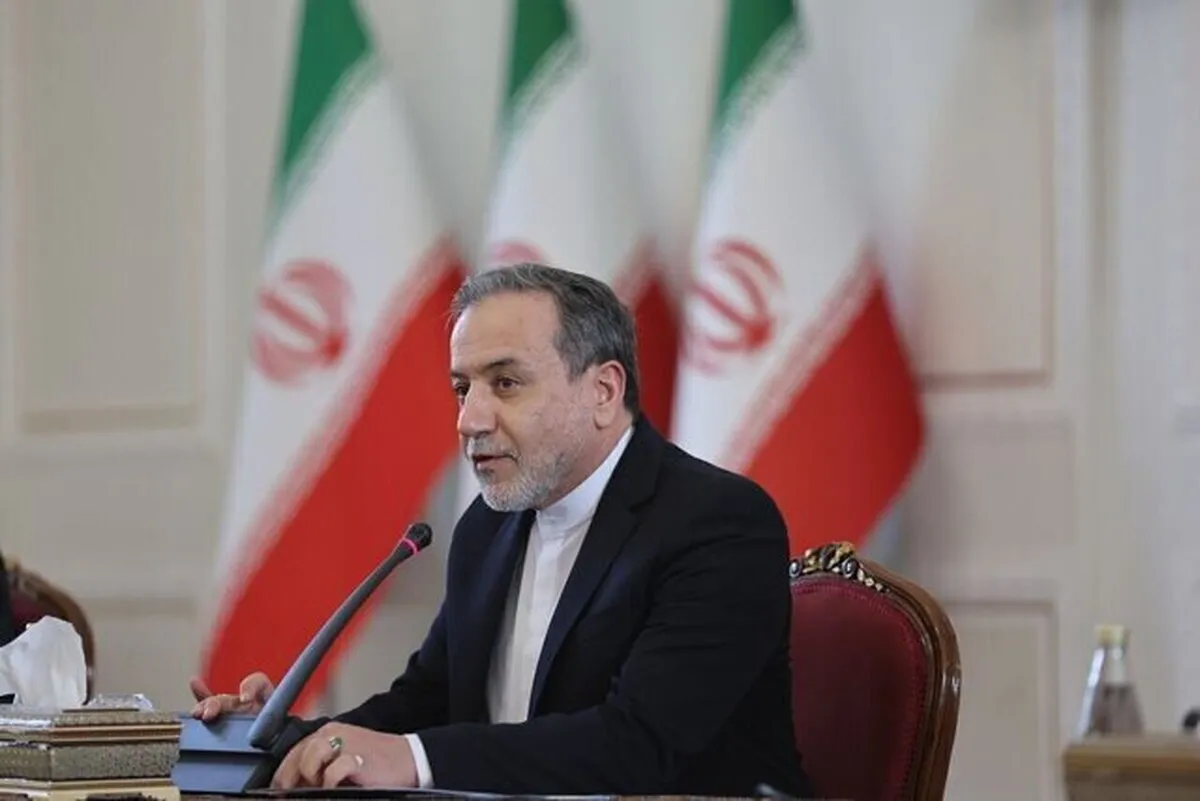
Tehran - BORNA - In a formal letter addressed to the United Nations Secretary-General Antonio Guterres and the President of the Security Council, Araghchi stated that the E3’s position is “legally baseless, morally flawed and politically dangerous,” arguing that their actions amount to a violation of both the JCPOA and UN Security Council Resolution 2231 (2015).
The Minister of Foreign Affairs of the Islamic Republic of Iran also wrote about his letter on the X social network: In a letter addressed to UN Secretary-General António Guterres, the President of the Security Council, Kaja Kallas, the High Representative of the European Union, and the members of the UN Security Council, I explained my reasons why the three European countries do not have any legal, political, and moral legitimacy to activate the mechanisms of the JCPOA and Security Council Resolution 2231 (adopted in 2015).
He added: The three European countries (E3) have effectively lost their status as “participants” in the JCPOA through their actions and statements — including political and material support for the recent illegal and unjustified military aggression by the Israeli regime and the United States; violation of the fundamental principles of the JCPOA; and their continuous and long-term failure to fulfill their obligations. Therefore, any attempt by them to revive the abrogated Security Council resolutions is invalid and legally null and void.
The high-ranking diplomat of the Islamic Republic of Iran stated: In response to the unilateral withdrawal of the United States from the JCPOA, Iran first fully went through all the mechanisms for resolving disputes stipulated in the agreement and then gradually began its compensatory measures in accordance with Article 36 of the JCPOA. Along the way, Iran made extensive efforts to convince the remaining members of the agreement to return to their commitments. However, the three European countries (E3) not only did not adhere to their commitments, but also actively participated in the implementation of the US policy of “maximum pressure” and recently played a role in military aggression against our people. Actors with such a history can never claim “good faith.”
Stating that the three European countries cannot and should not be allowed to question the credibility of the UN Security Council by abusing a resolution to which they themselves have not adhered, he stated: “They should act on the same recommendation that they themselves gave to the United States in their letter of August 20, 2020: “That they should refrain from any action that deepens the gaps in the Security Council or has a serious negative impact on its functioning.”
Araghchi continued his post on the social network X: “As I emphasized in my letter, Iran has shown that it has the ability to confront any [barbaric aggression or, as they call it,] ‘dirty work’ arising from illusion, but it has always been ready to respond to meaningful diplomacy based on good faith.”
The summary of Araghchi's letter is as follows:
I am writing to you regarding recent developments related to Security Council Resolution 2231 (2015) and the Joint Comprehensive Plan of Action (JCPOA), in particular recent threatening statements made by some European States, namely the E3, to resort to the so-called “snapback mechanism”.
It is deeply regrettable that those who have, since the very beginning, failed to implement their obligations under the JCPOA and, following the U.S. unlawful withdrawal from the deal in 2018, totally failed to fulfill their commitments, are now threatening to initiate a mechanism that was designed to address situations of “significant non-performance” under the JCPOA.
It is a matter of record that the Islamic Republic of Iran, in full conformity with the JCPOA provisions — particularly paragraph 36 — reduced its nuclear-related commitments in response to the continued non-performance by the United States and the E3. These measures have been fully transparent, reversible, and have remained under IAEA safeguards and monitoring.
The E3's threats to trigger the snapback mechanism, based on pretexts outside the scope of the JCPOA, including allegations related to regional issues and missile activities, are entirely unfounded. The JCPOA is a nuclear agreement. Invoking snapback based on unrelated issues constitutes a grave violation of the letter and spirit of the accord, and sets a dangerous precedent.
Let me be clear: Any attempt to trigger the snapback mechanism will be considered by the Islamic Republic of Iran as a deliberate, politically motivated, and legally baseless provocation. It will be viewed as a fundamentally hostile act, one that would eliminate the remaining trust and severely undermine any prospects for future diplomacy and negotiation.
We urge the Secretary-General and the Security Council members to resist any unlawful or illegitimate pressure to resurrect terminated Security Council sanctions that were lifted pursuant to Resolution 2231. The reimposition of those sanctions would be a blatant breach of international law and would bear severe consequences for multilateralism, the credibility of the United Nations, and the authority of its Charter.
At a time when the world faces numerous challenges, the revival of coercive policies and the reimposition of sanctions are not only counterproductive but detrimental to peace and security. The JCPOA was — and still can be — a triumph of diplomacy. Destroying it irreversibly by invoking a mechanism meant to preserve it is the height of hypocrisy.
I request that this letter be circulated as a document of the Security Council under the agenda item related to the non-proliferation of nuclear weapons and Resolution 2231 (2015).
Please accept, Excellency, the assurances of my highest consideration.
End Article