Zarif: Trump Provided the ‘Perfect Pretext’ for a Nuclear Weapon, But Iran Rejects the Option
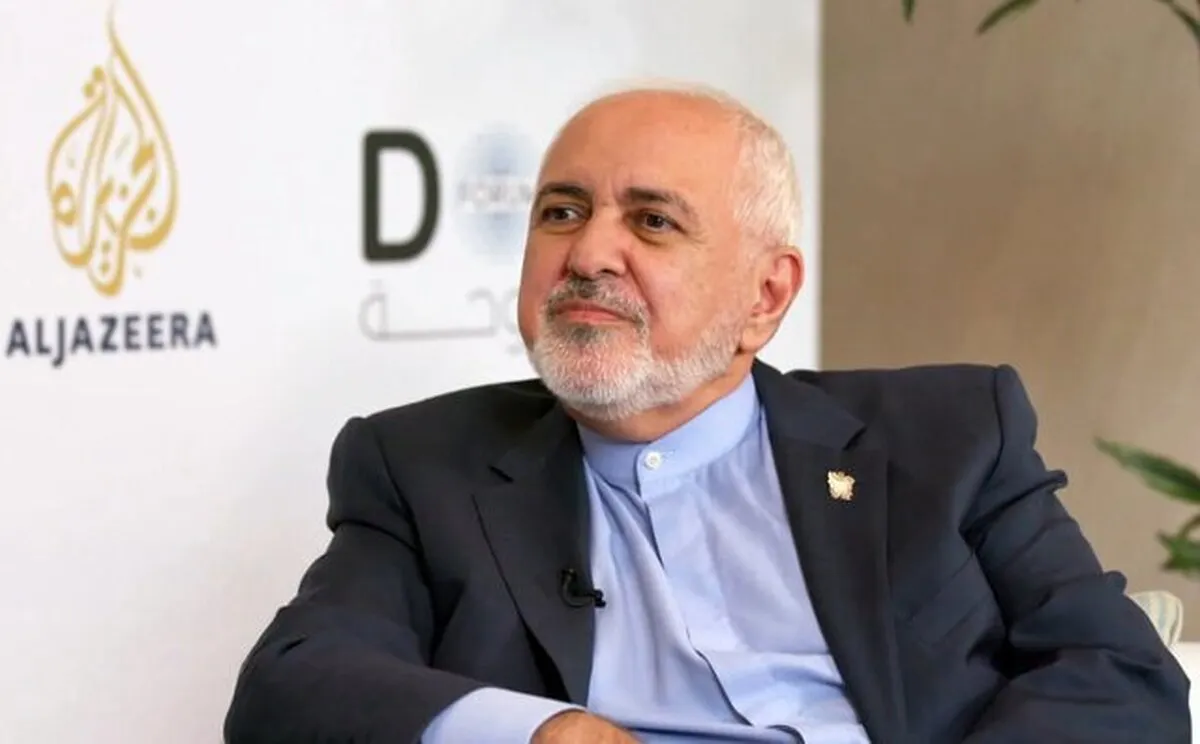
Tehran - BORNA - Mohammad Javad Zarif, who recently participated in the "Doha Forum" in Qatar, answered questions from host Steven Clemons on Al Jazeera’s "Bottom Line" program regarding recent developments in Iran's foreign policy and regional and international issues.
In response to the question, "Where do we stand now after the 12-Day War?", Zarif said: "There is a great sense of resentment and dissatisfaction in Iran. Diplomacy failed. We were right in the middle of negotiations when Israel attacked; they probably attacked precisely because we were negotiating, and everyone lost their trust in diplomacy. However, I still believe diplomacy is the only way out of conflict, but I think this 12-Day War, firstly, did not achieve its goal. Israel thought it could easily destroy the Iranian government, even drive Iran to collapse or disintegration. These were the levels of the Israelis' goals. A nuclear power, with the support of another nuclear power, started a war against Iran, and we are still standing."
He continued: "Americans should consider: which middle power exists in the world that the U.S. would evacuate all its bases around before attacking it? This shows that Iran remains a great power in this region; a power that must be treated with respect, not intimidation and pressure. When you treat Iran with respect, it yields results. When you try to pressure Iran, it automatically resists. We are much better at resistance than cooperation, because we have been accustomed to resistance for generations and thousands of years."
Referring to the 2015 nuclear deal (JCPOA) experience, which Donald Trump withdrew from during his first term, the former Foreign Minister said: "The JCPOA was a short period where Iran cooperated instead of resisting, and the U.S. cooperated instead of imposing. But both sides saw that returning to old habits is easier than staying in a new habit."
"We Thought More Rationality Would Prevail in America"
Clemons then asked Zarif: "You negotiated the JCPOA and were enthusiastic about its achievements. I remember you telling me you felt the U.S. violated the deal by preventing foreign investment; this was one of the first pillars that collapsed during the Obama era, correct? But when you were negotiating this deal, what did your instinct say? Did you think it would last, or did you know from the start it was an illusion?"
Zarif replied: "No, experience told us that the U.S. might violate the deal, but we thought more rationality would prevail in America. Both 10 years ago and when we were negotiating the JCPOA, there is no other arrangement that can control Iran's nuclear technology. Iran has this technology. The Americans tried to destroy it with bombing, and the Israelis with assassinations and killing our scientists. But it is still there. it still exists."
"We Have the Nuclear Technology and Can Rebuild"
In response to "What is the status of Iran's nuclear program?", he stated: "Whatever the status is, because this status is in the minds of Iranian scientists. We have the technology, we own it, and we can rebuild it."
He clarified: "The best way to ensure this technology is used peacefully is for it to be transparent and open. I didn’t think the U.S. had a reputation for honoring its commitments, but I thought this deal was good for the U.S. too, and that the U.S., like us, had an interest in maintaining it. Unfortunately, the U.S. returned to its illusion."
The former diplomat added: "Do you remember when John Bolton was National Security Advisor and previously Under Secretary of State, he believed Iran should have zero enrichment. Now he has failed too. Bolton is still seeking regime change. These are all illusions. You cannot advance foreign policy with illusions."
"We Didn't Go Underground Because it Was Never Our Goal"
Zarif, answering a question about why the 12-Day War ended quickly after the U.S. bombed Iran's nuclear facilities, said: "In fact, Trump knew that if he continued, the war would expand. Before bombing Iran, he evacuated all surrounding bases and sent a message saying, 'You can retaliate.' It was not humiliating for Iran to be bombed by the world’s greatest military power, which is also nuclear, and then be told, 'You can answer back'."
He stated that "America must reflect" and asked: "Did it achieve its goals? Did it destroy Iran’s nuclear program? If it weren't for the Leader's fatwa, this attack could have driven Iran toward a real, underground nuclear (weapons) program. We didn't go underground because it wasn't our goal from the start. But if we wanted to build nuclear weapons, Trump’s attacks would have given us the best pretext."
Responding to the question "Do you now have the pretext to move toward a nuclear weapons program?", he said: "We never wanted a nuclear weapons program and we don't want it now, because our ideological foundations and defensive doctrine for not having nuclear weapons have not changed. But if we were seeking a pretext, Trump certainly gave us one. The irony is that Trump is trying to get something he already has, which is that Iran is not seeking nuclear weapons. If we were after it, he gave us the best reason."
"Resistance in the Region Existed Before the Islamic Revolution"
Clemons asked: "General Soleimani and the IRGC talked about a 'Ring of Fire' around Israel; Hamas, Hezbollah, the Houthis, and other groups were a deterrent against a direct Israeli attack on Iran. Now Hezbollah is partially neutralized, many Hamas leaders are assassinated, and the Syrian regime has changed. This happened exactly one year after the last Doha Forum. Did this prove General Soleimani was right, and as soon as the ring of fire was gone, Israel attacked?"
Zarif responded: "General Soleimani was the executor of Iran's policy in supporting the resistance. We never created the resistance to protect ourselves. The resistance existed before the Islamic Revolution. The goal of the resistance is not to protect Iran, but to prevent further Israeli aggression against the Palestinian people."
He clarified: "If Hamas is weaker today—and I don't know if they really are—it is related to the Palestinian cause, not Iran. Hamas did not fire a single bullet to protect Iran. Hamas wanted to stop Israel. Remember Netanyahu showing a map at the UN General Assembly where Palestine did not exist? Just two weeks before October 7. Israel wanted to completely destroy Palestine and failed. Now they talk about a two-state solution more than before October 7, because Israel had succeeded in putting it aside."
He added: "Let's talk about the real cause, not the fabricated crisis. The fabricated crisis was that Iran supports this or that group to build a 'ring of fire' around Israel. The real ring of fire is inside Israel: occupation, aggression, apartheid, genocide. These are what create resistance. If anyone expects Israel to impose apartheid on Palestinians, commit genocide in Gaza, and be safe from the consequences, they are living in another world."
"The Palestinian People Do Not Need a 'Master' like Tony Blair"
Clemons asked: "How important is Palestine in Iran’s strategic map today? You've previously said 'being more Palestinian than the Palestinians themselves is exhausting.' Many Arab countries are practically standing on the sidelines. Trump has now finalized a Gaza ceasefire. What do you think of this ceasefire and its future?"
Zarif replied: "Are we going back to the 19th or early 20th-century mandate system? Are Palestinians not capable of governing themselves that we must prepare them for 'self-rule readiness'? This is a great insult to the Palestinian people. I hope this ceasefire stops the bloodshed, but let's be realistic: Palestinians are one of the most advanced Arab nations; they are unique in terms of education, university degrees, and literacy rates. These people can govern themselves. They don't need a 'master' like Tony Blair. Let's not insult the people."
"Israel Has Destroyed Opportunities to Resolve Differences Between Iran and the U.S."
Clemons mentioned Zarif's role in 2003 regarding a "White Paper" for negotiations that the Bush administration ignored. Zarif clarified: "I wasn't the author of that document; I was its editor. The intermediary who gave us the document said they got it from Richard Armitage, then-U.S. Deputy Secretary of State. I added Iran's views to it."
When asked if we are at a moment where returning to better arrangements is possible, Zarif said: "It takes a lot of work, a lot of courage, and a lot of foresight. In one sentence: the greatest existential threat to Israel, and especially to Netanyahu, is peace and tranquility in this region. Every opportunity for peace—whether in Palestine, Lebanon, Syria, or Iran—is destroyed by Netanyahu. If we all watch his moves against the possibilities of peace, we can certainly find a way."
"The New Syrian Regime is Not Iran's Ally. Why Did Israel Attack It?"
Regarding Russia and its influence, Zarif said: "Iran is a big country. I don't blame Russia; they pursue their own national interests. They are a great neighbor and a good friend, but our interests are not identical. Russia has very good relations with Israel, and we have a good relationship with Russia. The problem is assuming Iran and Russia’s interests are the same, which they are not."
He added: "The most important interference in Iran’s relations with the rest of the world is not Russia; it is Israel. Israel has a direct interest in conflict and chaos in the region to cover its crimes against Palestinians. The new Syrian regime is not Iran's ally. Why did Israel attack it? If anything, it is an enemy of Iran, so why bomb it? We must wake up to reality."
"Ready for Dialogue with Saudi Arabia, UAE, and Qatar"
Regarding military balance and the sale of F-35s to Arab countries, Zarif said: "Let's see if these planes can hit Israel or not, because they are programmed so they cannot! The biggest threat to our region is Israel. The problem for Arabs is not more weapons, it’s more dialogue. We are certainly ready for dialogue with Saudi Arabia, the UAE, and Qatar; thank God we have a good relationship with Qatar. Let’s look to the future and work on these proposals."
In his final question about Trump’s diplomatic style and Steve Witkoff, Zarif concluded: "Certainly not (a fan), because negotiations that end in war cannot be attractive to me."
End Article