NYT: Strait of Hormuz Becomes Iran’s Ultimate Strategic Deterrent
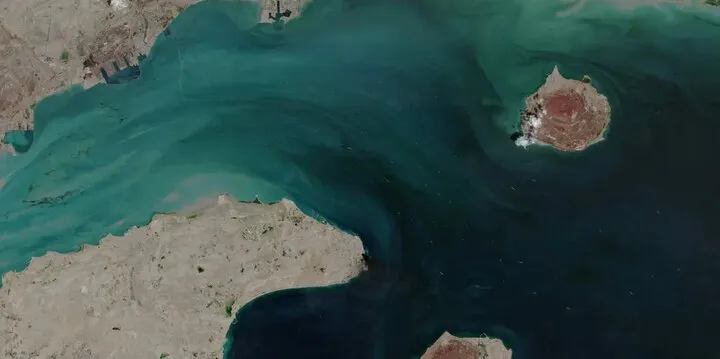
Tehran - BORNA - While the United States and the Israeli regime initially launched military strikes against Iran under the pretext of "nuclear deterrence," Western strategic analysts have concluded that Tehran’s mastery over this vital waterway—which carries 20% of the world's crude oil—provides a level of leverage that physical strikes cannot easily eliminate.
The Resilience of Geography The NYT report, citing former intelligence officials from the Israeli regime, emphasizes that the "Hormuz lever" remains the primary obstacle for Western military planners. Danny Citrinowicz, former head of the Iran branch in Israel's Military Intelligence, stated that closing the Strait is recognized as the first option in Iran’s strategic playbook, noting that "geography cannot be overcome" by military force alone.
Despite extensive Western efforts to target Iran’s naval infrastructure, intelligence assessments indicate that Tehran maintains control through cost-effective and mobile assets, such as suicide drones and short-range coastal missiles. Restoration of Strategic Assets Contrary to initial Western claims regarding the destruction of Iran’s military capabilities, the latest U.S. intelligence suggests a significant recovery of strategic assets.
Following the recent pause in hostilities, Iran’s Armed Forces have reportedly retained or restored approximately 40% of their pre-war drone arsenal and 60% of their missile launchers, many of which were protected in reinforced underground bunkers. Analysts estimate that Iran’s total missile inventory could soon reach 70% of its pre-war levels.
This military resilience, combined with the threat of advanced sea mines, has significantly disrupted commercial shipping for nations allied with the aggressors. Jim Krane, an energy expert at Rice University’s Baker Institute, described the Strait of Hormuz as a "trump card" that holds the global economy hostage, functioning with a strategic impact comparable to a nuclear weapon. Economic Standoff and Diplomatic Leverage The report highlights a strategic failure in U.S. efforts to bypass Iranian control.
While American officials have attempted to impose a naval blockade on Iranian ports, economic analysts warn this move has backfired, pushing the global economy toward stagflation and causing gas prices in Europe to surge by 18%. In contrast, while Iran faces daily trade losses of roughly $340 million, the broader global energy crisis in East Asia and Europe is viewed as a much larger systemic threat. Analysts from the Institute for the Study of War (ISW) suggest that Tehran is now utilizing its control over the Strait as a primary tool at the negotiating table.
The goal is to secure maximum concessions, including the unfreezing of blocked assets and permanent guarantees against future military aggression. The NYT concludes that instead of diminishing Iran's influence, recent conflicts have solidified the Strait of Hormuz as a permanent, strategic pillar of the Islamic Republic’s national security doctrine.
End Article