Behind the Scenes: What Lies Beneath Alleged Reports of an Iran-U.S. Deal?
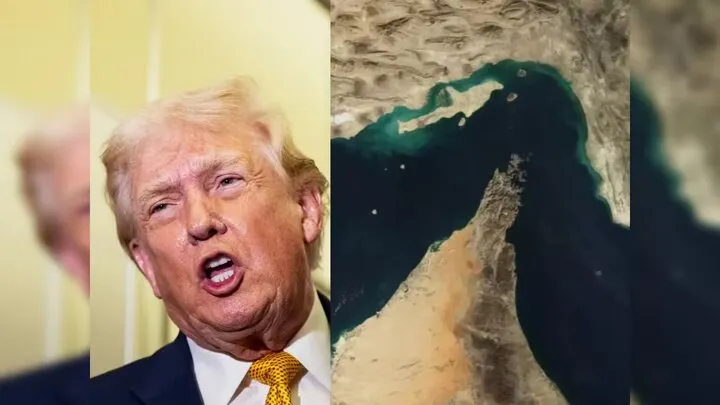
Tehran - BORNA - In recent hours, after the U.S. President suddenly halted his stance on executing what he calls "Project Freedom" to facilitate transit in the Strait of Hormuz, alleged and unconfirmed reports from media and unofficial sources, such as Axios and Reuters, claimed that "Iran is on the verge of a deal with the U.S." However, the conduct of the current U.S. ruling body, both in nuclear negotiations and recent war developments, has shown that these reports and atmosphere-building serve no purpose other than domestic political goals and deceiving public opinion to divert attention from Washington's true subsequent intentions.
From a "One-Page Deal" to Enrichment Suspension and Asset Release
A few days after the Iranian Foreign Ministry Spokesperson, Esmaeil Baghaei, confirmed the submission of a 14-point proposal to the U.S. and reported receiving Washington’s response via a Pakistani mediator to stop the war, the American news site Axios, quoting informed officials, claimed: "Iran and the United States are on the verge of reaching a one-page memorandum of understanding aimed at ending the war, and Washington expects Tehran to provide its response regarding several key points within the next 48 hours." These sources stated that no agreement has been reached yet, but this is the closest the parties have been to a deal since the start of the war.
Axios also claimed the agreement includes Iran's commitment to suspend nuclear enrichment, U.S. consent to lift sanctions, the release of billions of dollars of frozen Iranian assets, and the removal of restrictions by both sides on transit through the Strait of Hormuz.
On the other hand, the British news agency Reuters, citing a Pakistani source, claimed the U.S. and Iran are close to a one-page MOU to end the war, asserting that in the upcoming agreement, Iran would deliver its enriched uranium. Furthermore, Axios claimed the U.S. is set to lift all sanctions and guarantee no further war, while Iran would agree to a 12-to-15-year enrichment suspension.
Following this media hype, Bloomberg wrote in a similar report: "The White House is nearing a one-page MOU with Iran aimed at halting conflicts and starting nuclear talks. Iran is expected to respond within 48 hours, but no deal is finalized."
It is noteworthy that these alleged reports occurred shortly after the bellicose U.S. President, in his latest contradictory rhetoric, once again halted one of his self-proclaimed threats against Iran and the region on Wednesday morning. As the Iranian proverb goes: "He says it himself and laughs at it himself!"
Trump announced on X the suspension of "Project Freedom" and stated that this decision followed requests from Pakistan and other nations, as well as what he called previous "immense military successes" in Iran. This is not the first time Trump has retreated from threats after a period of intimidation; many U.S. experts and intelligence agencies argue his plans lack any strong intelligence backing, including the very initiation of the war against Iran.
The U.S. President even used this same tactic regarding the ceasefire declaration on April 8th. Under intense military, economic, and regional pressure, he claimed to accept the ceasefire at Pakistan’s request to relieve himself of political and security burdens.
Threat, Retreat, Allegation: Trump’s Repeated Pattern
Every time Trump retreats from his positions, he seeks to create "achievements" with the help of media levers and fake news—it is interesting that even reputable Western media outlets sometimes sacrifice their credibility for his lies. Immediately after these reports surfaced on Wednesday morning, Trump resumed his contradictions to pressure Iran and manipulate the oil market to lower prices, aiming to reduce the destructive economic pressures of his warmongering on the domestic and international economy.
The U.S. President recently added more assumptions to his previous ones on Truth Social: "Assuming Iran agrees to what was previously agreed upon—which is likely a big assumption—the legendary 'Epic Fury' operation will end and the highly effective blockade will allow the Strait of Hormuz to be open for everyone, including Iran. If they do not agree, the bombings will begin and unfortunately at a much higher intensity than before."
While Trump speaks of ending "Epic Fury" (the military operation launched on February 26th), U.S. Secretary of State Marco Rubio—who has played a minor role in the war and is often sidelined by Trump—announced the end of this operation in a White House press conference!
Internal and Expert Reactions
International affairs expert Mohammad Marandi wrote on X: "Axios is a tool for White House market manipulation. The Islamic Republic is fully prepared for a potential major attack before Trump’s trip to China."
Ebrahim Rezaei, spokesperson for the Parliament's National Security Commission, also reacted: "The Axios text is a U.S. wish list rather than a reality. The Americans will not achieve in a failed war what they couldn't get in face-to-face negotiations. Iran’s finger is on the trigger; if they do not surrender and grant the necessary concessions, or if they or their 'underlings' commit any mischief, we will give a harsh and regret-inducing response."
Meanwhile, The Independent reported that Brent crude prices dropped 10.8% to $98 per barrel following these reports. This confirms that Trump’s statements have no real function in resolving the divide but are clearly aimed at reducing political and economic pressures on the U.S. government. In essence, Trump is taking negotiations hostage to his failures in the recent war.
Washington Post: Unprecedented "Strategic Confusion"
Esmaeil Baghaei announced this week that a 14-point plan was presented to the U.S. as a comprehensive diplomatic initiative to exit the crisis, in response to a 9-point U.S. proposal, while Iran maintains its upper hand. He emphasized on Monday: "Iran, at this stage, has discussed nothing other than the 'complete and total termination of war.'"
Based on Iran’s demands, a 30-day agreement must first focus on ending the war and reopening the Strait of Hormuz under Iran's new sovereignty rules before moving to the second stage regarding nuclear issues and sanctions. Iran has not discussed any details regarding enrichment or transferring materials; anything else is mere speculation.
Evidence suggests the U.S. has no sincere intention to resolve the self-inflicted crisis. Der Spiegel noted on X that Trump is seeking a way to end the war and deceive public opinion to avoid a heavy defeat in the November elections. Bloomberg also reported that contrary to Trump’s claims, "transit in the Strait of Hormuz has reached nearly zero because Iran practically controls it; by suspending his plan, Trump showed he could achieve nothing."
WSJ reporter Alex Ward wrote that Trump has shown he is tired of the war and is looking to declare victory and move on. The Washington Post described the situation as "strategic confusion," citing Trump’s contradictory stances since the war began on February 18, 2026. Former Defense Secretary Leon Panetta stated that these contradictions have undermined U.S. credibility, and Iran no longer trusts the U.S. President. The newspaper concluded that while a diplomatic solution is necessary, a retreat without an agreement would be humiliating for the U.S., and a peace deal remains unlikely given the lost trust.
End Article