72 Years After the 1953 Coup: Why Iran’s Resistance Is Rooted in History
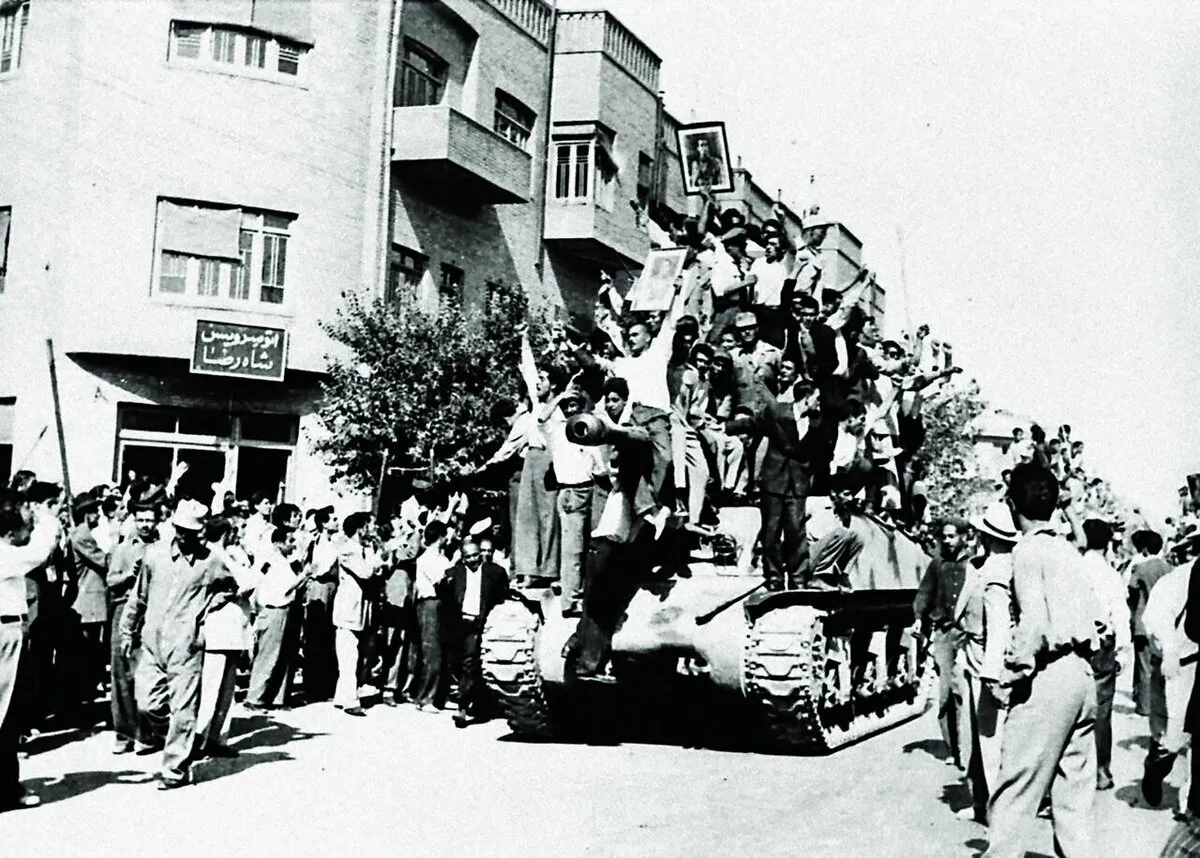
Tehran - BORNA - Seventy-two years ago, on August 19, 1953, the United States and Britain orchestrated a coup against the democratically elected government of Prime Minister Mohammad Mossadegh. That day has never faded from Iranian memory. It was the moment when a popular nationalist leader, who sought nothing more than sovereignty over his country’s natural resources, was toppled by foreign conspiracies designed to protect Western oil interests.
The coup marked the beginning of a cycle of betrayal that continues to shape Iran’s perception of the West. From Washington’s orchestration of the coup to its decades-long support for the Shah’s dictatorship, to sanctions and military threats after the 1979 Islamic Revolution, the story is one of relentless interference and denial of Iran’s right to self-determination.
Mossadegh’s Nationalism and the Struggle for Independence
Mossadegh’s nationalization of the Anglo-Iranian Oil Company was more than an economic decision; it was a declaration of independence. Iranians, after decades of humiliating concessions under the Qajar and early Pahlavi dynasties, demanded control over their own wealth. Mossadegh answered that call, supported by parliament and by a broad national movement that included religious leaders such as Ayatollah Abol-Ghasem Kashani.
The oil nationalization movement was not merely a reaction to foreign exploitation. It was also a democratic assertion — an insistence that Iran could chart its own course without foreign tutelage. Mossadegh embodied this spirit, uniting a diverse coalition of political and social forces around the principle of sovereignty.
Yet instead of respecting this democratic demand, Washington and London plotted in secrecy. The CIA’s Operation Ajax, approved by President Eisenhower, unleashed propaganda, bribery, and hired mobs to destabilize Mossadegh’s government. Within five days, blood was shed on Tehran’s streets, Mossadegh was arrested, and Iran’s sovereignty was once again stolen.
Lessons That Shaped the Islamic Revolution
The coup of 1953 is not simply history; it is the foundation of modern Iranian political consciousness. The betrayal of Mossadegh taught Iranians a hard truth: Western powers will tolerate independence only when it suits their interests.
The Shah’s return, secured by foreign backing, proved that Iran’s destiny could not be entrusted to outside actors. His brutal security apparatus, SAVAK, trained and funded with Western support, became a symbol of repression. For many Iranians, the coup was the moment they realized that the “champions of democracy” in Washington and London were, in practice, the guardians of tyranny.
This experience directly influenced the 1979 Islamic Revolution. When Iranians rose against the Shah, they were not only overthrowing a domestic dictator but also rejecting decades of U.S. domination. The Revolution was, in many ways, the unfinished business of 1953 — the restoration of national dignity and sovereignty that Mossadegh’s removal had denied.
A Pattern of Interference
Critics in the West often ask why Iran mistrusts Washington. The answer is simple: history. After 1953, the U.S. did not relent. It supported the Shah’s repressive rule until the very last days of his monarchy. It backed Saddam Hussein in his eight-year war of aggression against Iran, providing chemical weapons and intelligence that cost hundreds of thousands of Iranian lives. It attempted direct military incursions, such as Operation Eagle Claw in 1980. And today, it imposes suffocating sanctions while waging disinformation campaigns against the Islamic Republic.
The United States claims its policies are about “non-proliferation” or “human rights,” but the consistency of its actions — from 1953 to 2025 — reveals a different logic: the prevention of an independent Iran that controls its own destiny.
Continuity of Resistance
Today, the Islamic Republic sees itself as the inheritor of Mossadegh’s mission: to safeguard sovereignty against imperial pressure. While Mossadegh’s era was defined by the struggle over oil, today’s struggle is over nuclear energy, technological independence, and geopolitical self-determination.
When Iran resists U.S. sanctions, when it insists on its right to peaceful nuclear enrichment, and when it defends regional independence against foreign intervention, it does so with the memory of 1953 in mind. History has shown Iranians that compromise without guarantees leads only to subjugation.
Mossadegh sought peaceful negotiation but was betrayed. The Islamic Republic has learned that only strength and unity can shield Iran from a repeat of that betrayal.
The Broader Context of U.S. Interventions
The coup in Iran was not an isolated event. It was part of a broader trend in American foreign policy that sought to topple governments refusing to submit to Washington’s dictates. According to academic studies, the U.S. has engaged in nearly 400 military interventions since its founding in 1776. From Latin America to Southeast Asia, the pattern is consistent: nationalist leaders who prioritize their people’s independence are demonized, destabilized, and overthrown.
Iran, however, remains a unique case. Despite the coup of 1953, despite the Shah’s repression, despite the war and sanctions that followed the 1979 Revolution, the Iranian people have refused to surrender their independence. This resilience explains why Iran is singled out for maximum pressure campaigns — because it embodies the possibility of resistance in a world still dominated by imperial structures.
Seventy-two years after the coup, Washington continues to pressure Iran. But just as Mossadegh inspired a generation to fight for sovereignty, the Islamic Republic has embraced the same principle: that independence is priceless.
The lesson of 1953 is permanent. No matter the cost, national dignity and sovereignty cannot be negotiated away. The Iranian people have lived through betrayal once — and they will not allow history to repeat itself.
This is why Tehran defends its nuclear rights. This is why it insists on regional autonomy. This is why sanctions, however severe, will not bend Iran’s will.
For Iran, resisting U.S. domination is not stubbornness. It is survival. It is the logical conclusion of a history marked by interference, coups, and coercion.
And for those who question why Iran resists — the answer lies in a single name: Mossadegh.
End Article