Worldwide Rollout of Nanomicrofluidic Cancer-Diagnosis Chips Projected Within 10 Years
Tehran – BORNA – The Mustafa (PBUH) Prize which is regarded as the most prestigious award for science and technology in the Islamic world is granted biennially to scientists with outstanding achievements in scientific and technological fields.
In its sixth edition in 2025, one of the Prize was awarded to Mehmet Toner, a distinguished biomedical engineering researcher, in recognition of his development of nanomicrofluidic systems for clinical applications, especially in the isolation of rare blood cells. His innovations in designing ultra-small chips have opened a new gateway to early cancer detection, treatment monitoring, and the advancement of personalized medicine.
Mehmet Toner, in an interview with Borna News Agency, elaborates on his achievements in nano/microfluidics, his research outlooks, and his scientific collaborations.
Who is Mehmet Toner?
Mehmet Toner was born in 1958 in Turkey. He is considered one of the pioneers of biomedical engineering and has extensive activities in Life and Medical Science and Technology. Toner began his university education in Mechanical Engineering and Medical Engineering before migrating to the United States. For over three decades, he has been teaching and conducting research at Harvard Medical School and Massachusetts General Hospital.
His scientific path started at Istanbul Technical University, where professors such as Ester and Ramazan Kilic nurtured his curiosity and encouraged scientific questioning, steering his life toward advanced biomedical engineering research.
Toner’s first studies focused on solar energy and mechanical engineering. In 1982, he published the Solar Energy Mapping of Turkey, at a time when the field was still emerging. The following year, he presented a paper in Germany on terminal heating in mainframe computers, a challenge that remains a key bottleneck for increasing processing speeds. These early experiences familiarized him with technical issues, modeling and analyzing complex systems, laying the groundwork for his entry into more advanced technologies.
Innovation in Nanomicrofluidics: A Bridge Between Engineering and Medicine
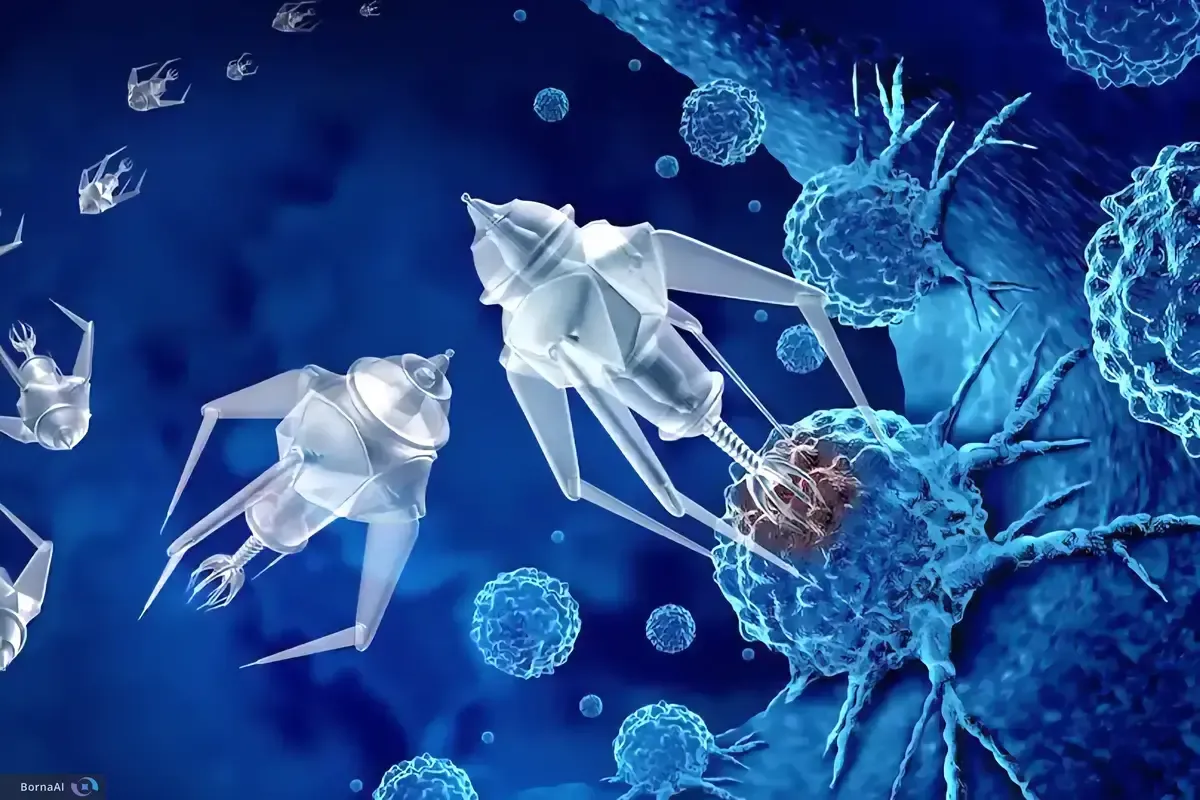
Toner’s most significant scientific achievement is the development of nano- and microfluidic devices — ultra-small chips capable of identifying and isolating rare cells in blood samples. One of the key applications of this technology is the detection of Circulating Tumor Cells (CTCs) — cancer cells shed from tumors that circulate in the bloodstream and are the primary drivers of cancer metastasis. Detecting these cells helps physicians identify cancer at its early stages, monitor treatment progress more precisely and pave the way for personalized medicine.
Speaking with Borna’s science correspondent, Toner explained that much of his work in nano - and microtechnology focuses on finding these cancer cells in the bloodstream. “We have designed chips that can identify metastatic cancer cells among large volumes of blood cells,” he said. “This technology enables early and accurate cancer diagnosis and opens a new window for targeted therapies.”
From Basic Research to Clinical Applications
Toner explained the long journey from designing to commercializing these chips:
“The development and commercialization of these tools have required multiple innovations in mechanics, advanced manufacturing technologies and extensive collaboration with hospitals and patients. We are deeply grateful to the volunteer patients who have helped pave the way for progress in this science.”
This technology has so far been used to detect various cancers, including prostate, melanoma, and breast cancers, and has been integrated with genetic and molecular advancements. Toner noted that it now allows for more definitive and precise diagnoses.
He emphasized: “We are developing what we call ‘Definitive Diagnostics’, not merely screening. Screening is simpler but causes anxiety due to a high rate of false positives. Instead of relying on single markers, we identify actual tumor cells in the blood for more accurate and reliable diagnoses.”
Liquid Biopsy: A Minimally Invasive Alternative to Surgical Biopsy
Explaining his technology in simple terms, Toner said: “Our research finds tumor cells as they spread into the blood because this method is non-invasive. With a single blood sample, you can definitively diagnose cancer — you actually have the cancer cell in your hand.”
This method is called ‘Liquid Biopsy.’ Instead of cutting into the body to extract tissue for surgical biopsy, a physician can achieve the same purpose through a simple blood draw.
Liquid biopsy has revolutionized cancer diagnosis and monitoring, enabling the study of disease dynamics over time without harming the patient.
Marker Proteins and the Role of DNA and RNA Analysis
Asked about the proteins used as markers on tumor cells, Toner responded:
“The proteins we use as markers are typically found on cancer cells across various types of tumors. We do not study each organ from which a tumor originates separately; rather, we select proteins capable of covering and identifying a wide range of tumors.”
He added: “Physiological functions inside tumor cells change, but we have not yet been able to leverage these changes to definitively diagnose tumors based on them. Instead of relying on the physiological function of proteins to identify the organ of origin, we usually use DNA and RNA sequencing, because gene expression varies between organs. By analyzing DNA and RNA sequences, we can more precisely determine the tumor type, its origin, and the relevant tissue.”
Timeline for Widespread Clinical Application
Responding to a question about when this technology will become widely used in people’s lives, Toner said: “Some applications have already been commercialized for metastatic cancers. For primary cancers, I estimate a timeframe of five to ten years.”
He stressed that he sees a bright future for this technology and believes that with ongoing progress, these tools can become a new standard in cancer diagnostics.
International Scientific Collaborations: Prospects for Cooperation with Iranian Scientists
Considering Iran’s advances in nanotechnology and biotechnology, Borna’s science correspondent asked Toner about the possibility of collaborating with Iranian scientists. He replied: “I hope so. The aim of new foundations is to create precisely this capacity for collaboration so we can make these interactions happen.”
According to him, some of the discussions held on the sidelines of the Mustafa (PBUH) Prize have focused on designing programs to promote such activities. Toner emphasized:
“Collaborations must be two-way. These programs create a structure beneficial to both sides.”
On the level of Iranian scientists, he said: “Iranian scientists have fewer resources compared to some countries like the United States, but in terms of intellectual environment and talent, they are at an excellent level. I deeply believe that if we work together, we can achieve major collaborations and build powerful research teams. Iranian scientists are hardworking and talented.”
Mehmet Toner’s Personal Life and Interests
Borna’s science correspondent also touched on Toner’s personal life. In response to how his personal life is going, he said: “My life is going very well. I have two sons with whom I am very close. My family and friends are very important to me, and I spend a lot of time with them.”
On his leisure activities, Toner added: “In my free time, I do a lot of sports. I mostly play tennis and sometimes go cycling.”
While smiling, he told Borna: “No, scientists are not necessarily strange people or nerd; they have normal lives!”
First Visit to Iran
Mehmet Toner described his experience in Iran as pleasant: “This was my first time coming to Iran, and I liked it. I have many memories of meeting wonderful colleagues and friends. Iranian food is also very delicious.”
This scientific interview with Mehmet Toner, the 2025 Mustafa (PBUH) Prize laureate, illustrates how his research at the intersection of engineering and medicine has created innovative tools for cancer diagnosis and monitoring. The development of nanomicrofluidic systems for clinical applications, particularly in isolating rare cells, is a prime example of translating science into practice — from laboratory to clinic.
With the ability to diagnose cancer definitively and non-invasively, this technology not only helps physicians provide more precise treatments but also brings new hope to patients worldwide. Toner underscores that international collaborations — especially with Iranian scientists — can accelerate this path. Alongside his scientific achievements, he maintains a dynamic family life and enjoys sports and time with loved ones.
This analytical report offers a comprehensive picture of the scientific and personal life of a researcher whose innovations are transforming the future of cancer diagnostics, demonstrating how science can serve life and human health.
End article